

AI job interviews: What to expect and how to prepare
The rationale behind artificial intelligence-enabled interviews is very human: companies want better, fairer and more consistent hiring decisions
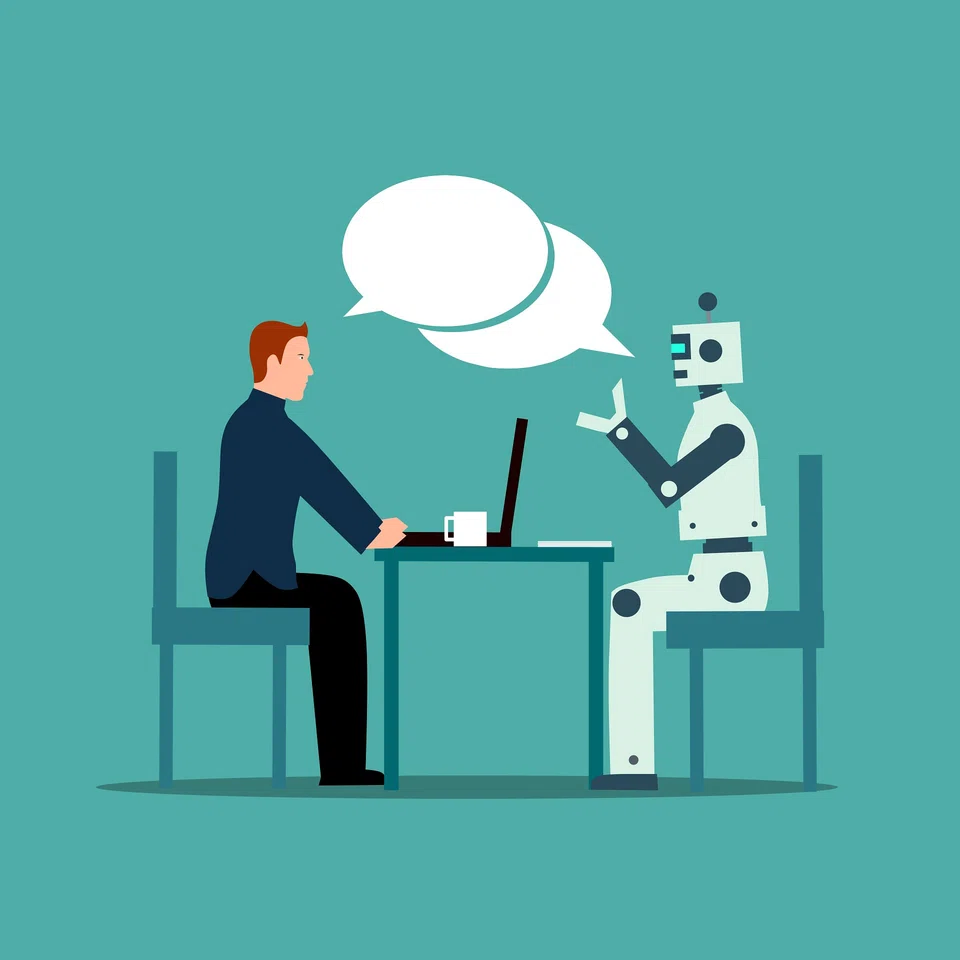
WE HAVE always used interviews to help us understand people better. They’re tools – albeit imperfect, human ones – for predicting who will succeed in a role and fit into a team. But what happens when the interviewer is not human?
That is the reality more candidates are starting to face, as companies adopt artificial intelligence (AI)-powered interviews in their hiring processes. These systems might sound futuristic, but the rationale behind them is very human: companies want better, fairer and more consistent hiring decisions.
Interviewers with a digital brain
At their core, AI interviews replace a human interviewer with a large language model, usually trained on a large dataset of language, behaviours or even video inputs. The model is designed to evaluate the quality of your answers, the style in which you respond, and how well you align with a pre-defined set of job-relevant criteria.
If you’re curious, simulate one. Open a tool such as ChatGPT and ask it to conduct a mock interview. It will ask you questions, evaluate your responses and even provide feedback. It’s not science fiction; it’s happening now.
When AI is used in video interviews, it might also pick up on how you express yourself visually, from tone and pitch to facial expressions. While that raises valid questions about privacy and fairness (more on that below), the core aim is simple: using the tool to assess fit objectively.
Why companies are embracing AI for interviews
As someone who works in talent strategy, I have seen firsthand that most traditional interviews do not predict performance adequately. Psychologists refer to this as low validity. There is a lot of bias in how interviews are conducted – from unstructured questions to unconscious preferences for candidates who look, sound or behave like us.
AI cannot fix everything, but it offers a more structured and consistent approach. It can evaluate everyone against the same criteria, reduce bias (and make any remaining bias easier to detect and fix), and improve the overall candidate experience by being responsive, clear, and available on demand.
At Mercer, our research suggests companies are increasingly looking for scalable, data-driven hiring practices, especially for high-volume or early-career roles. Our Global Talent Trends 2024 survey reveals 70 per cent of Singapore organisations achieved efficiency from generative AI, with 52 per cent noting more innovation in human resource (HR) processes. AI-enabled interviews help organisations move beyond “gut feel” towards something more evidence-based, while still respecting the importance of culture and human connection.
What’s different and what’s not
With a human interviewer, you naturally tailor your tone, pick up on social cues and adapt in real time. With AI, that dynamic disappears. But what takes its place is clarity.
Candidates need to focus on:
- Content: Answer clearly and with structure. Stay focused on what the company is likely looking for based on the job description.
- Style: Be mindful of your tone, word choice and pace. These elements may be scored.
- Preparation: Don’t just prepare for the questions – try to reverse-engineer the criteria. Ask AI to help simulate what “good” looks like for the role.
Interestingly, many companies are now exploring “hybrid” interviews – combining AI and humans. For instance, a human might lead the interview while the AI captures data, prompts more consistent questioning, or helps highlight key takeaways post-interview.
Humans in the loop
Will a real person ever see a candidate’s answers? In most cases, yes. Think of the AI interview as a screening tool, not a final decision-maker. If you pass the AI step, you’ll almost certainly move to a conversation with a real person. Humans still matter – especially in determining whether you’ll mesh well with the team or the culture.
We also expect companies to evolve their approach to fairness and transparency. In time, candidates may be able to review how their interviews were scored or appeal decisions if they believe the system misunderstood them. That’s good practice – and good ethics.
And if it feels like the AI got it wrong, raise your concern. Ask whether the AI interview process has been validated, meaning the organisation has tested whether it predicts job success.
Our study also shows 79 per cent of global executives believe AI improves HR decision-making quality, but human judgment remains critical. Most AI tools today are part of a broader hiring process, not the only step. If you feel you were not assessed fairly, it is reasonable to bring that up with the recruiter or hiring manager.
At Mercer, we advise companies to maintain transparency, use human judgment as a checkpoint, and ensure AI augments – not replaces – the hiring process.
Ensuring fairness, transparency and accountability
Final thought: AI interviews are not perfect – but neither were human ones.
Many people already game the interview system that is run by humans. Interviewers are frequently biased, sometimes unconsciously, by people they like, and use criteria they are unaware of to make decisions. Skilled interviewees make use of these issues to convince someone they are the best candidate for a role, even if perhaps they are not.
As AI derives its data sources from humans, it is likely to experience some of the same issues, at least at first. However, it is much easier to ask an AI about its decision-making process and to vet its criteria and address those issues.
So, as AI continues to become more integrated into recruitment processes, it is essential for organisations to continue to refine and improve how valid and accurate its recommendations are – particularly regarding fairness and bias. Areas to stay focused on include:
- Bias in historical data: Many AI-driven interview platforms are trained on historical hiring data that may inadvertently reflect past human biases – whether conscious or unconscious. This can perpetuate existing disparities in candidate selection.
- Flawed performance indicators: Some AI tools analyse facial expressions, speech cadence or tone – factors that may not reliably correlate with a candidate’s actual job performance or potential.
- Candidate experience and accessibility: AI-based interviews can sometimes feel impersonal, rigid or inaccessible. This may alienate candidates unfamiliar with the format or those requiring accommodations, potentially narrowing the talent pool.
While AI offers significant opportunities to streamline and enhance recruitment, it should not replace human judgment. Until fairness, transparency and accountability are embedded into the design and governance of these systems, HR leaders should approach their adoption with caution, maintaining a critical perspective to ensure equitable and inclusive hiring practices.
The writer is a career practice leader at Mercer Asia
TRENDING NOW

Once staunchly pro-China, Malaysian Chinese businesses are now distancing themselves from Beijing

Britain’s mansion tax shows the difficulty of targeting wealth

Three hats, one goal: How Ng Kian Swan runs sustainability at NUHS

COE review: The gap between luxury and mass-market cars isn’t the only one worth bridging

