

The AI work that will compound for Asean
Five ways South-east Asia could pull together to achieve more with the technology
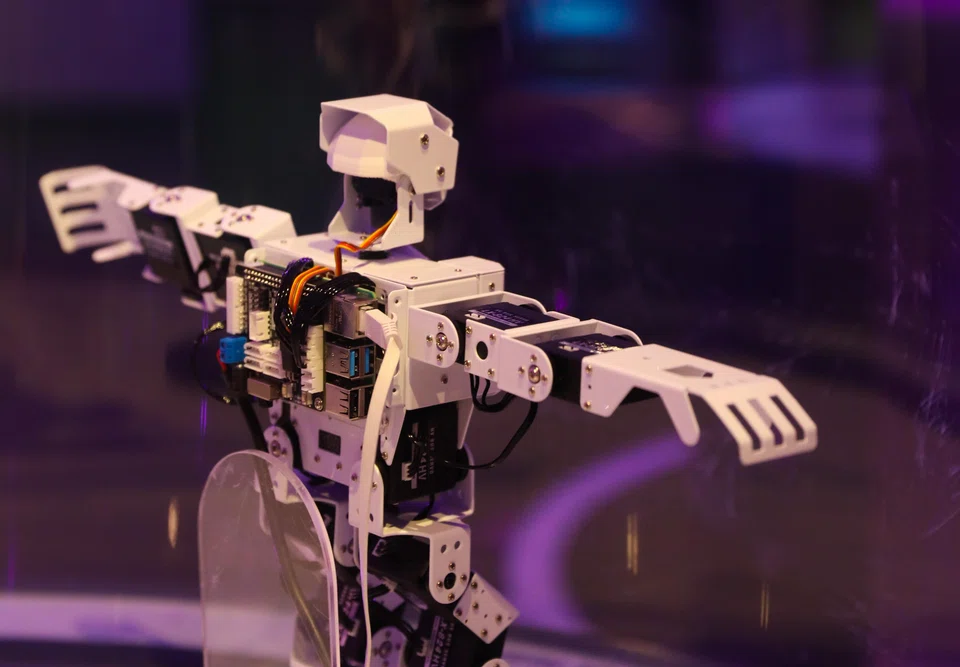
ARTIFICIAL intelligence systems write code, do sophisticated analyses, draft legal briefs and execute multi-step tasks on their own. Capability is advancing fast, despite open challenges around alignment and safety.
Yet, capability does not automatically translate to economic impact. The information and communication technology (ICT) revolution taught us that. The largest gains did not go to those who built the chips and routers, but to those who reorganised work around them.
AI follows a similar pattern. Asean is well-placed to leverage AI to boost its economy. But the constraints that matter most are the ones no single member state can solve alone.
AI’s current impact
The Anthropic Economic Index shows wide variability in AI use in Asean. Singapore is among the world’s heaviest per capita users, while several member states are near the bottom.
The same index reports that frontier models can handle most computer and mathematical tasks, while observed usage sits at roughly a third of that potential. The gap is large.
Task-level studies in software engineering, customer service and consulting find double-digit productivity gains in live deployments. Macro evidence lags, as it did in previous general-purpose technology revolutions. But the gap is closing – unevenly – and mainly in advanced economies so far.
Extending AI’s reach
Besides getting better, the cost of AI is falling dramatically. Systems are shifting from answering questions to doing work, completing multi-step tasks without human intervention.
The same systems are advancing science and engineering, and increasingly take a physical form in robots. Each shift extends AI’s reach: from individual tasks to entire workflows, from desktops to physical work.
We do not need theoretical models to see the upside; Asean’s own history tells the story. Before the global financial crisis, annual total factor productivity (TFP) growth across the region ran between 1.5 and 2.5 per cent. Today, it sits at about 0.5 per cent.
The economic promise of AI for South-east Asia is not about charting unknown territory, but about bridging this gap, using AI to pull Asean’s productivity back towards its pre-crisis highs.
An extra 1.5 percentage points of annual TFP growth compounds. Over 20 years, per capita income ends up roughly 35 per cent higher than under the current trajectory. Scaled across the bloc, the additional output amounts to well over a trillion dollars a year – the equivalent of another major economy.
Limits to AI’s impact
There remain obstacles in scaling that impact.
Adoption is a person-level, firm-level and country-level problem. The constraint is not the technology, but the organisation around it: data foundations, management and the willingness to reorganise work.
Firms that bolt AI onto old workflows tend to gain little; the ones that rebuild workflows capture the dividend. Ultimately, this is a leadership challenge, not a technical one.
Access gaps are widening across countries, firms and workers. The top 20 countries account for 48 per cent of global per capita AI use, up from 45 per cent six months earlier.
Within countries, large firms adopt faster than small ones, and skilled early adopters compound their advantage. Education systems in the region are not yet geared to close these gaps.
Fit also matters for adoption and trust. AI capabilities are built overwhelmingly on English-language, Western, white-collar data. Models know US commercial practice better than Vietnamese commercial code, for instance.
Frontier performance improves fastest where training data is thickest, which is not in South-east Asia. Safety and alignment evaluations are similarly Western-centric. The point is not capability in general, but capability for the specific job, in the specific culture, in the specific context.
Timing compounds the challenges of adoption, access and fit. Workers with six months of AI experience outperform new users on the same tasks. Firms that reorganise early climb the learning curve sooner.
The benchmarks that exist today shape which capabilities frontier labs optimise tomorrow. Delay has a cost.
What Asean could do together
While the conversation usually begins with compute, it is the wrong starting point. Training new foundation models requires massive clusters but compute is not the binding constraint for inference.
Data centres already span the region, and performant models can run on laptops. For most regional deployment needs in the next five years, we already have the hardware.
The binding constraints are what sit on top, and where pooling pays:
Data for the use cases that matter: Even in higher-resource regional languages such as Bahasa, the high-quality data needed for high-stakes domains – healthcare, education, public administration – is thin.
A Vietnamese-Chinese-English trade-document corpus, built once, serves every Asean exporter. A commons is also what enables the commercial layer above it: proprietary datasets, sovereign workflows, firm-specific fine-tuning.
The commercial layer is harder to build and easier to defend – but only on the back of shared foundations. Pooled responsibly, this is the highest-return investment on the table.
Evaluations tied to regional problems: Most global AI benchmarks test Western tasks. A benchmark for permit handling in Malay, clinic triage in Khmer or customs classification of the region’s trading languages would materially improve how models are chosen and deployed.
The same applies to how we evaluate safety: Regional benchmarks need to test how models behave in our cultures and on our sensitive use cases.
Open systems and shared infrastructure: Open systems have driven software progress for 30 years (think Linux, Apache, PyTorch and Hugging Face) and are a major reason AI is advancing so fast. They have consistently spawned commercial efforts, not blocked them.
Sea-Lion from Singapore, Typhoon and Wangchan from Thailand, PhoGPT from Vietnam, and Sahabat-AI from Indonesia are building on the best open models, embedding local commercial codes, cultural nuances and regional languages into them. They are the direct answer to the “fit” problem.
Purpose-built agents for the region: Most AI value for Asean will not come from frontier models as-is. It will come from systems tuned to a specific workflow in a specific language, at a fraction of frontier cost.
This application layer is still fluid and that is exactly when it is cheapest to shape, with the largest impact for the region’s citizens.
Expertise: This is the scarcest input: practitioners who can take a real operational problem and deploy AI against it. Cross-border secondments, regional fellowships, joint curricula and real-life training are small moves with low costs and compounding returns.
Capacity building was a major recommendation in the United Nations’ Governing AI for Humanity report; Asean can take the lead. Across our borders we have research hubs, engineering talent, service workforces and one of the world’s largest consumer markets.
Towards integration
No member state has all of these alone; together we do. Regional integration is also an effective mechanism to ensure our digital leaders help pull the rest up the adoption curve.
Data, evaluations and open systems form the regional public infrastructure on which commercial and public services rest. Not glamorous, but load-bearing. Human expertise and purpose-built agents will drive wider and deeper impact.
As AI capabilities expand, the adoption, access and fit questions will not answer themselves. These challenges will be met by what actually gets built. It is slower work than building a supercomputer. It is also the work that compounds.
The writer is senior director of AI products at AI Singapore and a member of the United Nations Independent International Scientific Panel on AI. Views expressed here are his own. He used AI for research and editing before submitting the draft.
This essay is part of New Global Order, a series which explores how the changing world landscape is reshaping business, politics and beyond.






