Aiming for the right blend: C-beauty’s challenge to K-beauty can’t be brushed off
Lower prices, rapid launches and a strong social media game support growth of Chinese cosmetic and skincare brands in S-E Asia

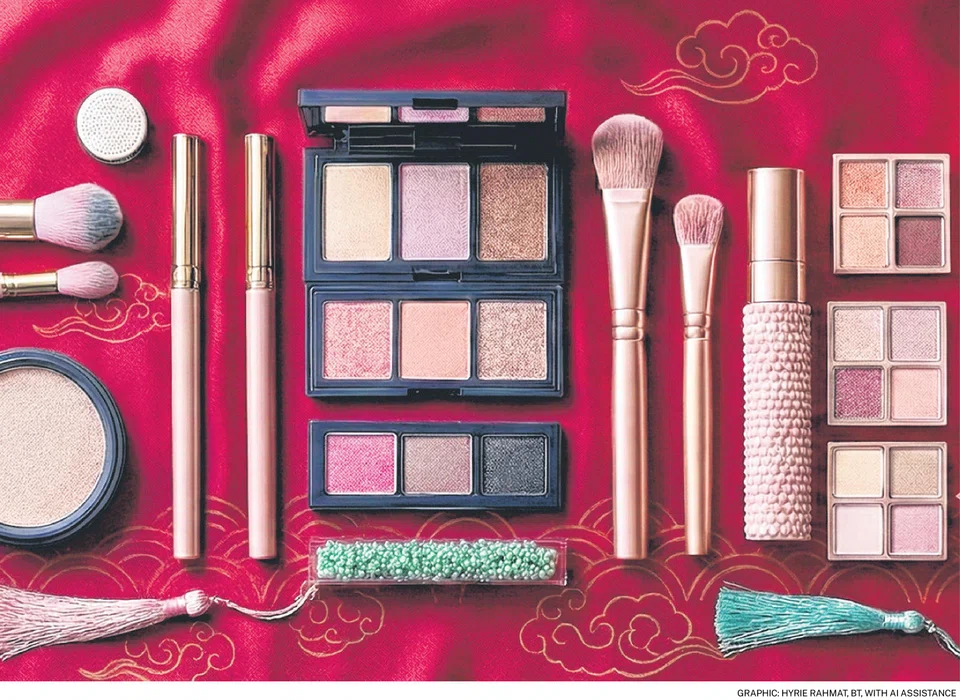
[SINGAPORE] Once a loyalist of South Korean beauty products, 30-year-old civil servant Aurelia Teo has diversified to cheaper China-branded options – and she is far from alone.
“I used to be quite loyal to Korean beauty, but as I learnt more about skincare ingredients, I realised that different countries do different things well; so I started being more open to trying other brands,” says Teo, who first tried Chinese products in 2023.
Digital-first marketing has helped the Chinese beauty industry – C-beauty for short – gain traction in recent years, particularly in South-east Asia.
The region is a key market for many C-beauty brands due to its geographical proximity, similarities in culture, and a generally young and digitally savvy population.
Consumers, meanwhile, appreciate the lower prices. Teo’s C-beauty collection ranges from eyebrow pencils – which cost about S$2, compared with S$8 for a South Korean equivalent – and pre-glued false eyelashes to skin-repair creams.
With rapid launches, lower prices and aggressive marketing, C-beauty is expected to maintain its regional growth momentum – and challenge the dominance of South Korean beauty products.
A prime market
South-east Asia’s importance to C-beauty can be seen, for instance, in how major sister brands Judydoll and Joocyee chose to open their first physical retail outlets outside mainland China in Singapore, in October 2025.
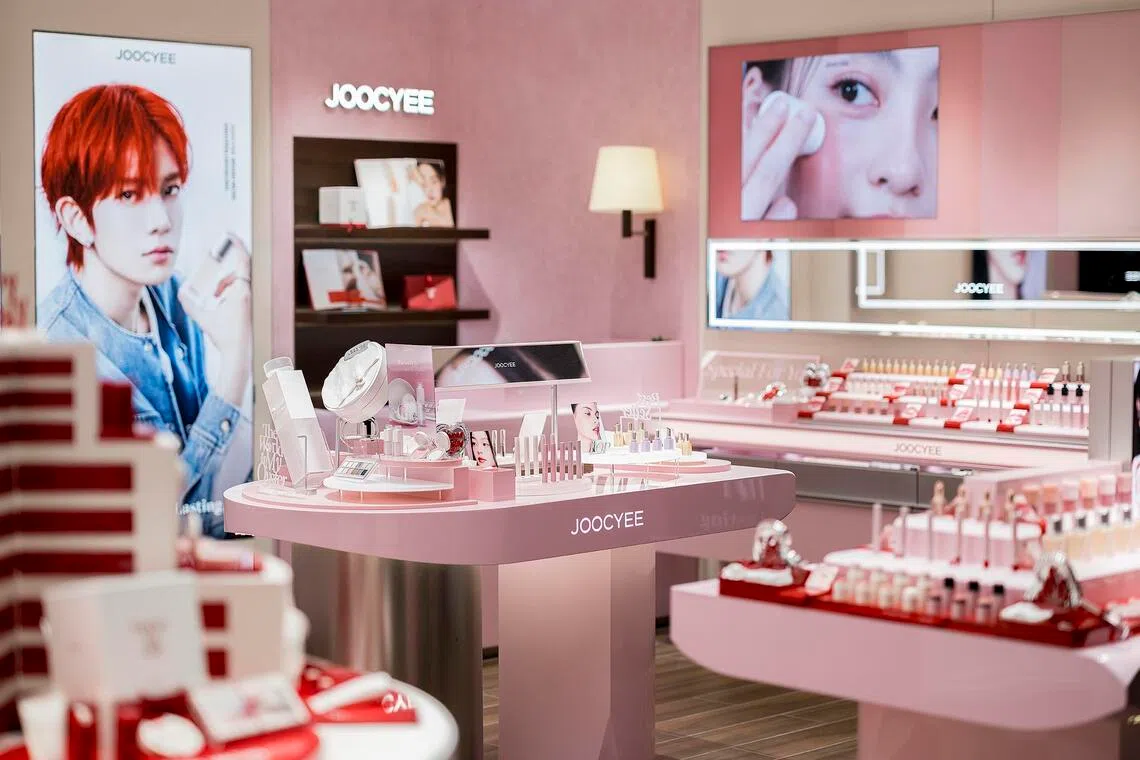
In 2025, South-east Asia accounted for more than 300 million yuan (S$55 million) in retail sales for Joy Group, the company behind Judydoll and Joocyee. This was about half the group’s total overseas business.
Granted, this was still a small percentage of the group’s total operations. In 2024, total sales came to 4.2 billion yuan. But the brands’ growth rate in South-east Asia currently exceeds their growth at home, notes Kong Fanqi, general manager of international business at Joy Group.
Says Kong, in Mandarin: “We have established teams dedicated to developing overseas products and content, with the goal to reach a wide base of local consumers, rather than serving only the Chinese community.”
According to a report by Euromonitor International, South-east Asia’s young population and rising disposable income make the region a prime market for Chinese beauty brands looking to expand overseas.
The report states that Chinese companies bring well-established marketing strategies tailored to local preferences. This is reinforced by the similarities between China’s e-commerce platforms such as TikTok Shop and those in South-east Asia, such as Shopee and Lazada.
In 2024, the Asean region’s personal-care imports from mainland China reached 216,799 tonnes, according to data from BMI, a research company under Fitch Solutions.
This is up 10 per cent from 2023, and represents an average annual growth rate of 15 per cent between 2021 and 2024.
Going abroad
Wong Teng Ian, insights manager at venture outfit Momentum Works, says that C-beauty gained some traction in South-east Asia around 2017 to 2019, but took off from the early to mid-2020s, accelerated by the growth of TikTok shops in regions outside mainland China.
“With the very intense competition at home, many of them thought of expanding to overseas markets,” she notes.
“You can consider it as a natural spillover of the capabilities that they have built at home over the years,” she adds, referring to both production and marketing.
The supply value chain in China has reached “a very high level of maturity” to support the domestic market, with production being “very specialised and efficient”, points out Wong. This enables brands to create new products faster and at lower costs.
“From the beginning of research and development (R&D), to raw materials, manufacturing, packaging and marketing, each segment is supported by suppliers; so the brands don’t need to do everything by themselves and it’s more efficient for them.”
With the rise of e-commerce and live-streaming, the entry barriers to new markets have also been lowered, she adds.
Maria Hadjicosta, consumer and retail analyst at BMI, observes that the increased use of TikTok globally has not just made it easier for brands to reach buyers, but has also popularised Douyin make-up, a Chinese aesthetic named after the domestic version of TikTok.
The dramatic, doll-like look of Douyin make-up contrasts with the typical South Korean aesthetic, which is more minimalistic. The popularity of the Douyin style drives attention towards Chinese beauty trends and relevant make-up and skincare brands, says Hadjicosta.
C or K
Even though South Korean beauty products – known better as K-beauty – are perhaps the most popular in Asia, observers are noticing a change in consumer habits.
Goh Choon Gek, commercial director at Watsons Singapore, says that in recent years, C-beauty has become one of the fastest-growing segments at the beauty and healthcare retailer’s outlets in the city-state.
Watsons Singapore started stocking K-beauty products around seven to eight years ago, riding the Korean pop-culture wave. In 2023, it began bringing in C-beauty products.
The K-beauty business remains larger, due to its longer presence in Singapore and product breadth across categories, notes Goh.
“(But) the level of growth for C-beauty has been phenomenal, and it has also driven engagement and loyalty within a younger group of customers, which was like how K-beauty started.”
While C-beauty has a young market, K-beauty has a broader demographic reach and appeals to those who value routine and proven efficacy, she adds.
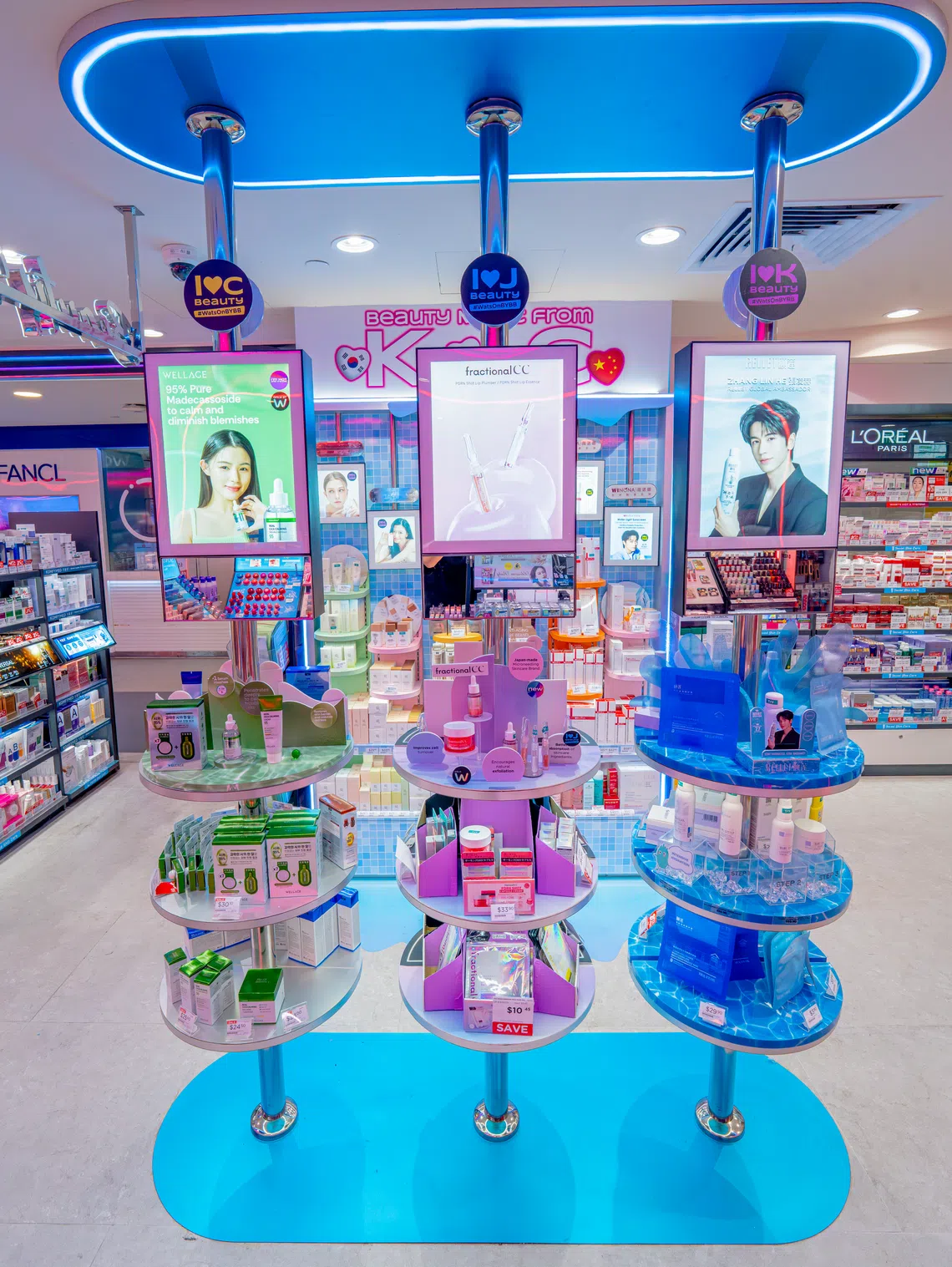
Euromonitor analyst Laura Tjahjadi notes that in skincare, which has a higher “trust barrier”, K-beauty has an edge due to its established reputation.
In addition, South Korean brands enjoy a slight premium due to cultural aspiration. But this is driven more by aesthetics and relevance than actual country of origin – so some Chinese brands adopt K-styled branding to tap this premium, she says.
C-beauty fan Teo notes innovative approaches by brands such as Flower Knows, popular for its whimsical, fairytale-themed packaging.
“The way they’ve done their packaging is very intricate and beautiful, and there’s nowhere else you can find such nice packaging, especially for this price,” she says.
However, Tjahjadi believes that K-beauty’s earlier cultural wave has plateaued, while the influence of Chinese pop culture is rising.
K-beauty’s higher prices and slower release cycles mean that shoppers are less likely to make impulse buys, she points out. In contrast, C-beauty offers lower prices, rapid launches and aggressive marketing tactics that fuel trial or impulse purchases – especially among younger, trend-driven consumers.
“This edge is clearest in colour cosmetics, where low-commitment, temporary wear encourages experimentation,” she notes.
BMI’s Hadjicosta similarly highlights the price advantage of Chinese personal-care products, particularly when compared with luxury skincare brands.
Consumers are becoming more wary of what they pay for and more sceptical of what luxury actually entails, she adds.
“People are starting to understand that they can get quality out of more affordable price ranges and C-beauty taps into this demographic, by offering R&D, innovation and affordability.”
Challenges
Still, C-beauty’s regional push faces challenges such as lingering negative perceptions, market saturation and a preference for offline shopping.
Concerns over safety standards are the main challenge for C-beauty, says Hadjicosta, noting the perception that certain China-made products – including cosmetics – are of “suboptimal quality”.
Even C-beauty buyer Teo sticks mostly to recognised brands, and does extensive research before trying others.
“I think China has always had an issue with the safety of the things that (it) manufactures, as opposed to beauty products from Japan and Korea, for example, which I am quite liberal with trying even if I don’t recognise the brand,” she says.
But Joy Group’s Kong argues that negative perceptions of the safety of China brands are rooted in views from a decade or more ago.
Today, overseas consumers can discover and try Chinese products “much more quickly” due to social media and cross-border e-commerce, which has “greatly increased” the visibility and discussion of C-beauty, he adds.
Hadjicosta also notes that mainland China is evolving to meet international standards for beauty manufacturing, with heavy investments in R&D.
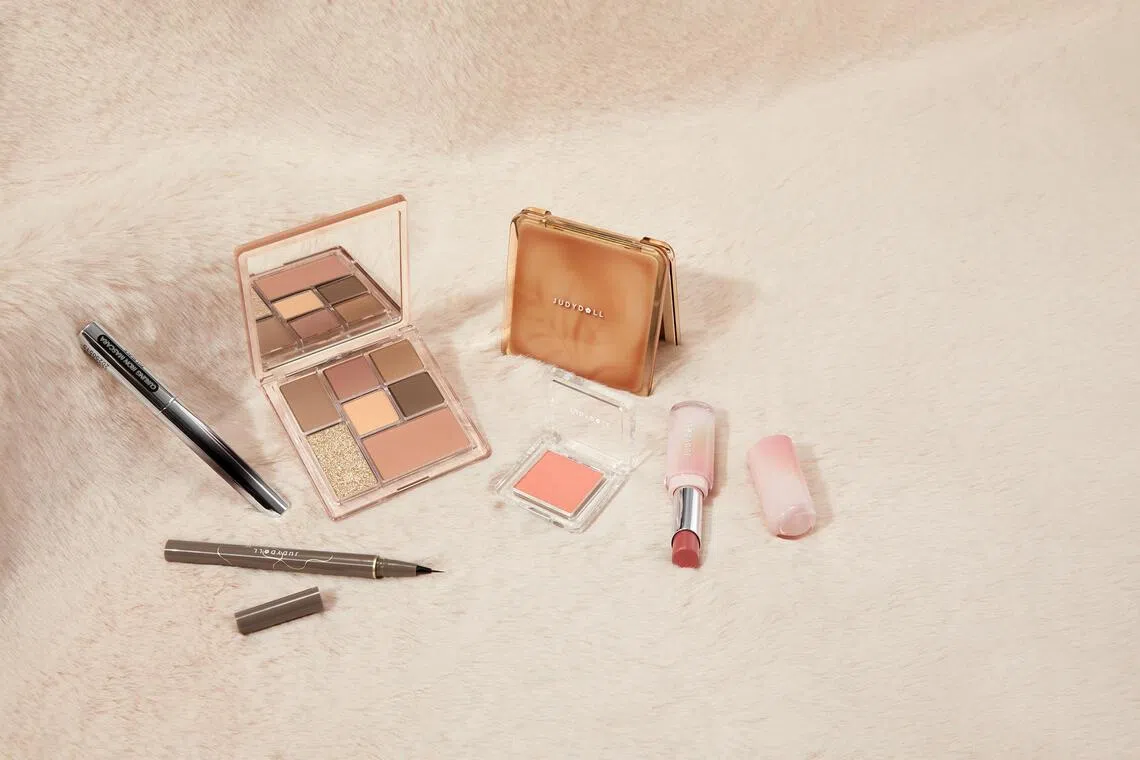
Another challenge is South-east Asia’s saturated personal-care market, says the BMI analyst. This may make it hard for any one China brand to stand out, especially since a number have entered the market.
To set itself apart, Joy Group adapts its strategy based on local consumption habits and market maturity. For example, for the Indonesian market, it has ensured halal certification for its factories.
Kong also notes that consumers in South-east Asia place “very high importance” on long-wear performance, oil control and lightweight, comfortable textures.
Hence, Judydoll launched a dedicated range of sun-protection cushions and powders to meet this demand, in several shades that include those for deeper skin tones.
He says: “Singapore might be quite similar to China because of the large proportion of ethnic Chinese, but across the wider South-east Asian region, the demographic backgrounds and cultures are actually quite different, so that is why we wanted to pursue localisation.”
China’s strong supply-chain capabilities make this possible, he adds.
“The efficient supply chain in China gives us better innovation and product-development capabilities to empower the front end.
“Our new product launch pace is actually faster than some Western brands or local brands,” he says, noting that Judydoll and Joocyee launch around 400 stock-keeping units each year.
Yet, even as e-commerce has enabled C-beauty’s spread, offline channels still remain important in South-east Asia.
“In South-east Asia, shopping malls are still a key way for people to discover and buy different products,” says Momentum Works’ Wong. “It is quite different from the Chinese market, because in China, people tend to buy every kind of thing online.”
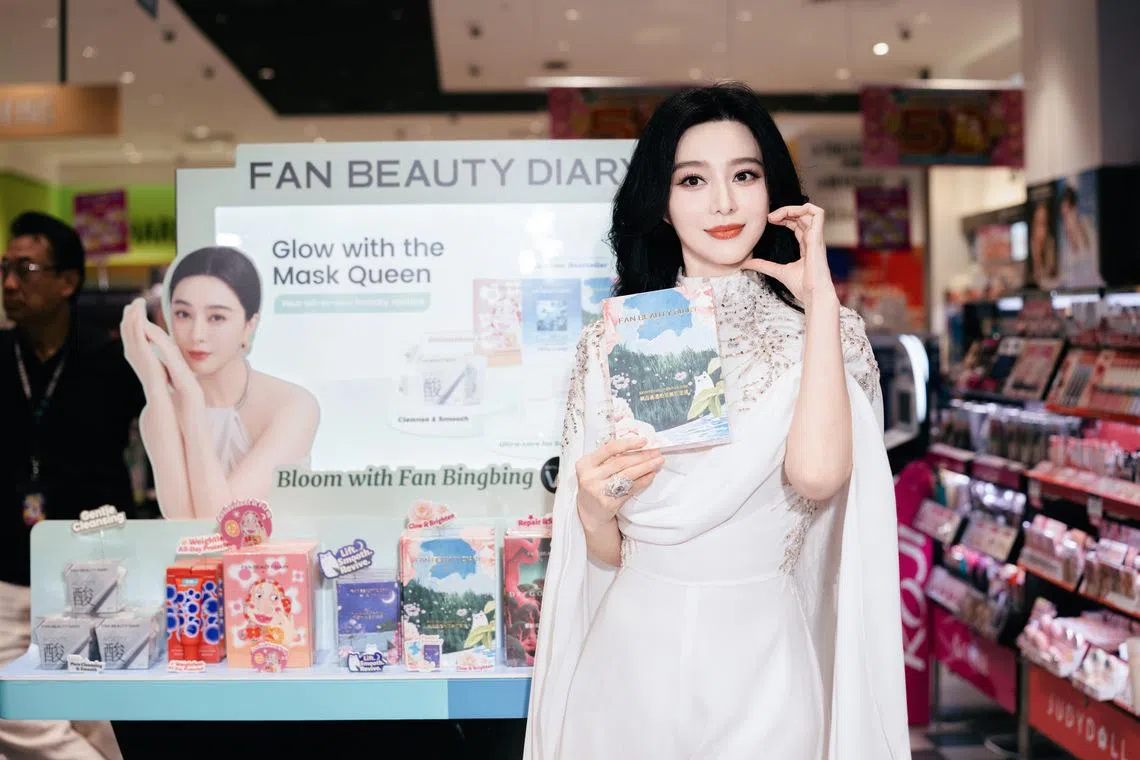
As a result, C-beauty brands in South-east Asia have widened their presence in physical retail stores such as Guardian and Watsons, notes Euromonitor’s Tjahjadi. This allows them to capture sales in suburban and rural areas where e-commerce penetration remains low.
Goh notes that at Watsons Singapore, customers typically prefer to try new C-beauty products in-store, even after discovering them online.
“When it comes to colour cosmetics, it’s even more important that you can test the shades and so on,” she explains. “Plus the brands also have their beauty advisers, so this is where you gain a lot more insights and discovery in stores.”
Betting on C-beauty
Despite these challenges, C-beauty’s future looks bright. The industry has drawn interest from international investors such as L’Oreal and LVMH’s private equity arm L Catterton.
In 2025, the sector saw US$42.1 million in equity funding. This was mainly from cosmetics company Chando Group’s latest financing round, which saw investments from L’Oreal and Chinese private equity firm Harvest Capital.
The healthy funding interest shows that global giants are betting on the long-term expansion of China’s beauty consumption and C-beauty’s continued product innovation, says Neha Singh, co-founder of startup data platform Tracxn.
Tjahjadi expects C-beauty brands to keep growing through agility, rapid innovation and fast responses to consumer trends, especially for facial colour cosmetics.
After strong success in Singapore, Joy Group aims to open more standalone boutiques in the city-state and potentially in other countries.
Monthly turnover at Judydoll’s standalone Singapore boutique is already higher than that of its top stores in mainland China, points out Kong.
The company is also keeping an open mind about having manufacturing facilities in South-east Asia, although it has no plans to shift production for now.
“In recent years, Chinese culture’s influence in South-east Asia has grown larger, and China’s supply chain and the product innovation capabilities have become stronger,” says Kong.
“In the future, C-beauty will likely be more popular and recognised globally – certainly in South-east Asia.”