Amid digital push, real-world problems such as water bankruptcy risk being overlooked
As countries race to push technological boundaries, similar attention should be paid to fundamental resource needs

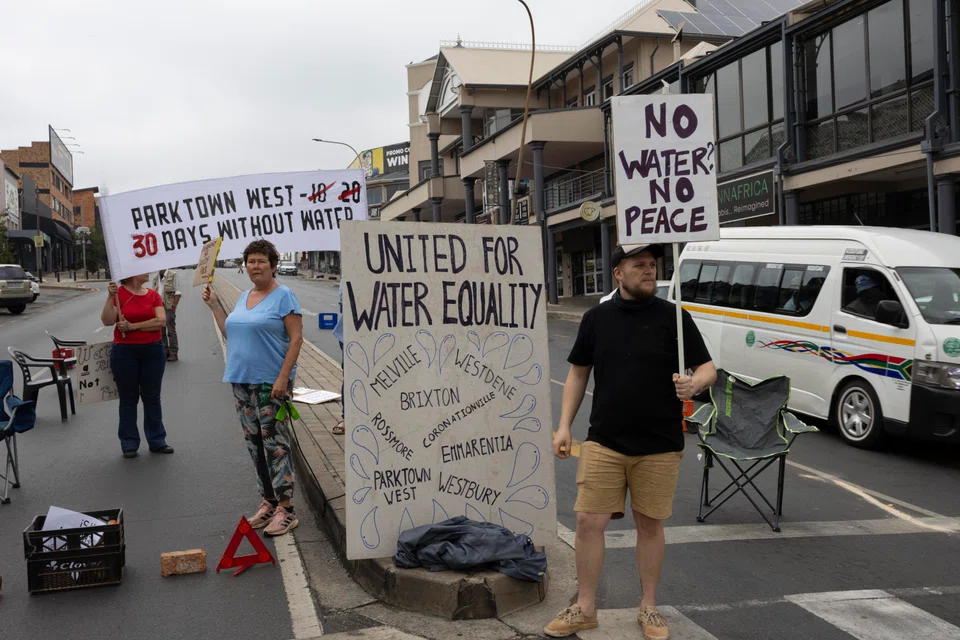
WITH global attention now captured by cutting-edge digital technology – from quantum computing to artificial intelligence – it can be easy to assume that the basic issues of everyday life have been solved.
Easy, at least, for the better-off in developed countries, who fall within the upper tiers of Maslow’s hierarchy of needs. Yet, in much of the world, fundamental needs remain under threat – including that for water.
In January, the United Nations University Institute for Water, Environment and Health (UNU-INWEH) released a report on the world’s “global water bankruptcy”. It noted that nearly three-quarters of the world’s population live in countries classified as “water-insecure” or “critically water-insecure”. Some 2.2 billion people lack access to “safely managed” drinking water.
In many areas where groundwater is drawn upon, long-term water use has exceeded inflows and “safe depletion limits”, the report warned. Climate change is worsening the issue, intensifying droughts and causing the loss of critical freshwater stores through glacier melt.
The report argued that the world is not simply in a water “crisis” – the term implies a temporary emergency that can be addressed in order to return to normal. Rather, we are in a state of outright water bankruptcy. This means not just “insolvency” but “irreversibility”, and has corresponding implications for what must be done.
Furthering the financial metaphor, the report noted that declaring bankruptcy paves the way for a “fresh, more sustainable start”. Managing the world’s water bankruptcy similarly calls for “a transformational fresh start in human-water relations”, and a recognition of the new reality: one of long-term human-caused or anthropogenic drought.
Close to home
For those of us in the fortunate one-quarter of the world’s population, water shortages may seem like a distant struggle. As much as international idealism might hope that those in richer societies can spare a thought for their fellow man, the psychological reality is often different.
Affluence is not an absolute defence. Drought is a function of physical, not economic geography. In prosperous South Africa, protesters have taken to the streets on the back of water shortages. Even the world’s richest country, the US, is far from immune; Florida’s ongoing drought and urban communities without safe drinking water are examples.
Market logic also provides a pragmatic reason to worry about water security elsewhere: the centrality of water in agriculture.
The UNU-INWEH report flagged the reality that more than half the world’s food production takes place in regions that are experiencing or are expected to face declining water stocks.
On a smaller scale, water scarcity is already shaping our immediate neighbourhood. As a recent long-read in The Business Times Weekend noted, the proliferation of data centres in South-east Asia has raised concerns about their insatiable thirst.
As the UNU-INWEH report also said, water scarcity is not just about volumes, but quality. Industrial-use water, such as that used to cool data centres and for semiconductor production, needs to be high-quality water, putting this use in competition with the needs of the local community.
The silver lining is that the demand for water by data centres is driving research into and implementation of related solutions, from recycling of industrial wastewater to designing for water efficiency.
But if the world’s water bankruptcy is to be tackled, it cannot be left simply to the market.
Even as governments pour billions into digital technologies, similar research and resources must be directed towards preserving this most fundamental and existential requirement.