Amid rising costs, businesses should not be seen as the enemy
EVEN as inflation eases, cost-of-living pressures remain an undeniable concern in Singapore. Yet while fear and frustration are understandable, the antagonistic stance that some consumers take towards businesses – with disbelief or dismissal of their own cost pressures – is less so.
The government has repeatedly acknowledged that households face cost-of-living pressures, not least with the goods and services tax (GST) having just been raised another percentage point on Jan 1.
In recent years, various assistance packages have been rolled out to mitigate these increases, with the potential of even more help to come in Budget 2024. The role of companies in protecting consumers from such pressures, however, is less clear-cut. After all, companies themselves are victims of rising costs.
To guard against GST-related profiteering, the government’s Committee Against Profiteering was reconvened in March 2022. For the first year-and-a-half or so, it received over 350 feedback submissions, according to a parliamentary reply in October 2023. Of these, only 32 involved specific allegations of GST misrepresentation.
But it is important to note that the committee’s remit is to investigate “unjustified price increases of essential products and services that use the GST increase as an excuse”. What is unacceptable, according to the committee, is raising prices by more than the GST increase while citing the GST hike as the reason. In other words, raising prices may be acceptable as long as GST hikes are not used as an excuse.
This is an unpalatable message for consumers – and the government has rarely put it so bluntly. Yet it is nonetheless an important point. Inflation, after all, hits companies in the first instance. Companies cannot be expected to absorb costs indefinitely and never pass them on.
The government itself has made this point before, though usually in the limited context of raising wages for lower-income workers.
The argument goes as such: If lower-income workers are to be paid more, then costs will go up for their employers, and some of these costs must be passed on. Singaporeans must therefore be willing to pay more for their coffee shop meals, say, with the knowledge that this is for the benefit of less-privileged workers.
Perhaps a similar appeal to solidarity could be made for price increases by small and medium-sized enterprises (SMEs).
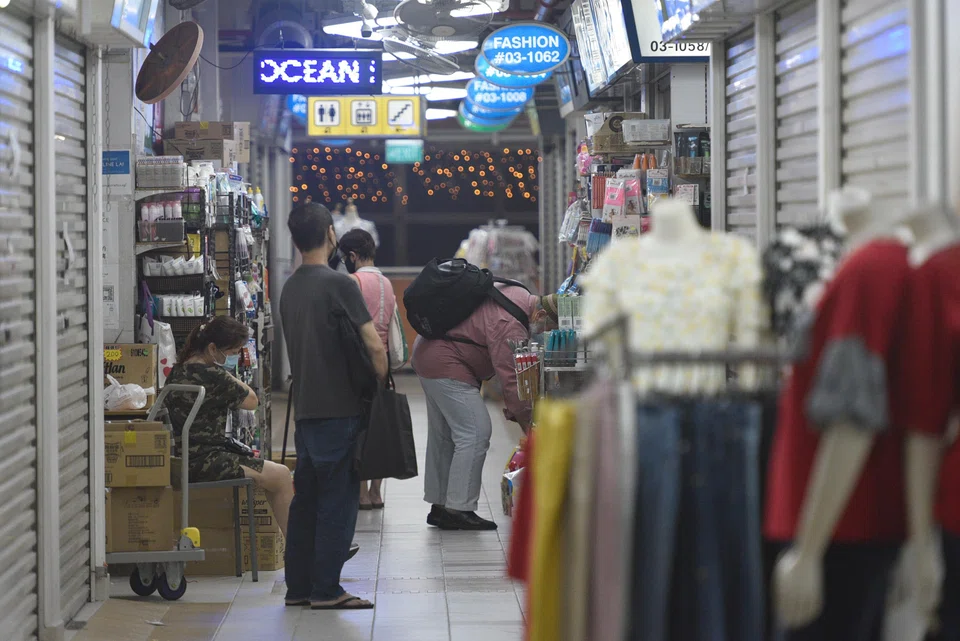
Heartland SMEs, in particular, are most likely to be caught between cost pressures and consumers’ expectations of continued low prices, due to their neighbourhood locations. If such small independent businesses – often mom-and-pop stores or similar family-run outfits – are to survive amid rising costs, their customers need to be more accepting of price increases.
Beyond this, however, there is a more fundamental – if less popular – principle that consumers should accept: price increases are ultimately a business decision.
Granted, large companies with deeper pockets might well be able to absorb rising costs. Some have indeed done so. For instance, supermarket chain FairPrice Group – which explicitly identifies with having a social mission – is absorbing the GST hike for some 500 essential items in the first half of 2024.
But it seems unreasonable to expect all businesses to do the same, particularly if they are driven purely by the profit motive and not a nobler mission.
The decision to raise prices is rarely taken lightly. Rather than seeing businesses as rapacious profiteers, consumers should understand that their pricing decisions reflect certain realities about costs, and predictions about sales.
Of course, consumers remain free to vote with their wallets – and this is likely to prove more effective than moral suasion, when it comes to changing the behaviour of companies.