

Apec and G20 summits in shadow of Trump’s presidential win
The prospect of his new protectionist agenda may give impetus to new non-US trade deals
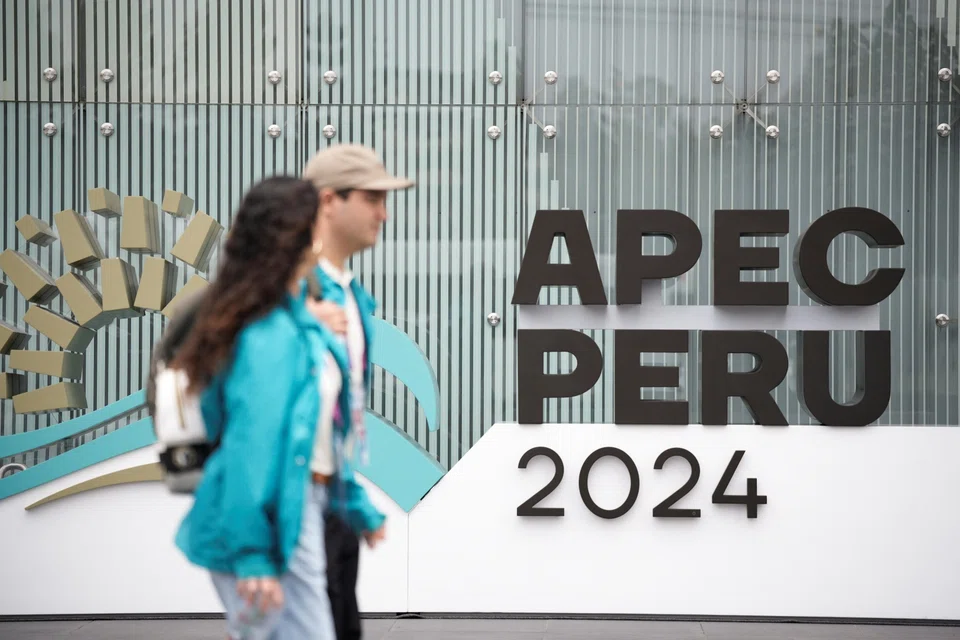
WORLD leaders are making final preparations for the upcoming Apec summit in Peru, and the G20 in Brazil. Yet, the minds and behaviour of many political and business leaders at the summits will be shaped by someone who won’t actually be in the meetings: US President-elect Donald Trump.
Trump’s clear win on Nov 5 has shaken the foundations not just of US politics, but also international relations. His election means that US allies and foes alike are now preparing for his second helping of “America First” which may be much more radical than the first, reshaping the international order into the 2030s.
Take the example of the president-elect’s conversation last Thursday (Nov 7) with Russian President Vladimir Putin. This comes amid much speculation that Trump will try to push through a peace deal with Ukraine after assuming office next year, sending a chill across Kyiv and much of the rest of Europe.
Trump’s plans for huge tariffs could also trigger a trade war with his threats to hit imports from China with an up to 60 per cent levy when he returns to office. A new wave of tariffs could also significantly impact allies in Asia-Pacific such as Japan and Singapore, plus others ranging from Canada, Mexico, to the European Union.
The prospect of Trump’s new protectionist agenda may already be shaping behaviour in giving impetus to new non-US trade deals. For example, the EU is seeking to finalise a huge agreement with the Mercosur bloc in Latin America.
China, which is reportedly bringing 400 business people to this week’s Apec summit, is also planning to sign a new trade deal there with Peru that could boost two-way commerce by at least 50 per cent between the countries. Bilateral trade between the two countries reached nearly US$36 billion last year.
China has large mining and infrastructure projects in the country, including the Chancay mega port. These are a key part of Peru’s portfolio of mining projects totalling around US$54 billion, plus infrastructure projects yet to be developed that amount to around US$157 billion.
The Apec event, which will be attended by leading corporate executives such as JPMorgan Chase CEO and chair Jamie Dimon plus Tik Tok CEO Chew Shou Zi, includes a CEO Summit which has become one of the region’s premier business events. It will bring together well over 1,000 C-level executives, thought leaders and government representatives.
The CEO meeting will compile private sector recommendations for enhancing regional economic exchanges for Apec leaders with the goal of promoting inclusive, sustainable and resilient economic growth. This builds from the meeting of G20 finance ministers who recently asserted “good prospects” for a soft landing for the global economy.
Yet, aside from economic challenges such as rising protectionism, geopolitical fissures are complicating this optimistic outlook. Recent divisions include those over the Ukraine conflict which has split the region with, for instance, the United States, Australia, Canada, Japan, South Korea and New Zealand supporting Kyiv.
The Ukraine issue is far from the only one to fragment the huge Apec club which includes states that collectively account for some 60 per cent of global gross domestic product. Another simmering fissure is that between the United States and China, by far the two most powerful states in the world today, which has strained the consensus-driven approach that previously prevailed at Apec and other regional multilateral fora.
Many US regional allies have longed for the Biden administration to develop over the last four years a comprehensive, well-funded grand strategy to embed US influence, as ex-president Barack Obama had intended with the Comprehensive and Pacific Trans Pacific Partnership (CPTPP) at its heart. Yet, with Trump in 2017 pulling the plug on US participation in CPTPP, and disparaging other institutions such as the World Trade Organization, a vacuum in US influence exists that hasn’t been fully plugged by President Joe Biden.
The only big winner of this may be China which is pushing for momentum for a regional architecture, including the Regional Comprehensive Economic Partnership plus Belt and Road, which would allow it to assume the upper hand. This is damaging US influence not just with local allies, but potentially in regions beyond too.
Such geopolitical divisions, especially since the Ukraine war, are also undermining the effectiveness of the G20 which collectively accounts for some 90 per cent of global GDP, 80 per cent of world trade, and around 66 per cent of global population. Since Russia’s invasion, some G20 members have clashed repeatedly, with Russia’s Foreign Minister Sergei Lavrov walking out of meetings, and there have been less of the usual customary group pictures of the so-called “G20 family” taken.
With Ukraine so divisive, there are potentially huge barriers to constructive discussion taking place in Brazil. This is a headache for President Luiz Inácio Lula da Silva, who is seeking not only to deliver an effective summit, but also use it as a springboard for next year’s COP30 climate event that he will also host.
Other states too have called for consensus at the G20, including India, around key priorities of the Brazilian presidency. These include the fight against hunger and poverty, plus the global governance reform.
On the latter front, Lula’s argument is that the changing global economic power balance, plus also the large number of conflicts across the world at the moment, makes this shift in the multilateral order a necessity. Yet such reform has been discussed for decades and will prove far from easy. While a growing number of countries agree on the case for change, in principle, forging a consensus around specific proposals is hard.
Perhaps the most distinctive element of this year’s agenda is food security. Brazil sees itself as a genuine agri-superpower, including as an international breadbasket for much of the rest of the world, including the Global South it is vying for leadership over alongside others, including China.
Lula is well aware that the G20 is widely seen in the last 15 years to have seized the mantle from the G7 as the premier forum for international economic cooperation and global governance. However, the G20 has failed so far to realise the full scale of the ambition some have thrust upon it. In part, this is because it has no formal mechanisms to ensure enforcement of agreements by world leaders.
Amid the uncertainty, it appears unlikely that the G20, nor Apec, events will exceed expectations. Many world leaders are instead likely to “wait and see” at these summits, on many big issues, awaiting the disruptive arrival of Trump in January.
The writer is an associate at LSE IDEAS at the London School of Economics
TRENDING NOW

Singapore identifies 7 firms responsible for haze fires, notices issued urging action: Grace Fu

Philippine power giant First Gen rebuffs foreign offers, plans up to US$2.6 billion in expansion

DBS remains analysts’ pick ahead of Q3 earnings after Singapore banks’ share slump

Indonesia imposes US$116 million in fines over manipulation of Sinar Mas, Prajogo-linked stocks

