‘Arc of instability’ has red lights flashing in Europe
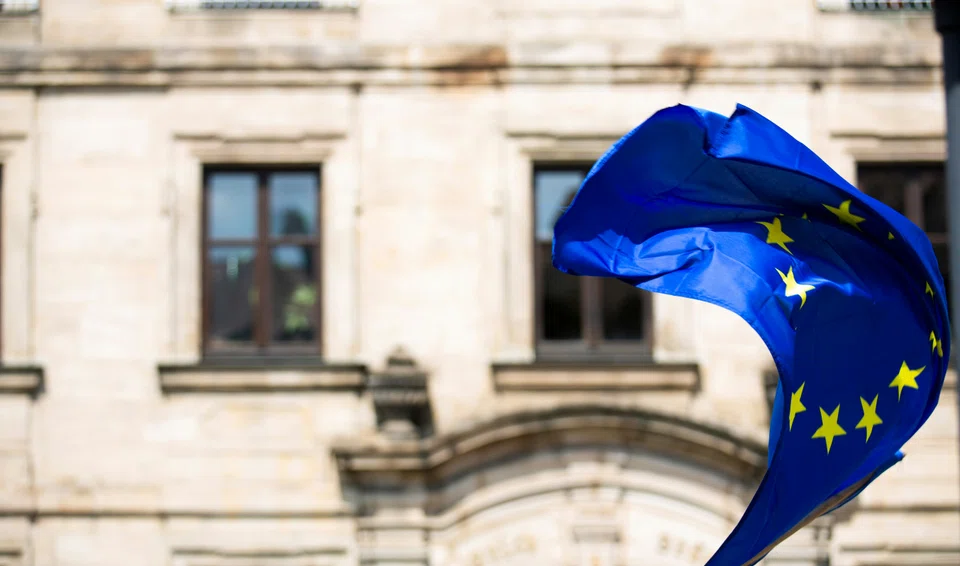
AS THE clock ticks towards June’s big European Parliament elections across the 27 member states, politics in Brussels is becoming increasing domestic-focused. Yet, there has rarely been a time in recent years when so many “red lights” are flashing outside the bloc, in what has been called “an arc of instability”.
That arc term was first used in the 1990s, especially by Australians, to describe a chain of politically unstable nation states in the Asia-Pacific region. However, much more recently it has been used by some US policymakers to highlight instability in a different, broader geography – a spectrum of states from sub-Saharan Africa through North Africa, into the Middle East, East Europe and the Caucasus, plus South and Central Asia, and potentially parts of South-east Asia too.
It is some of this vast geography that will be the key topics of discussion on Thursday (Mar 21) and Friday, at the first summit this spring of the European Union’s 27 presidents and prime ministers. Take the example of growing tensions in the Middle East, where the EU’s chief diplomat Josep Borrell has this week condemned Israel for creating what he said was a “man-made famine” in Gaza.
“Before the war, Gaza was the greatest open air prison. Today it is the greatest open air graveyard,” Borrell said. European leaders, he added, have told Israeli Prime Minister Benjamin Netanyahu they cannot stand by and watch Palestinians starve to death.
In North Africa, meanwhile, Sudan is facing a catastrophic famine that could be only weeks away, aid workers have warned, amid security restrictions and armed violence as the war between the Sudanese Armed Forces and its former security partners, the Rapid Support Forces, continues.
The UN’s World Food Programme says this threatens to trigger “the world’s largest hunger crisis”, with more than 25 million people scattered across Sudan, South Sudan, and Chad “trapped in a spiral” of food insecurity.
The conflict has also uprooted more than eight million people. With two million forced from their homes before the fighting broke out, Sudan already hosts the world’s largest displacement crisis.
There is growing concern in Europe about the possibility of a new migration crisis if the numerous current conflicts in the Middle East and Africa spill over into neighbouring countries. This in a context where multiple European governments are still dealing with the impact of the 2015 migration crisis, which saw around one million Syrian refugees cross from Turkey into Greece alone, according to UN estimates.
Perhaps unsurprisingly, Greek Minister of Migration and Asylum Dimitris Kairidis is one of the politicians to highlight this risk, noting that “if instability spreads… things can become really dangerous”.
He added: “We need to be vigilant, we need to come closer together as Europe. (We need) better guarding of borders, combating criminal networks of smugglers, returns for those who do not get asylum.”
One of the other big concerns for European leaders with the growing proliferation of foreign challenges is that they will distract or undermine the political focus of the West, from what many see as the international super-priority in Ukraine.
In recent weeks, there have been growing Russian advances on the battlefield, and Nato secretary-general Jens Stoltenberg recently said that Kyiv is running out of ammunition in the war and that the allies are not doing enough to help. This comes as a Bill in the US Congress to send further aid to Ukraine continues to stall amid deep partisan debate ahead of elections there in November.
In this context, there is a huge body of work for the EU to still undertake to become a more fit-for-purpose, progressive force in the world today. It was former Belgian prime minister Mark Eyskens who said in 1991 that the bloc was “an economic giant, a political dwarf and a military worm”.
At this week’s summit, therefore, it is no coincidence that EU leaders will discuss security and defence as a pressing priority. There is unanimity within the bloc that Europe needs to increase its defence readiness, and strengthen the EU’s defence technological and industrial base to build resilience and competitiveness.
Earlier this week, European Commission president Charles Michel said that if Europe wants to exist in peace it must shift to a “war economy” mode. He said that this requires significantly bolstering defence capabilities in the face of the threat posed by Russia.
Michel noted that US support can no longer be taken for granted, and that EU countries need to take much more responsibility for their own security as they grapple with the biggest security challenge since 1945. He also condemned a decades-long lack of funding and investment in European militaries and, despite military manufacturing capacity increasing by 50 per cent since the start of Russia’s full-scale invasion, that much more was needed to be done.
Beyond these hugely important security and defence questions, it is clear, too, that the bloc will need a clearer, wider grand strategy in the years ahead. In many plausible scenarios, it is highly likely that Europe will be facing a more challenging geopolitical context.
Several countries in particular will be crucial to shaping how this plays out in a fast-changing multipolar world, including the United States. With respect to that latter, longstanding ally of Europe, greater stability has been infused into the bilateral relationship following Joe Biden’s election to the US presidency. However, Donald Trump, who has called for the EU’s further dismemberment, could well win again in November.
Yet, whether Trump or Biden win, the overall geopolitical context for Europe may worsen significantly in the next half-decade to 2030. This is not just because of Russia, but also wider challenges, including the instability in key countries in neighbouring regions such as Africa and the Middle East.
Taking the example of Africa, for instance, Borrell has admitted that the spate of recent coups in the region are a “big issue for Europe that is opening up a new era of instability in a region which is already very fragile… It’s clear that things haven’t gone well”.
Rich in natural resources, much of Africa has widely been seen as key by many European nations to the goal of diversifying their international supply chains, post-Ukraine.
Taken together, the bloc therefore faces huge challenges. While it is on a trajectory to become a stronger, progressive force in world affairs, it still has a long way still to travel in this direction to fulfil its ambition.
The writer is an associate at LSE IDEAS at the London School of Economics