Are Asia and Europe at ‘Trump tipping points’?
Developments in Greenland and Iran have fed into a wider reassessment of US power in key Asian and European nations
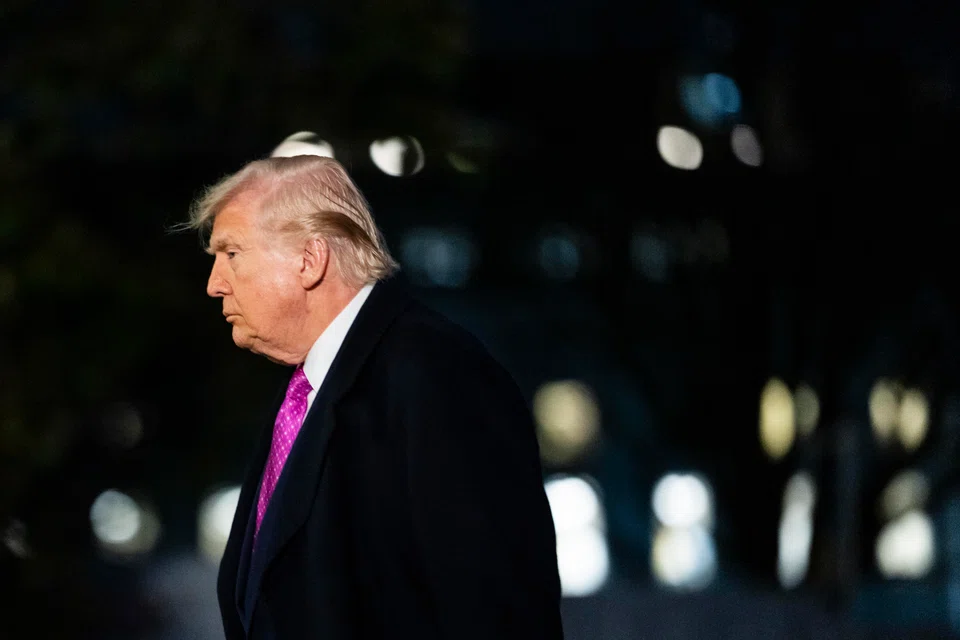
EVEN before the Iran war started in February, and the latest US tariffs were announced, US President Donald Trump’s standing was at a nadir in much of Asia and Europe.
However, key countries in these regions may now be approaching more consequential tipping points in their relationships with the US president, which could shift trade and energy policy, among other key consequences.
From the Middle East to Greenland, Trump’s persistent foreign policy brazenness has sapped the trust of longstanding allies.
In Europe, where this dynamic has come into sharpest focus, there are accelerated shifts towards more strategic autonomy, including defence independence, energy diversification and economic measures to protect against US coercion.
Of course, these dynamics are not new to 2026. In June 2025, the Pew Global Research Project found that perceptions of the US had already nosedived under the second Trump administration compared with the final phase of Joe Biden’s presidency.
In many countries surveyed, there was already a double-digit reduction in the percentage of people with an overall favourable view of the US.
This includes Japan, which saw a fall-off from 70 to 55 per cent; South Korea 77 to 61 per cent; Poland 77 to 55 per cent; Sweden 47 to 19 per cent; Spain 48 to 31 per cent; the Netherlands 48 to 29 per cent; Germany 49 to 33 per cent; and France 46 to 36 per cent.
In Indonesia, the only Asean country surveyed by Pew in summer 2025, some 48 per cent of people had a positive perception of the US. That is exactly equal to the portion of the population in Indonesia with a negative assessment of the US.
The Pew data is far from isolated. In January this year, research from the European Council on Foreign Relations (ECFR) showed significantly more people in several key Asian and European nations perceive the US as a “necessary partner with which we must strategically cooperate” rather than an “ally that shares our interests and values”.
In South Korea, the relevant data is 48 and 41 per cent, respectively; the UK 53 and 25 per cent; the so-called EU10, including France and Germany, 51 and 16 per cent; and Switzerland 42 and 8 per cent. ECFR highlights these numbers have fallen sharpest in Europe, compared with previous years, with lesser declines in much of the rest of the world.
Recent actions of the Trump team have only exacerbated this economic and political concern. The proof points for this include the frustration that is boiling over among leaders such as UK Prime Minister Keir Starmer and German Chancellor Friedrich Merz, who are publicly disagreeing with Trump for the first time in recent weeks.
Allies looking beyond Trump presidency
Much of Europe, and some of Asia too, are therefore preparing much more seriously than they did during Trump’s first term for break points from the US.
These states know that, even if Trump does not seek an unconstitutional third term of office, the Maga (Make America Great Again) movement is likely to continue through Vice-President JD Vance as the 2028 Republican nominee. Vance is widely criticised in Europe, in particular, after his remarkably ill-judged speech at the Munich Security Conference last year.
It was there that he made the extraordinary assertion that Europe’s main security threat comes not from Russia, but from erosion of democratic norms inside the region, including alleged censorship and the suppression of populist voices.
Much of Europe and Asia, including key Asean powers, are therefore hoping for a Democrat victory in the 2028 US presidential election. However, they increasingly view it as essential to prepare for worst-case scenarios.
Since Trump took office again last year, there has been a steady stream of US actions that have challenged longstanding assumptions about shared interests and mutual restraint.
Iran and Greenland
Most recently with Iran, where Trump has pressured key allied countries, including North Atlantic Treaty Organization members plus Japan and South Korea, to contribute more to a war that most of them perceive violating international law – and strategically unwise too. This is yielding a series of US presidential threats and public rebukes that could weaken these traditional alliances further.
This US brazenness is not limited to allies. Trump has also pressured China to assist in reopening the Strait of Hormuz, and has postponed his long-planned trip to Beijing due to the ongoing war.
Tensions with Europe were also apparent in the controversy over Trump’s territorial designs on Greenland, where he appeared to leave open the possibility of military action and threatened key European nations with additional tariffs.
This prompted France, Germany, Italy, Poland, Spain, the UK and Denmark to issue an extraordinary joint statement declaring that “Greenland belongs to its people”. “It is for Denmark and Greenland, and them only, to decide on matters concerning Denmark and Greenland.”
During the Greenland diplomatic debacle earlier this year, the European Union even left open the option of imposing retaliatory tariffs, and also a so-called “trade bazooka”, the Anti-Coercion Instrument (ACI).
This was created in 2023 to deal with the threat posed by China which has been called a “systemic rival” to the EU. The ACI would allow the EU to change customs duties or take other trade-related actions in response to coercion from the US.
These remarkable developments have fed into a wider reassessment of US power in key Asian and European nations, including in the economic domain. For example, Washington and Brussels in 2025 reached a landmark tariff agreement under which the EU committed to purchasing US$750 billion worth of US liquefied natural gas (LNG), oil and nuclear energy.
As transatlantic trust has ebbed, however, EU policymakers have grown increasingly uneasy about the implications, in the words of European energy commissioner Dan Jorgensen, of “replacing dependence on Russian gas with heavy dependence on US supply”.
This assessment is felt especially strongly in Germany, the EU’s largest economy, where LNG imports now derive overwhelmingly from the US. It is no surprise then that Merz has begun actively diversifying Germany’s supply with outreach to Qatar and the United Arab Emirates.
Of course, Washington has pushed back strongly against the charge that US energy could be weaponised. US Energy Secretary Chris Wright, for instance, asserted: “Commissioner Jorgenson’s comments are rather unfortunate. The US is a rock-solid supplier of energy. You can’t have a better partner.”
He also argued that US energy exports have been increasingly central to Europe’s security since Russia’s invasion of Ukraine in 2022.
Nonetheless, there is growing economic and political concern in much of Europe and Asia, including key US allies in Asean.
For many in these regions, ongoing developments have showcased a unilateralist Trump team that is willing to pressure allies when convenient, as now over Iran.
The result is a growing urgency in Asian and European debates about how to rebalance relations in an era of ever more volatile US behaviour.
The writer is an associate at LSE Ideas at the London School of Economics