Are we in an AI bubble?

The perspective of an investor and former telecom analyst who witnessed the bursting of the tech bubble in the late 1990s
Summarise
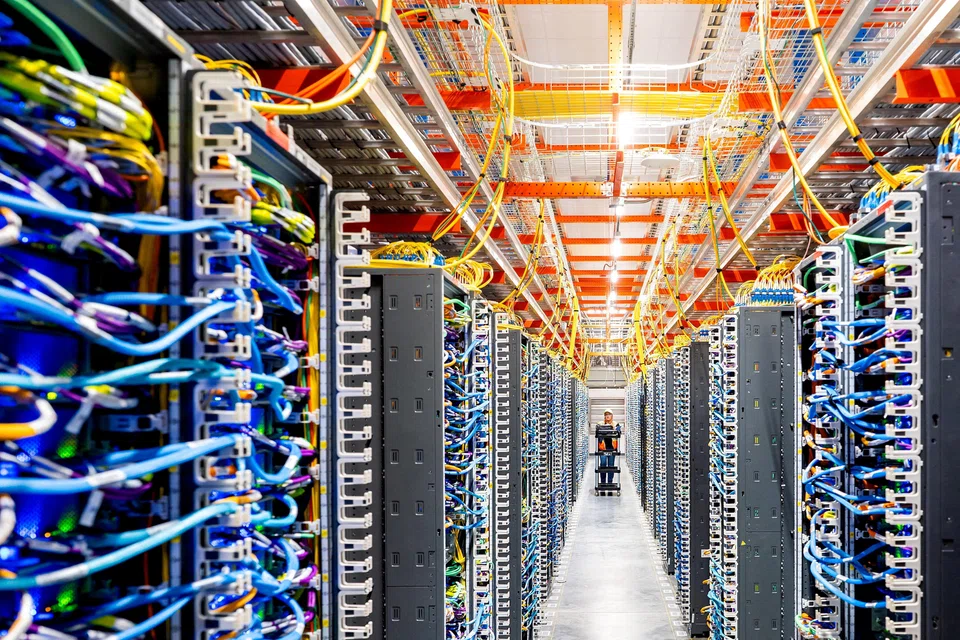
    • An Amazon Web Services AI data centre in the US. As long as companies such as Amazon see AI spending as existential, they will continue to invest, and that will continue to fuel the boom in artificial intelligence, says the writer.
    • An Amazon Web Services AI data centre in the US. As long as companies such as Amazon see AI spending as existential, they will continue to invest, and that will continue to fuel the boom in artificial intelligence, says the writer. PHOTO: REUTERS
    Published Sat, Dec 13, 2025 · 07:00 AM

    RECENTLY, there has been a large volume of media coverage on whether investor enthusiasm for artificial intelligence (AI) is driving the market towards an “AI bubble”.

    Having witnessed the bursting of the tech bubble in the late 1990s, I believe lessons from that experience are applicable to the current environment.

    The key question today is whether the appropriate analogy is the year 2000, which would imply that we are in a bubble that is about to burst; or 1998, which would imply the major inflection point has yet to be reached and the market may have more room to run.


    While it is difficult to assess bubbles with foresight, I believe we are closer to 1998 than 2000. As some may remember, 1998 was the year that Global Crossing – the defining company of the fibre-build era and one of the linchpin stocks of the late-90s bubble – went public at US$19 per share. Nine months later, it was trading at US$64.

    WorldCom, a US telecom giant at the time, famously reported then that Internet traffic was doubling every 90 days. Of course, both companies later went bankrupt, but not before staging a spectacular run. From the time Global Crossing went public on Aug 14, 1998, until the market peaked on Mar 10, 2000, the tech-heavy Nasdaq-100 index rose more than 245 per cent.

    Sitting out that period was very painful for experienced portfolio managers who were sceptical about the growing bubble as they were left behind in the market rally. They were ultimately vindicated in 2000 and beyond, but the journey was unpleasant.

    Will history repeat itself?

    I think there is a substantial probability that we will see a bubble at some point down the road, followed by a potentially gut-wrenching correction. But I do not think we are there yet.

    Today, we have a much more robust set of companies making AI-related investments. The giant hyperscalers – the providers of Internet and cloud platforms, such as Amazon, Microsoft and Alphabet – can support their massive capital expenditure far better than the telecom upstarts of the late 90s.

    Some economists say that the AI-related spending, which includes purchasing advanced chips and building huge data centres, has helped to keep the US economy out of a recession this year.

    By some estimates, the AI spending cycle is so large that it accounts for roughly 7 per cent of US gross domestic product – or more than US$2 trillion.

    The Big Tech incumbents see this enormous spending as necessary, to avoid being disrupted by the younger, upstart AI companies. I believe that as long as companies such as Amazon, Microsoft and Alphabet see such spending as existential, they will continue to invest, and that will continue to fuel the AI boom.

    Missing piece: the pending IPO boom

    Another significant difference today is that we have not seen the leading company of this era, OpenAI, go public as yet.

    OpenAI launched the latest round of enthusiasm in November 2022 with the unveiling of ChatGPT, an AI-powered chatbot that quickly became the most downloaded app in history at the time. Other innovative startups – including Anthropic, Cohere, Mistral AI and xAI – remain private as well, for now.

    We have not had our “Global Crossing moment” yet, but I believe it is just a matter of time before these startups enter the next stage of their growth through the initial public offering (IPO) process.

    One of the elements that inflated and sustained the 90s tech bubble was accelerating revenue growth, with promises of profitability later. These pre-IPO companies are the modern-day equivalent. When they go public and investors get a more detailed glimpse into their financials, high growth rates are likely to be rewarded by the market.

    In addition, it is worth noting that the US Federal Reserve is currently engaged in a rate-cutting cycle. Loose monetary policy can provide a tailwind for highly valued technology stocks. In 1998, Fed officials started slashing interest rates very aggressively after the collapse of hedge fund Long-Term Capital Management. They maintained low rates amid widespread fears over the Y2K bug.

    Today, one could argue that tariffs and a weakening labour market are the equivalent concerns prompting the Fed to take action. In any case, then as now, there is a great deal of liquidity in the system, and that tends to fuel the animal spirits of investors.

    What if the AI bubble is about to burst?

    Another lesson that I have learnt from three decades of investing is that the market will humble you at times.

    It is entirely possible that I am wrong about the scope and timing of an AI bubble. In my portfolios, I am investing like we are somewhere in 1998 or 1999, with the intent of fully participating in the powerful AI trends as they continue to unfold among these dynamic, growth-oriented companies.

    However, I am also playing defence, seeking to add some degree of balance to my portfolios.

    In that light, I am actively looking for companies that may be out of favour today, but could do relatively well if the AI bubble pops. Energy and cable companies fall into this category. Both of these sectors are trading near historically low valuations. And both contain select companies with decent earnings, valuable long-term assets and the potential for upside surprises.

    The energy sector, for example, makes up about 2.8 per cent of the S&P 500 index today. This is only slightly higher than what it was during the depths of the Covid-19 crisis, when oil prices briefly fell below zero. This area of the market has, in effect, been left for dead, and that suggests that the level of pessimism may have gone too far.

    Similarly, with the rapid decline of cable television, cable stocks have been unloved for a long time. But for investors willing to sift through the sector, there may be some overlooked gems with growing businesses and healthy cash flows trading at very low multiples. Investors do not get many opportunities to invest in growing businesses at six times earnings.

    Examples of companies that illustrate this theme are energy companies such as Halliburton and Cenovus Energy, along with cable companies like Comcast and Charter Communications. If we see a fundamental shift in market leadership down the road, I can envision a time when the energy and cable sectors will reassert themselves and potentially trade at much higher valuations.

    I am not ringing any alarm bells, but this is how I am hedging against AI-related risk in my portfolios.

    Looking ahead for bubble trouble

    This commentary is not intended to suggest I doubt the rapid advancements in AI and the potential it has to be an incredibly transformative technology. I am not an AI sceptic. I believe it will change the world, just like the Internet changed the world. AI will set the stage for the creation of new, innovative and disruptive companies, the same way the Internet paved the way for Amazon, Alphabet, Meta and Netflix.

    But I also think it is important to assess where we are along the path of AI adoption and investor enthusiasm, when there is very real possibility that there will be trouble ahead. If we are on the way to bubble territory, then it really matters where we are on that timeline.

    Looking at the history of the late-90s tech bubble, one may reach the same conclusion as me: that it is probably too early to let the risk of bubble trouble overcome the compelling opportunities presented by this powerful new technology.

    The writer is an equity portfolio manager at Capital Group