

Are we on course to become a Little Brother society?
Trust in our peers could be the casualty as surveillance technology becomes smaller, smarter and cheaper
A QUARTER of a century ago, a public debate raged over closed-circuit television (CCTV) cameras. Did they actually reduce crime? Would they usher in a Big Brother society? Meanwhile, some deep thinkers were looking further ahead: What would happen when this sort of technology became much smaller, cheaper and more widely available?
In his 1998 book The Transparent Society, the writer David Brin argued that the technology could not be stopped, but it could provide citizens with “flashlights of our own” to examine the powerful. A few years later, academic Steve Mann coined the term “sousveillance” (from the French word for “below”) to represent the idea that ordinary people could provide a counterbalance to growing surveillance by providing “watchful vigilance from underneath”.
Were they right? It is certainly possible to see sousveillance in action in 2025. The fact that almost everyone now has a camera phone has enabled the exposure of some acts of police brutality, for example.
Data protection laws such as the European Union’s General Data Protection Regulation have made it possible for gig workers to obtain copies of their data from platforms such as Uber, in an attempt to understand how the companies’ opaque algorithms determine their pay. A recent trend on TikTok involved young people surreptitiously recording meetings in which they were laid off by their employers.
But sporadic acts of sousveillance have not proved to be much of a check on the spread of surveillance. To take the workplace as one example: an Organisation for Economic Co-operation and Development survey of more than 6,000 companies across six countries published this year found that software is now used to monitor working time by 88 per cent of US companies, 44 per cent of European companies and 19 per cent of Japanese companies.
It is used to monitor the completion of work activities by 86, 40 and 18 per cent respectively of US, European and Japanese companies. This is in spite of the fact there is no evidence to suggest that electronic performance monitoring of employees improves performance, according to one meta-analysis.
Nor does the ability to “watch the watchers” seem to have done much to improve trust in powerful institutions: Edelman’s latest Trust Barometer, which surveys people across 28 countries, found a rising proportion of people thought that business leaders, political leaders and journalists purposely misled people.
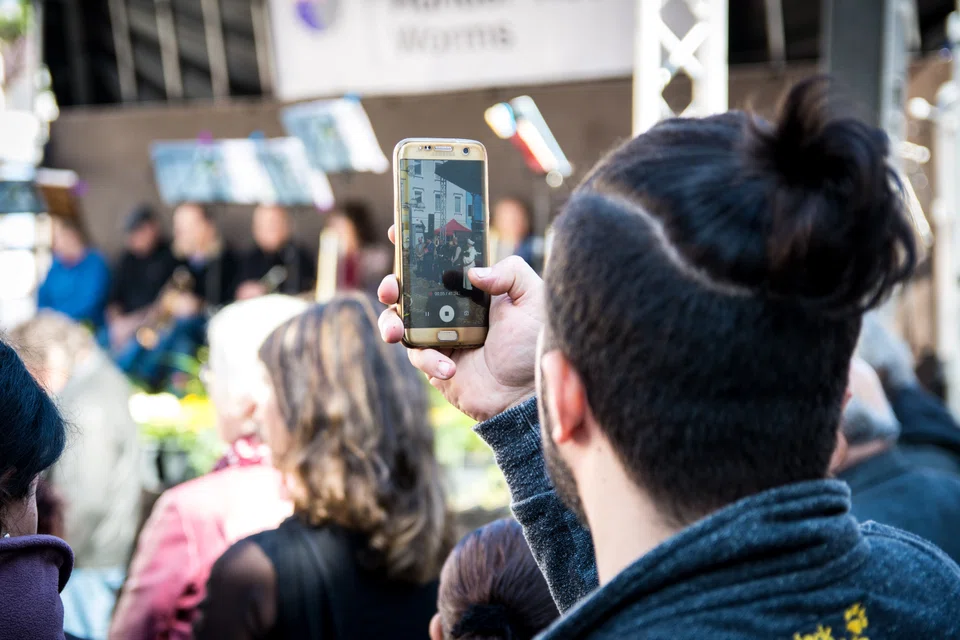
Indeed, the most striking trend in recent years has not been sousveillance of the powerful, but what – for want of a better word – I am going to call “peerveillance”. With the help of gadgets and subscriptions from technology companies, we are increasingly turning our gaze on each other, whether through cameras on our cycle helmets or our rapid adoption of camera doorbells such as Amazon’s Ring devices.
The next step might be smart glasses such as the Meta Ray-Ban Display, which Meta unveiled last week. The ordinary-looking glasses can do some handy things, such as overlaying an arrow onto your vision so you don’t have to keep looking down at your phone for directions. But they can also take photos and record videos, and some fear that at some point, facial recognition technology could be added to them, too, so users could know in real time who they were looking at.
It would be dangerously fatalistic to simply shrug because privacy is “already dead”. There is a qualitative difference between the ability of people to film you or your children with a phone or doorbell, which are highly visible, versus their ability to do it undetected (unless you see the small “recording” light on the glasses), let alone to apply facial recognition.
The potential benefits – perhaps a user could be spared embarrassment when they bumped into someone whose name they had forgotten – seem entirely outweighed by the obvious risks of this technology in the hands of creeps and stalkers.
Of course, most people aren’t creeps or stalkers, but once the tech is out there, it could have a chilling effect on how people feel and behave in public spaces. It might make them more wary of interactions with strangers, or even tempted to cover their faces.
That would be a serious loss, because while trust in institutions is in decline in many places, measures of social trust have actually held firm in a number of countries up to now. According to the World Values Survey, the share of people who say they trust someone they meet for the first time has remained steady over the past 15 years in Canada, Australia and the US, and improved slightly in Britain and Germany.
The fear of Big Brother has been bad enough. The last thing we need now is to fear a bunch of Little Brothers, too.






