



Asean assumes greater focus from foreign powers
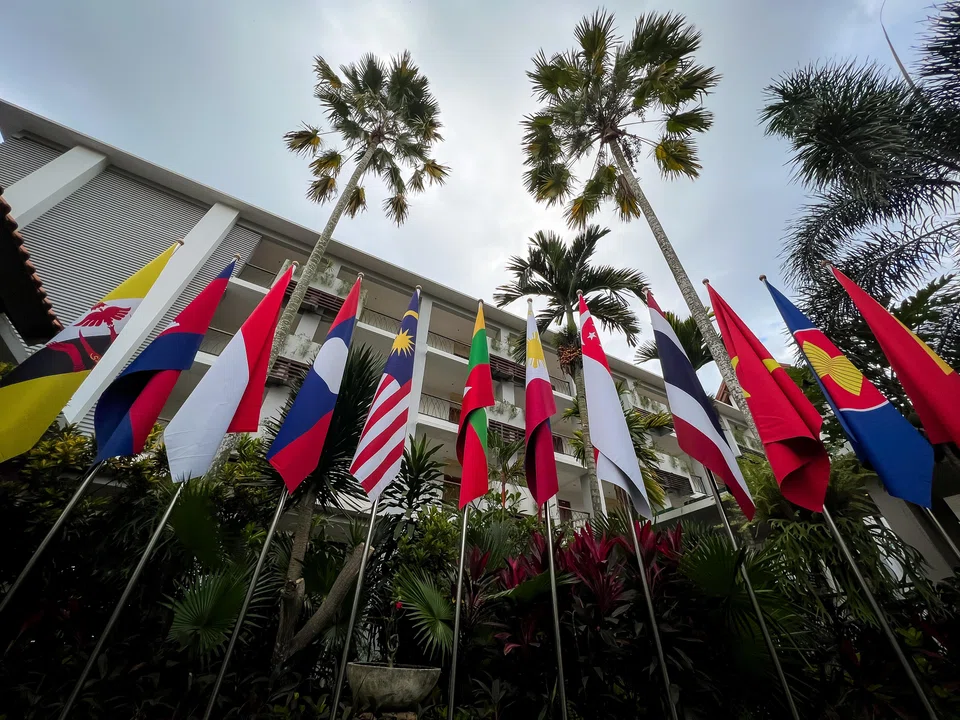
SEPTEMBER’S global diplomacy will be dominated by the Group of 20 summit in India on the weekend of Sep 9-10. Yet below that international radar screen is the East Asia and Asean summits a few days earlier in Indonesia which are key too.
While the Asean and East Asia summits in Jakarta events are of a lower profile than the G20, the Asean nations are fast becoming a key target of diplomacy for foreign countries outside of Asia-Pacific, including those in North America, Europe and the Middle East. Little wonder perhaps in today’s frenzied geopolitics when South-east Asia has a population of over 600 million covering an area of 1.7 million square miles.
Asean also has a purchasing power parity and gross domestic product of over US$10 trillion that is growing significantly.
International interest in the area is shown by the fact that the United Nations Conference on Trade and Development tabled Asean’s foreign direct investment (FDI) inflow for 2022 as having grown by 5 per cent year on year in 2022 to a total of US$224 billion, a record high and bucking the trend in various parts of the world amid the 12 per cent overall decline of global FDI in the same year.
Of course, Asean has regularly engaged other countries in the Asia-Pacific and beyond previously. It is a major partner of international bodies such as the United Nations, Gulf Cooperation States (GCC) and Mercosur, and maintains a global network of alliances and dialogue partners.
However, the attention of foreign suitors outside Asia-Pacific is growing fast including, inevitably, the United States which has attended the East Asia summits since 2011. At the upcoming summits in Indonesia, US vice-president Kamala Harris will attend, building from last year’s US-Asean summit in Cambodia that President Joe Biden participated in.
It was at the latter event that the Asean leaders elevated US-Asean relations to a comprehensive strategic partnership. This underlines how the Biden administration has overseen a huge expansion in US-Asean ties, including the launch of five new high-level dialogue processes on health, transportation, women’s empowerment, environment and climate, and energy, as well as elevated engagement in existing dialogue tracks on foreign affairs, economics and defence.
Other ways that the US is stepping up its diplomatic profile is by providing significant monetary assistance (US$860 million in 2022 alone) through the State Department and US Agency for International Development to Asean. This assistance is supporting joint forums in areas such as climate ambition and clean energy transition, access to education, strengthened health systems, security modernisation efforts, rule of law and human rights.
Outside of North America, the European Union (EU) last year held its first ever summit with Asean. Collectively, the two mega regions have a combined population of well over 1 billion and their future engagement is underpinned by the EU and Asean Plan of Action for 2023 to 2027.
The EU and Asean have been dialogue partners since 1977, and following a EU-Asean ministerial meeting in 2020, opened a new chapter by becoming strategic partners.
This has seen the bilateral relationship flourish across three main platforms: political and security cooperation; economic collaboration; and socio-cultural cooperation which includes higher education, health, disaster management and preparedness, biodiversity protection and the effective management of protected areas, sustainable urbanisation, and sustainable agriculture.
Take the example of trade and investment relations which have grown considerably during the last decade. The EU is Asean’s third largest trading partner, accounting for over 10 per cent of Asean trade. Meanwhile Asean is the EU’s third largest trading partner outside Europe. The EU is also the biggest investor in Asean countries.
Underpinning this economic engagement, the EU has also become a major development cooperation partner of Asean, and is actively engaged in expanding confidence building and preventive diplomacy in the region. It has also supported countries in the region in their fight against the pandemic with hundreds of millions of dollars in grants and loans.
While states across Europe, including the UK, have ramped up engagement with Asean partners in recent years, it is the 27-member EU at the vanguard of this. The Brussels-based club is keen with Asean to bolster regional stability, security, prosperity and sustainable development, at a time of rising challenges and tensions, in a bid to uphold democracy, human rights, the rule of law and respect for international law.
Moving to the dynamic Middle East regions, nations including Saudi Arabia and the United Arab Emirates (UAE) are also engaging Asean nations more too. Take the example of the UAE which last year signed Asean’s Treaty of Amity and Cooperation in South-east Asia, and obtained sectoral dialogue partner status, paving the way for enhanced trade and investment cooperation and laying the groundwork for strategic partnerships in pursuit of mutual and regional prosperity.
The UAE has said the country is constructing a “corridor of opportunity” between the GCC states and South-east Asia. A key part of this is fast-tracking negotiations on comprehensive economic partnership agreements with South-east Asian states to maintain the UAE’s status as a leading trading partner in the Middle East.
Inevitably, in this hugely competitive context, other Asia powers are doubling down on their own engagement with Asean. While China is often singled out here, others too – including G20 host India – are ramping up their diplomacy.
Indian Prime Minister Narendra Modi, for instance, is now considering changing his plans so he can fly to Indonesia for a short visit on Sep 6, and return to India the next day just before the G20 summit that he is hosting. Earlier, New Delhi officials had said his schedule was making it difficult for him to attend the meetings in Jakarta as he needs to return in time for the arrival of leaders for the G20.
Any Modi visit to Indonesia in September will re-affirm India’s ties with Asean soon after the 30th anniversary of Asean-India Dialogue Relations, where ties were raised to a comprehensive strategic partnership. Modi also hopes to review plans for a potential free trade agreement.
These examples showcase how foreign powers are gearing up for engaging Asean ever more closely. The massive region is a growing priority for non-Asia Pacific powers as they try to steal a competitive march on other big players in the region, such as China and India, to try to drive economic and political advantage in the mid-2020s and beyond.
Andrew Hammond is an associate at LSE IDEAS at the London School of Economics
TRENDING NOW

OCBC mobile, online banking services restored after Friday afternoon disruption

SGX CEO Loh Boon Chye to step down; succession planning under way

Waymo founder predicts ‘landslide’ robotaxi adoption in Singapore, driven by high car costs

Vietnam’s northern provinces, not Hanoi or Ho Chi Minh City, are powering near 10% GDP growth

