Asean could be hard hit by intensifying Iran crisis as G7 broods

Vietnam and Indonesia may be among the most vulnerable
Summarise
    • Some traders forecast that key Asian countries, including those in Asean, might face physical shortages of gasoil around a month before Europe does.
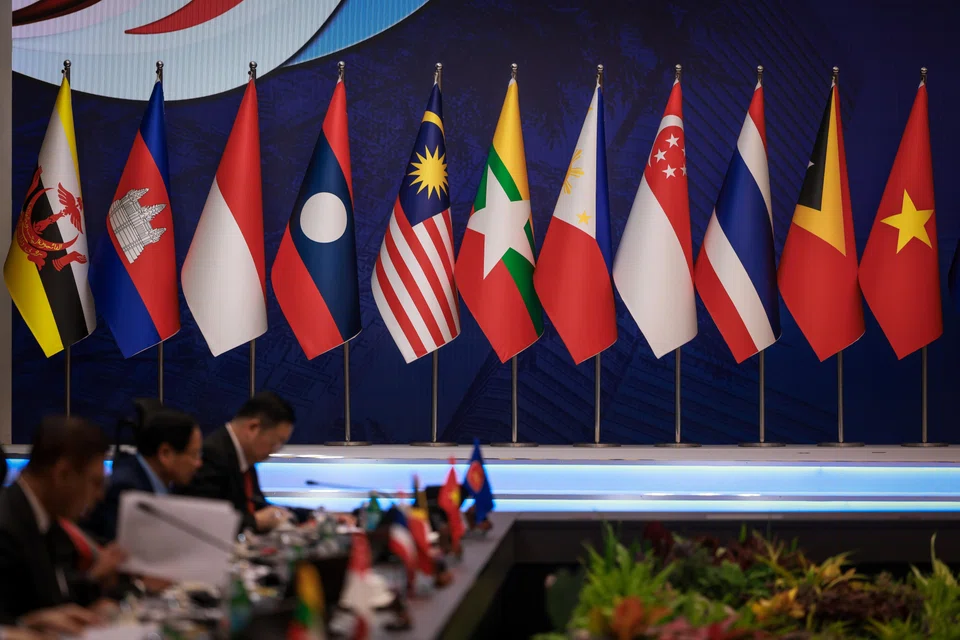
    • Some traders forecast that key Asian countries, including those in Asean, might face physical shortages of gasoil around a month before Europe does. PHOTO: BT FILE
    Published Thu, May 21, 2026 · 12:44 PM

    WHEN the Iran war began on Feb 28, many market participants expected the conflict to last only days. However, the crisis is now approaching three months since its onset, with growing warnings about the intensifying energy and wider economic fallout, especially for Asia.

    With the Strait of Hormuz still largely closed, a new phase of the economic challenge may soon begin. JPMorgan asserts that as soon as early June, global oil stocks could hit operational stress levels with inventories of around 7.6 billion barrels, whereby supply chains face extreme strain and wider refined product rationing begins.

    This would be a key pivot point, as price volatility would probably rise significantly. Moreover, the margins for error would fall dramatically in terms of supply chain management.


    If inventories drop by September, as potentially forecast, to a minimum operational floor of about 6.8 billion barrels, the global economy would begin running out of usable oil reserves, forcing rationing much more across the board.

    Below this level, challenges would grow exponentially for refineries to operationally function, as pipelines would not be able to maintain pressure, with physical infrastructure failing.

    This has parallels with the gas market too. If gas storage tanks in Europe, for instance, fall below 10 per cent, lower pressure makes it harder for remaining gas to be extracted from tanks.

    While the world has faced other major energy crises in the past, including the 1970s shock from the Middle East, these two critical levels – operational stress levels and operational floors – have not been simultaneously confronted by the oil sector before.

    So this is technically uncharted territory for the world economy, where there is no previous playbook for market participants to look to.

    In March, the International Energy Agency (IEA) coordinated the release of 400 million barrels of oil to mitigate reductions in cargo, although the US has so far only released about 80 million barrels of the 172 million promised at that time.

    Little wonder that some Group of Seven (G7) leaders, including Japanese Prime Minister Sanae Takaichi, are therefore asking the IEA for an additional coordinated release of oil stockpiles. This follows warnings last week of further price spikes, as oil stocks deplete at the fastest-ever rate.

    Asean and wider Asian impact could be key

    It is no coincidence that some Asian leaders are most vocal on this topic.

    Key points of vulnerability are in high energy importers in the region, such as Indonesia and Vietnam in Asean, where inventories could hit critical levels faster than elsewhere.

    Some traders, for instance, forecast that key Asian countries, including those in Asean, might face physical shortages of gasoil around a month before Europe does. It is reported that shortages of liquified petroleum gas supplies are hitting India already.

    However, Asean and wider Asia are not uniformly vulnerable to these potential energy and wider economic worst-case scenarios. For instance, Singapore fuel storage facilities have been above seasonal averages.

    Unsurprisingly, these issues dominated the G7 meeting on Monday (May 18) and Tuesday, where G7 finance ministers and central bank governors were joined by officials from India, Brazil, Kenya, Qatar, the United Arab Emirates, Syria and Ukraine.

    Greek Finance Minister and Eurogroup President Kyriakos Pierrakakis stressed the vital importance of Hormuz being fully reopened as soon as possible.

    Yet, despite growing global unanimity that a resolution is required, the G7’s actual leverage to secure this outcome remains highly constrained. This was illustrated by the lack of progress US President Donald Trump made on this agenda in China last week with Chinese President Xi Jinping.

    The G7 club, comprising Canada, France, Germany, Italy, Japan, the UK and the US, now accounts for only 30 per cent of global gross domestic product by purchasing power parity. This is down from 68 per cent in 1992.

    Aside from the energy dimension of the crisis, the International Monetary Fund and the World Bank flagged again this week that they have been asked to expand their support for countries impacted by a growing food problem with inflation in fertiliser and food prices.

    French Finance Minister Roland Lescure said on Tuesday: “If we do nothing, 50 million people could very soon be affected by a food crisis. We must act now.”

    With growth in much of the global economy already beginning to slow, long-term borrowing costs in several G7 economies have grown, as investors worry about rising inflation caused by tight energy supplies.

    On Tuesday, the yields on the 30-year US Treasury bond jumped to the highest since 2007. Meanwhile, yields on 30-year UK government bonds have been reaching record highs since the late 1990s due to a mix of domestic political instability and concerns over rising inflation.

    With economic shockwaves from the Iran conflict growing and diplomatic options stalled, France is exploring the possibility of a bigger crisis management role for the G7 in the Middle East.

    This includes a possible French and UK-led post-conflict mission to try to ensure that Hormuz remains open for shipping. The initiative, the details of which are yet to be finalised, would involve potentially more than 40 other nations.

    Taken together, there is growing G7 concern that the Iran crisis is entering a dangerous new phase. Emergency measures are increasingly likely to be considered if Hormuz is still closed in around a month’s time in mid-June, when world leaders assemble in France for the club’s leadership summit.

    The writer is an associate at LSE IDEAS at the London School of Economics