

Asean-EU summit: Forging a strategic front amid Middle East turmoil
As geopolitical volatility reshapes the global order, leaders from both blocs stressed that the security of their regions is ‘more interlinked than ever’
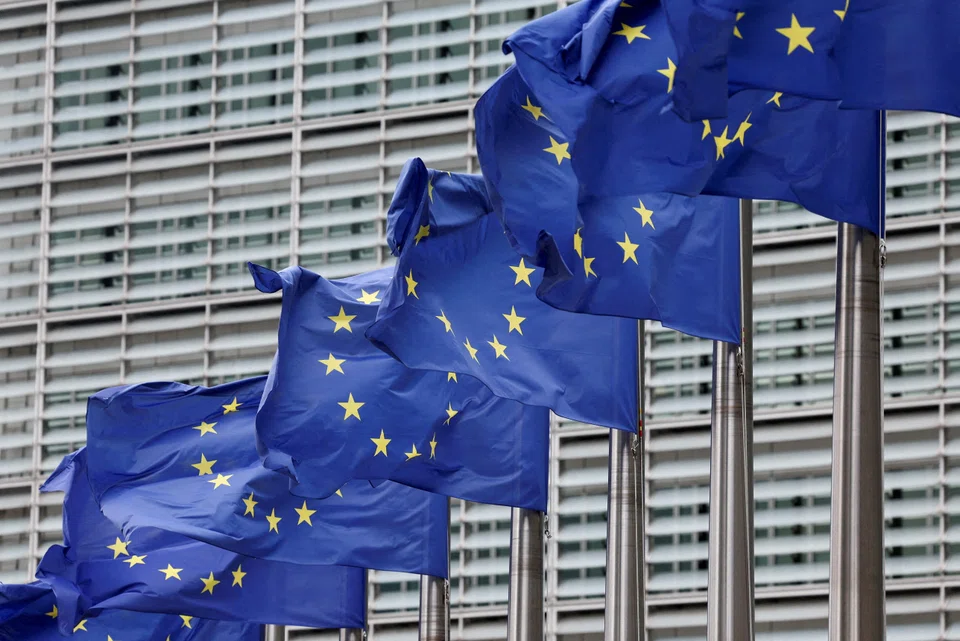
THOUSANDS of kilometres separate the European Union and Asean, yet the two have a growing amount in common, not least as two of the largest blocs of nations in the world. Collectively, the two mega regions have a population of well over one billion and their future engagement is underpinned by the ambitious EU-Asean Plan of Action 2023-2027.
The warmth of the relationship was evident at the 25th Asean-EU Ministerial Meeting on Apr 27 and 28 in Brunei Darussalam. High-level discussions were held under the strategic partnership that the two powers now enjoy, culminating in a 15-page joint ministerial statement issued.
The EU and Asean have been dialogue partners since 1977, advocating for shared values and principles for a rules-based international order, sustainable multilateralism as well as open and fair economic relations.
This agenda has perhaps never been more important than now, in the shadow of not only the Iran war, but also wider tensions between China and the US. The April summit comes less than a month before US President Donald Trump is scheduled to meet with his Chinese counterpart Xi Jinping in Beijing from May 14 to 15.
In this context, both the EU and Asean are keen to double down on their trade and investment ties, which have grown considerably over the last three decades. Today, the EU is the third largest trading partner for Asean, accounting for 372.7 billion euros (S$556.4 billion) of foreign direct investment stocks into Asean in 2023.
Key successes to bolster trade and investment in recent years include the 2021 Asean-EU Comprehensive Air Transport Agreement, the world’s first bloc-to-bloc deal.
Under the agreement, Asean and EU airlines enjoy expanded opportunities to fly passenger and cargo services between and beyond both regions, rejuvenating air connectivity following the Covid-19 pandemic.
Going forward, the blocs are continuing to explore a regional free trade agreement, as has been highlighted previously by key officials including former Malaysian trade minister Mustapa Mohamed and former EU trade commissioner Cecilia Malmstrom.
This is an especially important agenda item for Brussels in the aftermath of the Ukraine war and the unfolding Trump tariff agenda, the latter of which is also affecting Asean.
Beyond an Asean-EU deal, there is also momentum behind a potential accord between the EU and the Comprehensive and Progressive Agreement for Trans-Pacific Partnership (CPTPP) bloc. Singapore Minister for Foreign Affairs Vivian Balakrishnan continues to lead a push for what he hopes might be an “ambitious” eventual EU-CPTPP accord.
Middle East crisis backdrop
The immediate backdrop for last week’s summit is the economic and geopolitical turmoil from the ongoing Iran war. Despite the ceasefire, the critical Strait of Hormuz waterway, which had long borne passage to around a quarter of global oil maritime trade, continues to be largely blocked following the start of US-Israel strikes on Iran on Feb 28.
There are key areas of EU-Asean agreement, including the need for a speedy, full reopening of Hormuz. Erywan Yusof, Brunei Darussalam’s second minister of foreign affairs and country coordinator of Asean-EU Dialogue Relations, who co-chaired last week’s big event, spoke for all fellow officials when he declared that the “conflict and rising tensions are disrupting supply chains and destabilising energy markets”.
Yet, one emerging area of potential disagreement concerns Russia energy. The EU has urged Asean to stay away from Russian crude oil as the bloc works out how best to ensure energy supply in the aftermath of the Iran crisis.
Since the war began, Moscow has agreed to supply crude and liquefied petroleum gas to Indonesia, and other Asean powers may look toward Russia too. The recent Jakarta deal was done during Indonesian President Prabowo Subianto’s trip to Moscow with his younger brother Hashim Djojohadikusumo, asserting that Jakarta will buy some 150 million barrels of oil.
Kaja Kallas, EU high representative for foreign affairs and security policy and vice-president of the European Commission, who co-chaired last week’s summit, warned Asean that Russia will probably use the oil revenue to help fund the Ukraine war.
In the energy sector, the EU has some limited leverage with Asean having helped link key electricity networks across South-east Asia. Brussels has also funded key energy transition projects in the region, including Indonesia’s switch from coal.
Next steps with strategic partnership
Since the EU and Asean elevated ties to a strategic partnership in 2020, bilateral collaboration has flourished beyond the economic sphere. There has also been significant cooperation in security, higher education, health, disaster preparedness, biodiversity protection as well as sustainable urbanisation and agriculture.
For instance, the EU has also become a major development partner for Asean, actively engaged in expanding preventive diplomacy in the region. It also supported countries in the region with over 800 million euros in grants and loans during the pandemic recovery.
Moreover, free and open maritime supply routes in full compliance with international law are key. The EU intends to work more closely with partners on maritime security and defence, malicious cyber activities, terrorism, and organised crime.
One of Europe’s goals of engagement with Asean, and indeed the Asia-Pacific region more generally, is to build economic competitive advantage relative to other world powers, including the US. While states across Europe, including the UK, have ramped up engagement with Asia-Pacific partners in recent years, it is the 27-member EU leading this effort.
This is shown in the EU’s Indo-Pacific strategy, with Asean at its heart, to reinforce strategic focus, presence and actions in this region of prime strategic importance. The strategy is pushed strongly by European nations such as Germany, France and the Netherlands, which all want to see stronger economic and investment collaboration, building on EU trade agreements with Singapore and Vietnam in 2019, and Indonesia in 2026.
German investment has been especially pronounced in Asean markets such as Malaysia and Singapore. Meanwhile, the Dutch and French have a significant economic footprint across the region too, one reason why French President Emmanuel Macron visited South-east Asia again last year.
The EU strategy seeks to embed a framework for political and economic cooperation based on mutual respect and equality. The aim is to bolster regional stability, security, prosperity and sustainable development, at a time of rising challenges, upholding democracy, human rights and the rule of law; maintaining an open and fair environment for trade and investment; enhancing regional resilience; tackling climate change; and supporting connectivity with Europe.
Last week’s summit underlines why the EU sees such a big opportunity in Asean, despite potential friction over Russia energy. South-east Asia is a growing priority for the EU as it tries to drive economic and political advantage following the Ukraine war and the uncertainty of the Trump era.
The writer is an associate at LSE IDEAS at the London School of Economics
TRENDING NOW

Britain’s mansion tax shows the difficulty of targeting wealth

Once staunchly pro-China, Malaysian Chinese businesses are now distancing themselves from Beijing

The only common thing in S-E Asia is that we all eat rice: Cisco’s Asean president
Singapore data centre operator DayOne opts for US IPO at likely US$20 billion valuation

