

Asean increasingly pulled in opposite directions
Pursuing trade talks with the US will likely prove difficult while China appears to be pulling all stops to strengthen ties with the region
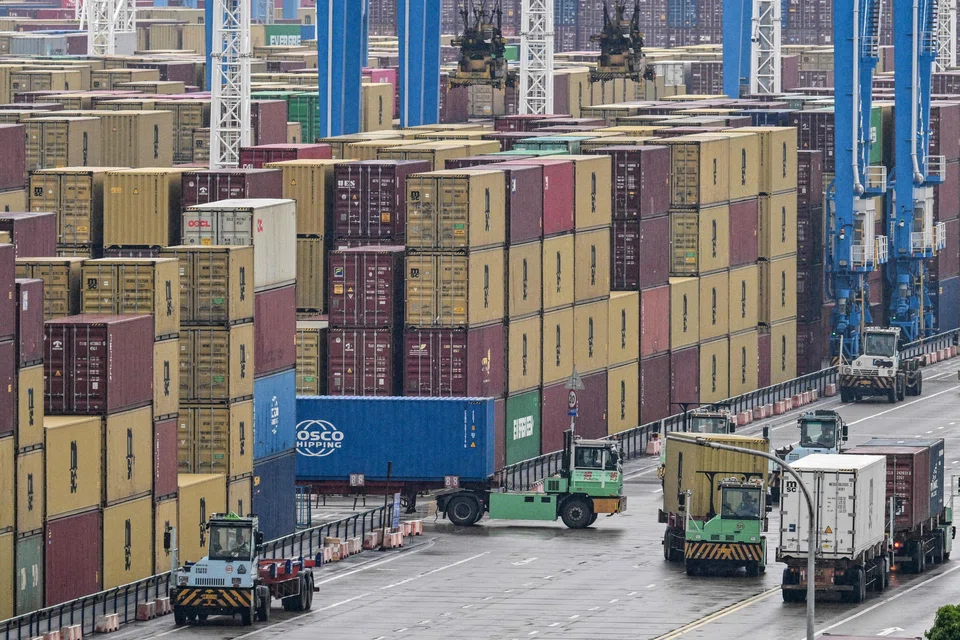
ALL eyes are on US trade talks, but for the Asean countries, visibility on progress remains poor. This partly reflects the US administration’s priority to strike deals with other larger economies including India, Japan, and China. For Asean, only preliminary talks have taken place and formal discussions are yet to happen. In the case of Thailand, it is yet to get a schedule for its first-round talks with high-level officials.
Big ask from the US
There are other fundamental factors at play. Where some preliminary talks have already occurred, it is unclear what the US wants exactly and officials have been trying to figure out the specific demands. Once they have a sense, a framework to pursue formal negotiations will be put together along with possible proposals.
The US has made it unequivocally clear to its trading partners to clamp down on transshipments from China aiming to circumvent US tariffs. This demand is most relevant for Asean countries, but compliance will also likely be challenging.
A few of them, especially Vietnam and Thailand, have benefited from these trade diversion effects since the first round of the US-China trade war and these will be difficult to reverse in the short run. Even in Singapore, where we did not see much re-routing in Trump 1.0, a surge in re-exports boosted its trade surplus to a record high in April.
The concern is that this demand seems to be a hard constraint from the US. In Thailand’s case, ahead of talks with the US, Prime Minister Paetongtarn Shinawatra reportedly ordered a tightening of the issuance of certificates of origin.
But by her own admission, it will take time to resolve, likely longer than the 90-day reprieve period for tariffs which expires in early July.
The US administration is likely bent on using negotiations with other countries to keep the pressure on China by preventing a re-routing of exports to the US via these third countries.
China’s calculated charm offensive
At the same time, China is making its move to strengthen ties with the region, indicated by no less than President Xi Jinping’s visit to Vietnam, Malaysia and Cambodia in April.
Greater cooperation is the big buzzword from official statements. Key proposals from China include building an economic community and deepening supply chains with the region via the creation of industrial parks, special economic zones and technological corridors.
Under China’s Belt and Road Initiative, it also proposes fast-tracking the construction of infrastructure projects, particularly railways and an “Air Silk Road” to improve regional connectivity.
While the timeline for implementation of these initiatives remains unclear, the consistent theme across Asean to enhance trade and investment relations with China suggests these have likely been shaped by the desire for a common response to rising US protectionism.
Follow-up action from China has also been swift, sending an even clearer signal to Asean leaders that its larger northern neighbour is serious in its intent. Before the Asean Summit in Kuala Lumpur last week, negotiations had already been completed to implement version 3.0 of the Asean-China Free Trade Area, an initiative that President Xi was encouraging as recently as his visit. This upgrade covers new sectors such as the green and digital economy and puts greater emphasis on developing regional supply chains. The inaugural Asean-China-GCC Summit also took place last week, attended by Premier Li Qiang.
Malaysia can claim the unique distinction of hosting President Xi and Premier Li back-to-back within a month. In contrast, progress among Asean countries on trade talks with the US have been slow.
A pivot adds to the uncertainty
In addition to the complex nature of these trade negotiations with the US and the difficulties that Asean countries face in removing non-tariff barriers and reducing transshipments, being caught in the crossfire between the US and China will likely present more challenges for the region.
The difficulty in coming up with a deal with the US could encourage a pivot by these countries to trade more with China and try to substitute exports to the US. China’s share in Asean’s total trade is already nearly twice that of the US, so this is not inconceivable, especially with China’s initiatives that could bring benefits such as more investment inflows and assistance in infrastructure roll-out.
On the flip side, signs of greater economic cooperation with China could prompt the Trump administration to keep US tariffs high against the Asean countries. The upshot is that uncertainty will likely remain elevated and tariffs may go back up after July, posing more downside risks for the region’s growth outlook.
The writer is chief Asean economist at Nomura
TRENDING NOW

He built the Vingroup empire. Now South-east Asia’s richest man is handing some key roles to his sons

CPIB hauls Multi-Chem CEO, COO in for questioning; stock hits ‘circuit breaker’
SC Capital Partners sells Rivervale Mall in Sengkang for around S$276 million

From Haidilao to Oriental Kopi: How some of Asia’s favourite F&B players are faring in 2026

