
BRUNCH

Asean markets are ‘gold mines’ for cross-border sellers, but challenges abound

Even as China players dominate the e-commerce space, the S-E Asian bloc can still find ways to compete

Summarise
Jamille Tran
Published Fri, Oct 11, 2024 · 03:00 PM
    • Thanks to e-commerce giants, which have lowered entry barriers for South-east Asian sellers, small businesses in the region have been able to internationalise closer to home.
    • Thanks to e-commerce giants, which have lowered entry barriers for South-east Asian sellers, small businesses in the region have been able to internationalise closer to home. PHOTO: ADOBE STOCK; ILLUSTRATION: SIMON ANG, BT

    [HO CHI MINH CITY] Overseas orders make up 80 per cent of Poong Craft’s monthly revenues, essentially enabling Tran Thi Tuyet Hoa to make ends meet in Vietnam via her online store on Shopee. 

    Over the past year, the platform has made Hoa’s hand-crocheted flowers available in places that she has never been to, such as Singapore, Malaysia and Taiwan.

    Thanks to e-commerce giants such as Shopee and Lazada, which have lowered entry barriers for South-east Asian sellers, small businesses in the region have been able to internationalise closer to home.


    But what Hoa is constantly concerned about is the abundance of comparable Chinese products available in the international market. “They are often priced much lower, sometimes even at half the cost of my products,” she says.

    A Deloitte report released this year found that cross-border digital sellers worldwide are viewing emerging markets as the new “gold mines”, with South-east Asia as a key target market.

    But industry insiders say that these going-global merchants in South-east Asia still perceive significant barriers. These include intense competition with the likes of China, stricter overseas policies and regulations, rising operating costs and increasingly restrictive platform rules.

    A few months ago, items at Chip & Joe, an Indonesian educational toy brand founded in 2020, were delisted from Shopee Singapore due to the platform’s stricter requirements for cross-border sellers.

    “The Singapore market used to contribute about 30 to 35 per cent to my total sales,” says Chip & Joe founder Ulisari Eslita. Now, she focuses on only her home turf.

    Overcoming these challenges will be key to unlocking the e-commerce opportunity for Asean businesses and moving the needle when it comes to regional digital trade.

    South-east Asia as a gold mine

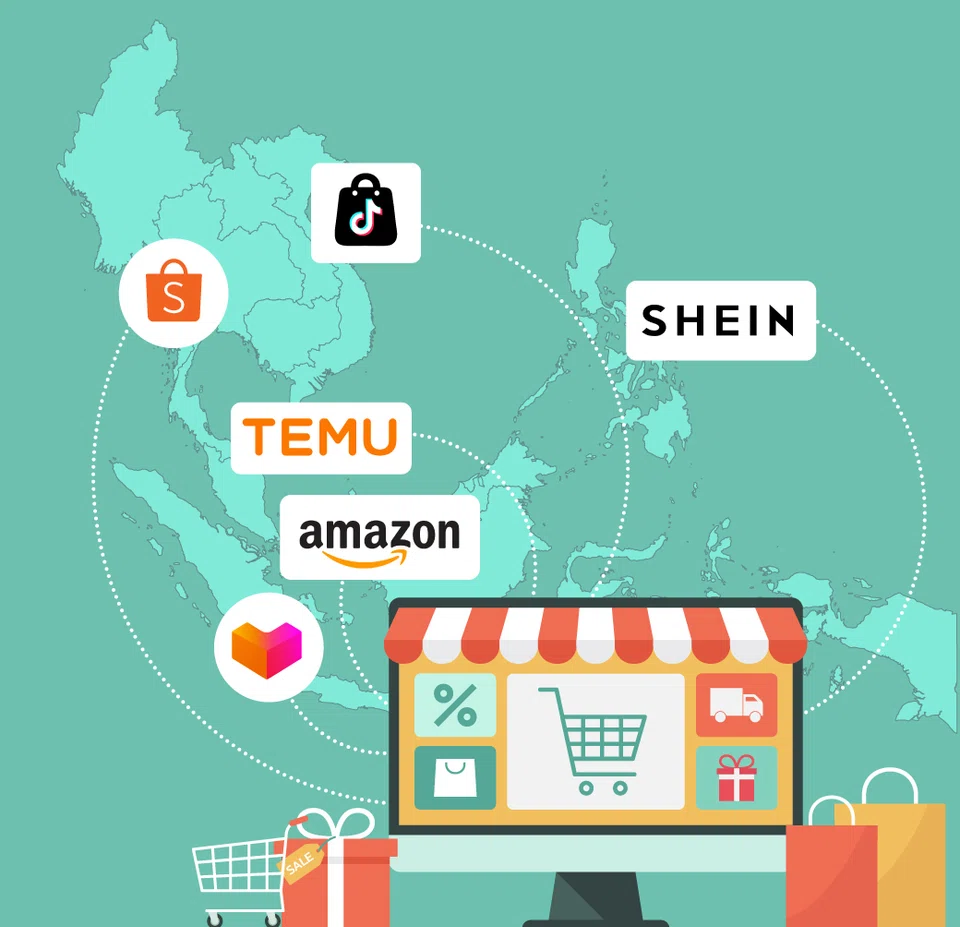
    More e-commerce players are investing in the region to tap the new gold mine. According to Deloitte Research, 38.5 per cent of Chinese cross-border e-commerce enterprises have entered the South-east Asian market, including giants such as TikTok Shop, Shein, and Temu.

    These big platform players, along with traditional regional entities such as Shopee and Lazada, often apply a fully managed model to help online merchants with international logistics, including shipping, customs clearance, and payments. 

    “This streamlined approach reduces operational risks, enabling sellers to expand internationally without setting up foreign offices or managing complex supply chains,” notes Zhou Junjie, chief commercial officer at Shopee.

    Shopee first launched a platform for cross-border sellers in Asean in 2019 in Malaysia, and has since expanded to Indonesia, Vietnam, Thailand, and the Philippines.

    In Vietnam alone, the platform has driven an eightfold increase in international sales since 2022, with more than 350,000 local small and medium-sized enterprises (SMEs) and 1,000 brands accessing Asean markets through the platform.

    Since August, Taobao, a popular Chinese online shopping platform, has also started offering free international shipping for clothing purchases to shoppers in Singapore, Malaysia, South Korea, Taiwan, Hong Kong and Macau. This new programme also includes covering return costs and redirecting returned items to Taobao’s global warehouses, thus minimising risks for cross-border sellers.

    Asean businesses are also expanding their presence in the region, which had a population of nearly 700 million in 2023 – the largest after only India and China.

    Crosify, a Vietnamese developer of wooden items, is planning to bring its educational toy brand, Kalotoys, back home and to nearby markets including Malaysia and Thailand in the coming years.

    Crosify’s co-founders Dong Duc Thanh (left) and Le Trung Anh develop made-in-Vietnam educational toys for children under five years old that are sold abroad. The company recorded a revenue of 95 billion dong (S$5 million) in 2023. PHOTO: CROSIFY

    Since 2020, the firm has been applying a “direct-to-customer” model to sell its made-in-Vietnam products in the United States, Canada and Australia mainly via online marketplaces such as Amazon and Etsy.

    “I think South-east Asia would be the focal point of global growth in the next 10 years, thanks to its youthful population structure, increasing disposal income, and significant economic growth potential,” says Dong Duc Thanh, co-founder of Crosify.

    “The absence of established leaders in educational toys also presents a prime opportunity for us to enter the market and gain top-of-mind awareness.”

    Similar to Thanh, 68 per cent of business leaders in a separate survey carried out by delivery service provider FedEx Express have also identified South-east Asia as the region with the most promising growth potential.

    “This optimism is fuelled by increasing regional and bilateral trade agreements, which are creating new opportunities for SMEs in cross-border commerce,” points out Kawal Preet, president of Asia-Pacific at FedEx. 

    Free trade agreements (FTAs) are providing increasingly extensive access to markets, as well as more favourable digital-trade terms for businesses in Asean countries. 

    They include long-established FTAs such as the Asean Free Trade Area and the Asean-China Free Trade Area, as well as newer ones involving the larger Asia-Pacific region such as the Trans-Pacific Partnership, Regional Comprehensive Economic Partnership, and Asean-Australia-New Zealand Free Trade Area.

    Greater policy cooperation in digital trade among South-east Asian countries is also contributing to the positive outlook for regional cross-border e-commerce.

    One of them is the Asean Digital Economy Framework Agreement, which is slated to be completed by 2025. Launched in 2023, it is meant to enhance digital regulations in key areas such as trade facilitation, payments, standards, and data. 

    An analysis by Standard Chartered notes that Asean is set to form the fastest-growing trade corridors in the world by the end of the decade, with average annual growth rates projected to be above 6 per cent from 2021 to 2030. 

    Intra-regional trade within Asean in particular is forecast to grow the fastest, with an average growth rate of 8.7 per cent every year from 2021 to 2030, and trade volume hitting US$800 billion at the end of the decade. 

    Currently, exports within Asean countries constitute 20 per cent – the largest share – of the region’s total exports.

    Competition in global market

    Even though South-east Asia offers a wealth of opportunities, sellers and producers in the region still tend to focus on major e-commerce markets in North America, Europe or East Asia. 

    Crosify’s Thanh says that the primary focus for his company’s growth and income over the next five years will continue to be the US, as the e-commerce market in South-east Asia is not yet at the same level of development.

    According to eMarketer estimates in 2023, despite leading the world in both retail sales growth and e-commerce sales growth, Asean saw a moderate e-commerce penetration rate at around 10 per cent, compared with the global average of 18.9 per cent in 2022.

    “It might be easier for merchants to take part in intra-Asean e-commerce (due to relatively similar regulations and fewer shipping challenges). But due to the limitations (arising from) the size of the regional economy, they will still want to sell to the US or China, which is a much, much bigger market,” points out Roy Wan, founder and chief executive officer of Return Helper, a provider of fulfillment and returns management services globally.

    That said, Wan observes that South-east Asian brands frequently face challenges such as expensive shipping fees and lengthy delivery times when catering to customers in Western nations.

    Chinese rivals, meanwhile, benefit from a deep and efficient logistics ecosystem that can deliver a package to the US up to three times faster than firms from Thailand or Malaysia, he adds. 

    Many local sellers are thus choosing to source goods from China, opting to have products manufactured in the East Asian nation and shipping directly to international customers without bringing the items to the sellers’ own location. 

    “No other manufacturing hub today is able to offer suppliers the level of depth and scale that Chinese manufacturing can offer, in terms of price, quality and variety,” explains Damien Yeo, an analyst in the consumer team at BMI, the research arm of Fitch Solutions. 

    Li Jianggan, CEO of Momentum Works, a venture outfit based in Singapore, points out that the South-east Asian market has also emerged as a great destination for China’s industrial output of consumer goods due to its proximity and geopolitical relationship.

    Li Jianggan, CEO of Momentum Works, says that Chinese sellers and brands are, in general, more experienced in selling standardised consumer goods to Western markets. PHOTO: BT FILE

    Online sales have thus boosted China’s export growth, with its “Four Little Dragons” of e-commerce – Shein, AliExpress, TikTok Shop, and Temu – making their mark worldwide. According to China’s customs authority, in 2023, the country’s imports and exports via digital platforms reached 2.38 trillion yuan (S$439.6 billion), up 15.6 per cent year on year. 

    A 2023 survey in 41 countries, reported by Statista, found that 37 per cent of respondents opted for Chinese e-commerce sites as their go-to destination for online shopping from overseas. China was identified as the top market for the latest cross-border purchases in major economies such as the US, the United Kingdom, and Japan.

    Li adds that Chinese sellers and brands are, in general, more experienced in selling standardised consumer goods to Western markets. Meanwhile, South-east Asian players have a competitive edge when it comes to selling niche goods, even though their supporting ecosystems are less deep.

    However, China’s advantage could be at risk if additional import tariffs and other retaliatory policies are imposed amid prolonged trade tensions.

    Jurisdictions around the world, from the US to the European Union, as well as Asean nations such as Indonesia, Thailand, Malaysia and Vietnam, are imposing or considering additional tariffs on small-value imports such as via e-commerce orders – a measure mainly designed to reduce the entry of low-quality products from China and ensure fair competition among online retailers.

    “It is a positive trend that many policymakers are looking at more proactive, balanced policymaking instead of simple, narrative-driven reactions,” Li says, expecting that the authorities will take time in the near future to understand the dynamics of various segments of players and make more nuanced decisions.

    “(This) will ensure consumers have greater choices at greater price points, while key domestic industries become more competitive, domestically and globally,” he adds.

    Crosify’s Thanh also recognises the need for his firm to invest in more research and development, testing and customisation to be able to compete with rivals from China, a hub of toy manufacturers.

    He believes that Crosify’s advantage lies in its ability to create quality products at affordable prices, thanks to the lower-cost yet more skilful labour forces utilised for handmade production processes in Vietnam.

    “Our mission is not to replace China as a place to produce low-quality goods. Like Japan and South Korea, we must aim to develop made-in-Vietnam products with high quality and competitive prices,” states Thanh. 

    Digital free-trade zones and integration with China

    Return Helper’s Wan suggests that setting up more free-trade zones could enable efficient and cost-saving e-commerce exports and return management within Asean, and from the region to the rest of the world.

    A digital free-trade zone was established in Malaysia in 2016 to encourage small companies’ participation in cross-border trade. It provides a series of supportive measures, such as the establishment of logistics hubs and the provision of digital trade facilitation services.

    Wan notes that it would be beneficial if Return Helper’s facilities were placed in such zones, so that the firm can enjoy incentives such as simplified customs checks and tax exemptions.

    Headquartered in Hong Kong, Return Helper offers comprehensive cross-border logistics services, including international shipping, warehousing and return management with its network of 13 warehouses located across the globe, including in Thailand, Malaysia and Singapore.

    Wan’s idea is similar to China’s 22 free-trade zones and 164 pilot zones for cross-border e-commerce, which covered 31 provinces, autonomous regions and municipalities across the nation in 2023. 

    Over the past years, Guangxi in southern China has been at the forefront of the country’s engagement with Asean due to its close proximity, with at least 12 cities in the autonomous region designated as national comprehensive pilot zones for cross-border e-commerce. 

    In 2022, imports and exports with Asean members accounted for more than 90 per cent of Guangxi’s total cross-border e-commerce trade.

    Additionally, Guangxi has set up 20 warehouses in countries such as Thailand and Vietnam to facilitate online sales, as part of continuous efforts to accelerate the construction of a logistics system and hub centre to target the Asean region.

    The China-Asean (Hekou) Cross-border E-Commerce Logistics Industrial Park and a China-Asean e-commerce pilot zone have also been developed in Hekou, which borders Vietnam’s Lao Cai province.

    “What South-east Asia could do is to attract sophisticated and competitive Chinese manufacturers to invest more in the region, (similar to what) the leading Japanese manufacturers did in the last century,” Momentum Works’ Li says.

    “We see opportunities for deeper supply chain integration, so that both sides can benefit more in a deeper way.”


