

Is Asean prepared for Trump’s disruptive diplomacy?
Attention will be trained on the US president as the bloc addresses his administration’s tariffs and asserts Asean’s strategic importance
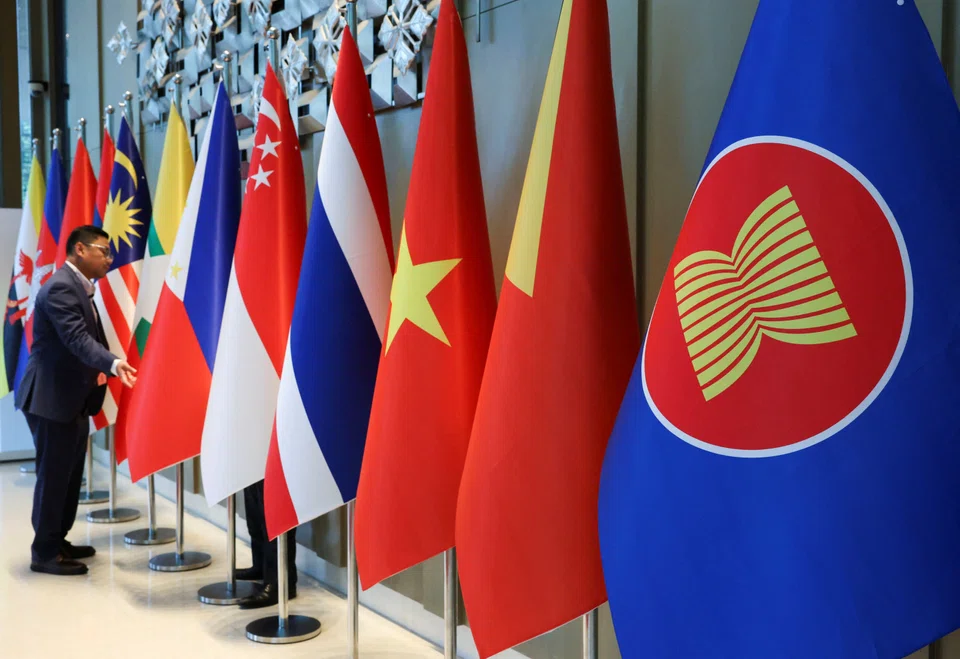
A VERITABLE gathering of world leaders is travelling this week to the Asean and East Asia summit in Malaysia. However, the limelight will be on one person: US President Donald Trump, who attends the big Asean event for the first time since 2017.
At the Philippines-hosted 2017 event, Trump ultimately decided to skip the East Asia Summit, another leader-led Asia-Pacific regional forum. This, along with his non-attendance at Asean summits in the following years of his first presidency fuelled perceptions of US disinterest in the region and provided what his critics contend was a key window of opportunity for China, the bloc’s largest trading partner, to deepen its engagement there.
Fast forward to today, and the upcoming big 2025 Asean and East Asia summits from Oct 26 to 28, respectively, are part of several stops for Trump. After Malaysia, he will travel to Japan for talks and to South Korea for the Asia-Pacific Economic Cooperation (Apec) summit. The Apec’s 21 economies represent nearly two-thirds of global gross domestic product and half of world trade.
The cast list of leaders attending the earlier Asean event is impressive, including Chinese Premier Li Qiang, Indian Prime Minister Narendra Modi, Brazil’s President Luiz Inacio Lula da Silva, and South African President Cyril Ramaphosa. But Trump will be top of mind for Asean leaders.
In large part, this is because of the new tariff rates on Asean states, a huge negative shock to the highly trade-dependent region. At the top end of the tariff range are Laos and Myanmar at 40 per cent; Brunei at 23 per cent; Vietnam, Malaysia, Indonesia, Thailand, the Philippines and Cambodia at 19 per cent; and Singapore at the lowest of 10 per cent.
While the Asean leaders are a disparate group, they will have one overriding message. That is, to persuade the US president of the strategic importance of the region and to seek more favourable tariff deals with Washington.
Whether this message lands with Trump, however, is highly uncertain. After all, he has already sought to divide and rule the region with bespoke deals that include big pledges to purchase more US goods from natural resources to mechanical goods.
Trump is also aware that, across the bloc overall, China has been the leading trade partner for more than a decade and a half, with trade totalling around US$600 billion in the first seven months of 2025 alone. However, a survey by the Asean Studies Centre at the Iseas-Yusof Ishak Institute, taken before the imposition of the Trump tariffs, found that 52.3 per cent of respondents in the region prefer Washington as a long-term strategic partner, compared with 47.7 per cent for China.
The large number of world leaders at the Asean event shows that, for all Trump may occasionally appear diffident towards the region, it is fast becoming a major focus of economic diplomacy for foreign nations. The strategically located region has a population of more than 600 million and an area of about 4.5 million square km. Asean also has a purchasing power parity GDP of more than US$10 trillion that is growing significantly.
Diplomatic attention on the region grew significantly during the Biden administration. At the November 2022 Asean summit in Cambodia, which then-president Joe Biden attended, regional leaders elevated US-Asean relations to a comprehensive strategic partnership.
This previous expansion in US-Asean relations included the launch of five new high-level dialogue processes on health, transportation, women’s empowerment, environment and climate, and energy, as well as elevated engagement in pre-existing dialogue tracks on foreign affairs, economics and defence.
The US also stepped up its diplomatic profile in Asean by providing significant financial assistance to the bloc. These monies have supported joint forums in areas such as climate ambition and the clean energy transition, access to education, strengthened health systems, security modernisation efforts, rule of law and human rights.
This previous commitment is a point of tension. Key members of the US Congress earlier this month released a letter, on a bipartisan basis, calling on Trump to show the same level of commitment to the region. The letter asserted that it is key that he attends the upcoming summits in Asia, and supports forums such as the Quad with Japan, India and Australia, as “essential to demonstrate US leadership and counter PRC (People’s Republic of China) ambitions”.
Inevitably, in this context of growing economic rivalry, other powers in Asia and beyond are doubling down on their own engagement with Asean. While China is often singled out here, others too – including India and the Gulf Cooperation Council (GCC) states – are ramping up their diplomacy.
Modi, for instance, has reaffirmed India’s ties with Asean since the 30th anniversary of Asean-India Dialogue Relations in 2022, when bilateral ties were also raised to a comprehensive strategic partnership. He also hopes to deepen ties, building from the Asean-India Trade in Goods Agreement.
Another striking step up in regional engagement is from the dynamic GCC, whose nations including Saudi Arabia and the United Arab Emirates (UAE) are pivoting strongly to Asean. So much so that Asean-GCC two-way trade reached a high of US$134 billion in 2022.
Led by the UAE, which signed Asean’s Treaty of Amity and Cooperation in South-east Asia, and obtained sectoral dialogue partner status, GCC is seeking to construct a “corridor of opportunity” between the two regions. This includes negotiations on comprehensive economic partnership agreements, including the 2022 UAE-Indonesia pact. Taken together, the upcoming Asean summit will showcase the growing geoeconomic importance of the region. It will also be a critical test: Will Asean leaders engage successfully with Trump, or will the US president’s “divide and rule” approach ultimately cede economic and strategic ground to China and other regional players?
The writer is an associate at LSE Ideas at the London School of Economics






