

Asean+3, not the US, is now the world’s largest market
This structural shift has measurable consequences for how shocks propagate
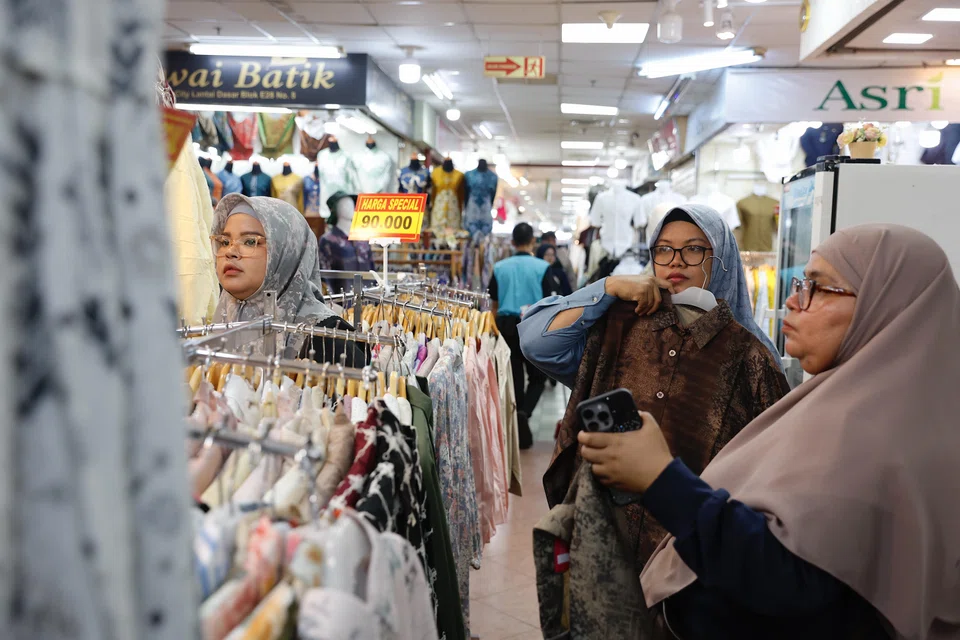
THE tariffs imposed by the US last year have reignited a familiar narrative: Asia’s export-dependent economies face an existential threat when US consumers pull back.
The story goes that Asean+3 – China, Japan, South Korea and Asean – remains fundamentally a factory floor for Western consumption, vulnerable to any disruption in demand from advanced economies.
This narrative is outdated. The structure of the global economy has shifted in ways that conventional analysis has been slow to recognise. Asean+3 is no longer merely the world’s factory. It has become the world’s largest market.
By 2022, the region accounted for 28 per cent of global final demand, surpassing the US at 26 per cent – a measure derived from value-added analysis, which traces final destinations rather than border crossings.
This is not a statistical curiosity. It represents a fundamental reordering of where global production ultimately gets absorbed.
Two decades ago, nearly a third of Asean+3’s exports serving final demand went to the US. In 2022, that share had fallen to 20 per cent, while intra-regional demand was nearly 30 per cent. Increasingly, Asia is producing for itself.
A more regionally anchored Asean+3
China sits at the centre of this transformation.
Conventional trade statistics tend to obscure China’s importance as a consumer because so much of what Chinese households buy is assembled domestically from imported components. Value-added analysis corrects for this, revealing China as a major destination for final demand – not just a way station for goods heading elsewhere.
The scale of Chinese consumption drives this. Consider automobiles: China is now the world’s largest market, accounting for nearly a third of global vehicle sales – more than the US and the European Union combined. It leads global adoption of electric vehicles, reshaping automotive supply chains from batteries to semiconductors. Or smartphones: China is home to over a fifth of the world’s users, about four times the US’ share.
These examples illustrate why regional supply chains have reoriented. Across product categories, China’s end-market position is not marginal but central, reshaping production decisions across the region.
Two decades ago, Japan was the anchor of Asia’s supply networks. Today, China has taken on that role, not merely as a production hub, but also as a source of final demand that pulls regional supply chains towards it.
When a South Korean chipmaker or a Japanese parts supplier decides where to locate production, they are increasingly thinking about proximity to Chinese consumers, not just Chinese factories.
For example, nearly half of Asean+3’s electronics intermediate exports now flow to China. These goods enter as components, but the final buyer is often a Chinese household. (*see amendment note)
Crucially, this is not a story of one-way dependence on China. The relationship is mutually reinforcing.
Japan and South Korea supply high-technology inputs – chips, displays, precision components, and capital equipment. Asean provides midstream manufacturing and assembly capabilities. China contributes scale, increasingly sophisticated production, and now substantial final demand.
The result is a regional production and demand system where each part strengthens the others. Other Asean+3 economies have become the largest source of final demand for Chinese exports, too – a mutual dependence that distinguishes the current regional architecture from earlier configurations where demand flowed primarily outwards to Western markets.
Asean itself, with nearly 700 million consumers and rapidly expanding middle classes, is emerging as a major market in its own right.
The region is now a significant destination for goods from China, Japan, and South Korea. It is the largest source of final demand for Chinese exports after the US. Asean represents one of the fastest-growing demand bases in the global economy.
What this means for the region
This structural shift has measurable consequences for how shocks propagate.
Our scenario analysis shows that a decline in Chinese domestic demand now affects the rest of Asean+3 five times more than it would have two decades ago. Conversely, sensitivity to US demand shocks has declined relatively for most regional economies. The region’s business cycles have become more synchronised with each other than with the rest of the world.
None of this implies immunity to US trade policy. Tariff escalation carries real costs, and global factors remain significant. But it does suggest a degree of resilience that the conventional “factory for the West” characterisation would not predict.
The region’s demand base is now more regionally anchored and less dependent on extra-regional markets than at any point in the past two decades.
For policymakers and businesses, the implications are significant.
Strategies premised on serving Western demand need updating. Supply chain decisions should account for the gravitational pull of Asian consumption. And assessments of regional vulnerability to trade tensions should recognise that Asean+3 has built something it did not have before: a regionally anchored demand system, combining China’s unparalleled market scale, Asean’s diversity and dynamism, and the technological sophistication of Japan and South Korea.
The economic map has been redrawn. At its centre now stands Asean+3 – not merely as the world’s workshop, but as its most important market.
The writers are from the Asean+3 Macroeconomic Research Office. Dong He is chief economist and Allen Ng is principal economist.
This essay is part of our new series, New Global Order, which explores how the changing world landscape is reshaping business, politics and beyond
*Amendment note: This article has been updated. An earlier version contained an incorrect statement about Japan’s autoparts, which has now been removed.
TRENDING NOW

Once staunchly pro-China, Malaysian Chinese businesses are now distancing themselves from Beijing

Britain’s mansion tax shows the difficulty of targeting wealth

Three hats, one goal: How Ng Kian Swan runs sustainability at NUHS

COE review: The gap between luxury and mass-market cars isn’t the only one worth bridging

