Asean’s low-altitude economy needs a supply chain reform to take off
The bloc must address fragmentation and seize the growth opportunity
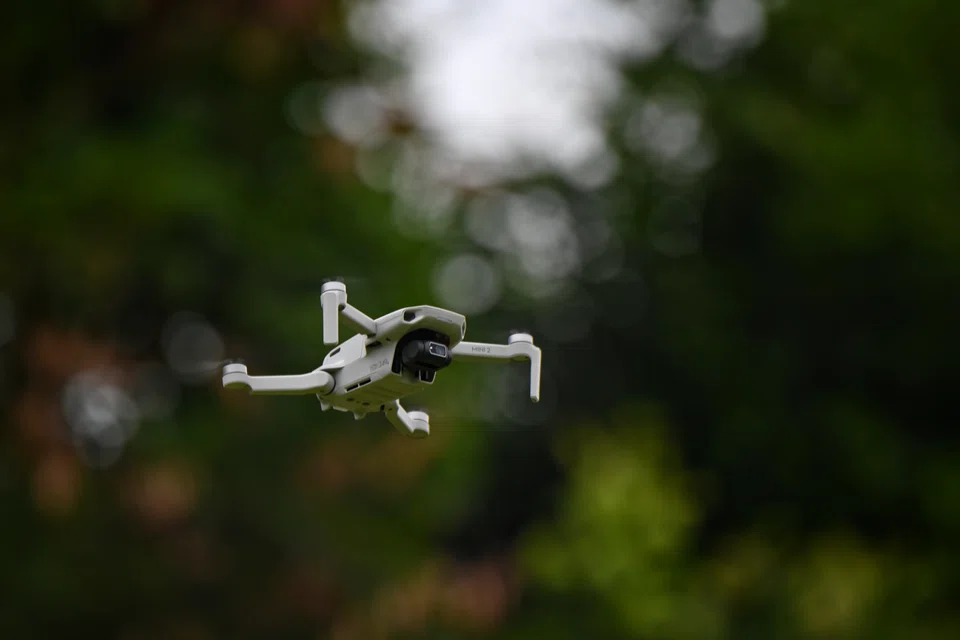
THE race to build a low-altitude economy (LAE) is accelerating across Asean. From drones delivering medical supplies to air taxis promising faster and cleaner urban transportation, the technologies shaping this frontier are already being tested across the region.
However, behind this momentum lies a critical weakness: Asean cannot lead in this space without the supply chains needed to sustain it. Without enablers such as domestic manufacturing, talent and regulatory coordination, the bloc’s low-altitude ambitions may never lift off.
Fragile foundations
Across the region, drones are already being used for precision agriculture, crop-spraying and remote-area logistics, while urban trial projects are underway for other use cases such as delivery services.
However, the supply chains needed to support these operations at scale are thin and highly import-dependent.
China produces 70 to 80 per cent of the world’s commercial drones, and leads production of critical elements such as flight controllers, speed controllers, sensors and propellers.
And one Chinese company, DJI, dominates both Asean and global markets. This concentration not only limits opportunities for other drone and component suppliers to emerge, but also increases the region’s exposure to potential supply or regulatory disruptions.
Reliable low-altitude operations require far more than just aircraft. They need a dense network of logistics and maintenance facilities – charging infrastructure, spare-parts depots and repair centres – that remain scarce across Asean.
Equally vital is the role of telecommunications networks. Drones depend on stable, high-bandwidth connections for navigation, communication and integration with unmanned traffic management systems, meaning specialised network configurations and antenna settings will be essential for safety and real-time coordination.
Many rural areas, where drones could deliver the greatest impact, still lack both the connectivity and warehousing capacity needed to sustain large-scale deployment.
Regulatory friction compounds these supply chain challenges. While most of the Asean-6 countries – Indonesia, Malaysia, Singapore, Thailand, Vietnam and the Philippines – have established general frameworks for drone operations, significant differences remain in how these rules are applied, creating barriers to seamless regional growth.
For instance, Singapore, Thailand and Malaysia all require drone registration, but the thresholds at which operators must comply vary significantly.
This means that the same type of drone may be tightly regulated in one market but not in another, creating uneven compliance obligations for manufacturers and operators.
Beyond registration, variations in licensing procedures, import rules and safety requirements complicate market entry and raise operational costs.
Finally, there is a shortage of skilled workers capable of maintaining and managing this new ecosystem. The gap extends beyond drone specialists to include engineers, technicians and data professionals, whose expertise underpins the broader aerospace and advanced manufacturing sectors.
As demand for these skills accelerates, Asean’s education systems and training providers will need to adapt quickly to avoid constraining growth.
Turning fragmentation into strength
To secure the future of the LAE, Asean must build a supply chain capable of supporting it at scale. Several steps can help turn current fragmentation into a regional advantage and growth opportunity.
First, Asean should harmonise standards and certification frameworks for drone components, maintenance and logistics. A shared set of benchmarks (such as those used for automotive products or electronics equipment) would help reduce duplication, facilitate trade, and create a unified regional market for low-altitude technologies.
Second, the region can strengthen resilience by developing regional manufacturing and maintenance hubs. Economies such as Malaysia, Thailand and Vietnam, with their established manufacturing bases, could specialise in assembly and component production, while others can focus on testing, operations and logistics.
A distributed yet connected ecosystem would allow each country to play to its strengths, while creating a complementary network that strengthens regional resilience.
Third, Asean should invest in modern logistics systems that blend digital visibility with physical infrastructure. Real-time tracking platforms, predictive maintenance systems and data-sharing protocols can reduce downtime and improve efficiency, while investments in drone corridors, charging networks and maintenance depots will enable safe, scalable operations.
Finally, workforce development must go hand in hand with technological progress. Governments and industry should collaborate on reskilling programmes, certification pathways and regional centres of excellence dedicated to drone operations and maintenance.
Building a pipeline of future talent will be essential for long-term resilience.
The Philippines’ moment to lead
As the Asean chair for 2026, the Philippines is well-placed to spearhead regional cooperation on the LAE.
The government has signalled strong interest in emerging aviation technologies, with agencies such as the Department of Transportation and the Civil Aviation Authority of the Philippines exploring frameworks for drone regulation and unmanned traffic management.
As an archipelago, the country is an ideal test bed for drone delivery, aerial mapping and emergency response services. Its growing participation in semiconductor and battery supply chains also provides a foundation for local manufacturing and integration into regional value chains.
The availability of reliable satellite broadband services, such as Starlink, further strengthens the Philippines’ readiness to support low-altitude operations.
With these advantages, the country can help to drive regional alignment on standards and certifications as well as facilitate public-private partnerships, strengthening Asean’s supply chain resilience.
The LAE presents an exciting opportunity for Asean to unlock sustainable growth. But innovation cannot thrive without resilience.
To truly lift off, the region must invest not only in drones and aerial corridors, but also in the supply chains, standards and skills that keep them in the air. By acting now, Asean can ensure that its LAE is built to last.
Swee Cheng Wei is associate director of economics strategy and Chailyn Ong is manager of economics strategy at Access Partnership. Mahisorn Wongphati is chief executive officer and co-founder of HG Robotics.