Asia anguishes over proposed EU Industrial Accelerator Act
As the EU signals a trade policy pivot, countries like China and Japan mull its effect on competition and business
OTTO von Bismarck, credited for unifying Germany in 1871, is thought to have said: “If you like laws and sausages, you should never watch either one being made.”
A century and a half later, many are expressing a similar sentiment about the European Union’s landmark Industrial Accelerator Act (IAA), presented on Mar 4.
More than 40 versions of the Act have been drafted over multiple months, and the official announcement has been delayed more than half a dozen times since 2025.
Divisions still remain within the 27-member bloc.
The IAA represents a significant change in the bloc’s legal framework for investment and its approach in addressing the global business environment.
Stephane Sejourne, the European Commission vice-president for industrial strategy, said the IAA is not “just a change in procedures, it is a change in doctrine”.
The French have been the biggest drivers of this shift in Europe, amid what President Emmanuel Macron calls a “geopolitical and geo-economic state of emergency”.
The IAA would reverse decades of the EU’s previous industrial competitiveness policy centred on comparative advantage and liberalisation of markets.
The measure is the latest stage of the EU’s Clean Industrial Deal, a key policy of European Commission President Ursula von der Leyen’s second term. It is designed to bolster the bloc’s competitiveness by boosting manufacturing while also promoting decarbonisation.
While it has already provoked controversy inside and outside the EU, the IAA is only the latest example of major economies’ policies that link market access to local production.
Countries such as India, China, Brazil and the US have similar legislations.
China has long used measures to build dominant positions in, for example, the solar panel and battery industries, with subsidies of around 4 to 4.5 per cent of gross domestic product.
The US Inflation Reduction Act, and the Chips (Creating Helpful Incentives to Produce Semiconductors) and Science Act are channelling hundreds of billions of dollars into domestic manufacturing incentives.
In contrast to some of these measures, the IAA relies more on regulatory mechanisms and market design. Brussels is now seeking to shape demand conditions so that more firms choose to invest in the EU market to access it.
The Commission is signalling that firms seeking to benefit from EU demand growth in clean tech would need to strengthen their footprint – either through manufacturing, research activities and/or local partnerships.
Specifically, the IAA seeks to boost the bloc’s approximately 2.58 trillion euro (S$3.79 trillion) manufacturing sector by leveraging the purchasing power of public procurement. This amounts to around 15 per cent of EU GDP with the introduction of the plan for “Made in the EU” and low-carbon requirements.
The IAA also introduces a mechanism for monitoring foreign direct investment in strategic clean-tech sectors such as battery, electric vehicles, solar photovoltaic cells, and raw materials.
There is a screening requirement for investments exceeding 100 million euros coming from a country that controls more than 40 per cent of global manufacturing capacity.
In such cases, the authorities may impose conditions on the investment, or prohibit it if key criteria are not met.
Asian alarm about IAA
No countries are named as targets of IAA. However, the structure of the rules is largely designed to address concerns about China’s powerful position in several clean-tech supply chains.
More than 70 per cent of EU clean-tech imports come from China, though dependency varies across nations.
The new EU proposals may generate fresh European-China friction and Beijing may retaliate. China’s Commerce Ministry has expressed “grave concern” that the measures amount to a new round of EU protectionism that undermines global trade rules and fair competition.
Wang Lei of the China Council for the Promotion of International Trade said local-content clauses would “discriminate de facto” against Chinese firms, building from existing EU electric vehicle duties.
To address the interests of Chinese firms, Beijing has said it will monitor the legislation process of the IAA and assess its impact. It retains leverage through its rare-earth export curbs and tariffs on European goods such as French cognac.
The new rules also pose potentially significant challenges for other nations, including Japan.
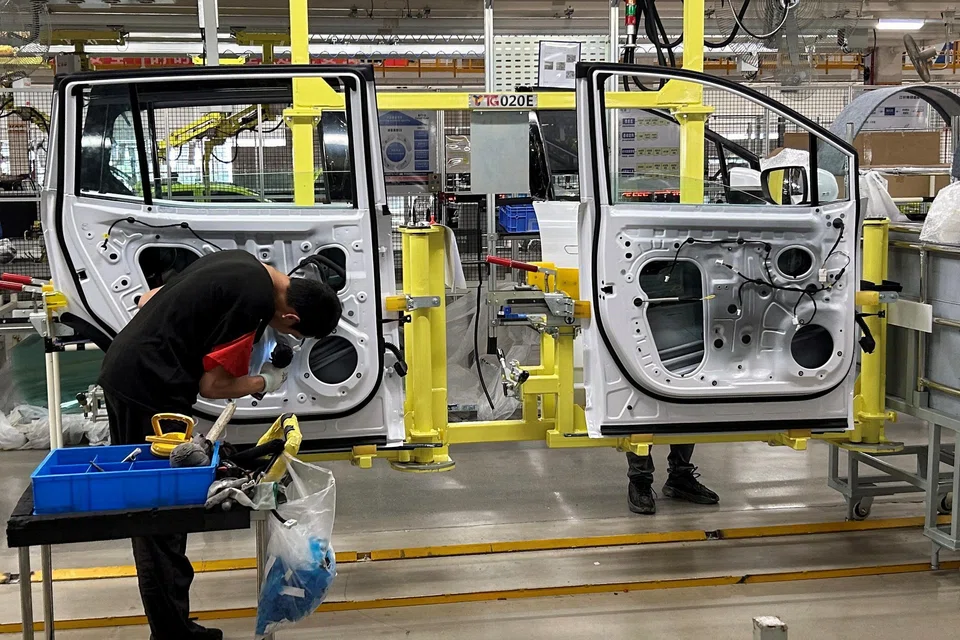
The IAA criteria for cars under “Made in EU”, for instance, is that they must be finally assembled in the bloc and meet a 70 per cent EU local-content threshold; stricter sourcing rules will also be phased in over time.
Within three years, at least half of key components such as batteries, battery materials, power electronics and core drivetrain and control systems must be produced in the EU.
Cars are assessed not only on tailpipe emissions, but also their embedded carbon from manufacturing, including their use of low-carbon steel and aluminium. Brussels will define detailed low-carbon benchmarks later.
Japanese carmakers have raised alarm over the IAA’s specific mandates requiring corporate-fleet vehicles (up to 60 per cent of EU sales) and small EVs to be assembled within the bloc.
As this effectively disqualifies UK-built models from subsidies and procurement perks, the UK is lobbying to be included as a “trusted partner” in the IAA.
Nissan warned that this poses an “existential threat” to its Sunderland plant in North England.
Toyota, with UK manufacturing operations, faces similar threats to its EU market access.
Honda echoed concerns that the rules could leave non-EU automakers “out in the cold”, restricting incentives and disrupting supply chains.
South Korean firms have expressed worries, too. Hyundai Motor and some other companies have already met with the South Korean Ministry of Trade, Industry and Resources, asking it to lobby the EU for favourable IAA terms in the coming weeks.
Nevertheless, non-EU nations such as Japan, the UK and Turkey – which have a free-trade area, customs union or government procurement with Brussels – may be deemed to be of EU origin under the proposed IAA. China is not in this club.
Welcome as this may be to Tokyo, London and Ankara, the IAA also states that the Commission can adopt delegated acts within six months to exclude non-EU countries from the scope of “Made in EU”, if such exclusion is justified to avoid dependencies or to secure the security of supply in EU products.
Delegated acts are legal instruments that allow the Commission to amend or supplement non-essential elements of EU legislation.
Next steps with finalising IAA
The IAA proposal will be further negotiated in the European Parliament and Council. At the upcoming European Council meeting (Mar 19 to 20), EU leaders will probably endorse the principle of targeted European preferences for strategic sectors.
The IAA details have exposed deep divisions between those prioritising industrial protection and those defending open markets. The former, including Sejourne and Macron, argue the EU’s industrial base must be more actively rebuilt.
Those in the other camp, including Commissioner for Trade and Economic Security Maros Sefcovic, warn excessive “Made in EU” rules risk protectionism.
Brussels-based think tank Bruegel has warned that “Made in EU” requirements could raise costs for export-oriented industries, and actually slow down Europe’s industrial transformation, and ultimately, the clean-energy transition.
While much still remains unclear, one thing is certain: As the next phase of negotiations commence, the intra-EU divisions will persist.
The writer is an associate at LSE IDEAS at the London School of Economics