Asian geopolitics could shift with Takaichi-Trump meetings
New Japanese PM Sanae Takaichi will push for more assertive security role in alignment with US strategy
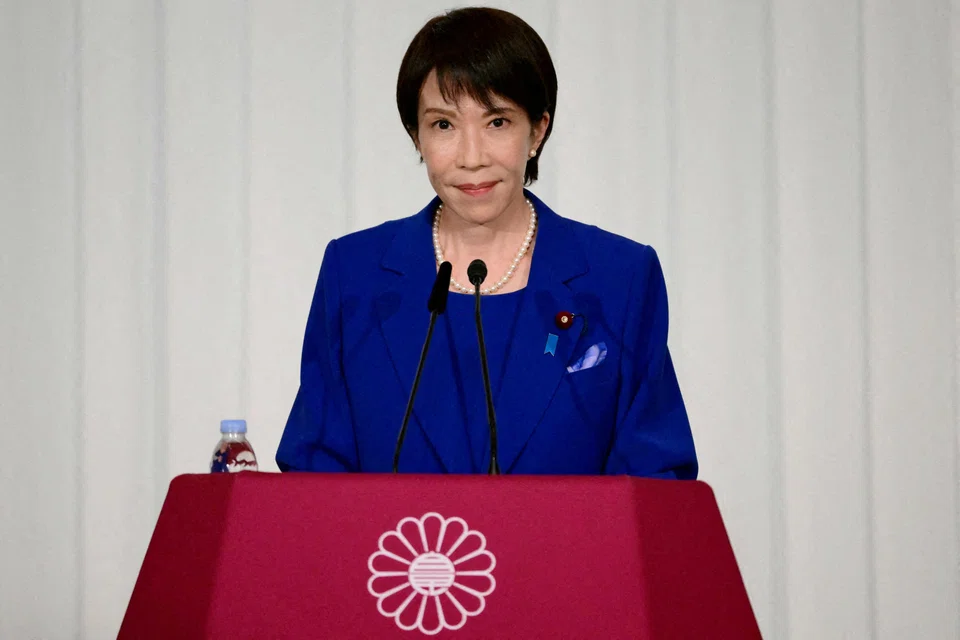
WHILE media attention focuses on the upcoming Asean and Asia-Pacific Economic Cooperation summits, US President Donald Trump’s multi-day trip to Japan next week also spotlights the nation’s growing geopolitical and geo-economic importance amid political tumult in Tokyo.
International interest is partly driven by the leadership transition in Tokyo and the appointment of Sanae Takaichi, Japan’s first female prime minister. Takaichi, who styles herself as a new Margaret Thatcher (the UK’s first female prime minister), may well be a kindred spirit to Trump with her anti-immigration and conservative nationalist views.
Trump has already feted Takaichi, calling her “a highly respected person of great wisdom and strength”, and her election “tremendous news for the incredible people of Japan”.
In response, Takaichi said that she is “truly hoping to work together with President Trump to make our alliance even stronger and more prosperous, and to advance a free and open Indo-Pacific”.
Despite these warm words, it is unclear whether Takaichi can form a strong, sustained political bond with the mercurial Trump, especially given her fragile domestic position; the ruling Liberal Democratic Party lacks a legislative majority.
Also, recall that the US president in his first term initially called then UK prime minister Theresa May “my Maggie” before falling out with her over a range of issues, including her preferred Brexit deal.
Underlying drivers of closer US-Japan ties
Beyond personalities, Trump’s trip showcases the growing structural factors reinforcing Tokyo’s growing geopolitical and geo-economic importance.
Japan is a key member of the G7 and the Quadrilateral Security Dialogue, a strategic partnership between the US, Australia, India and Japan. Trump’s trip will help consolidate Tokyo’s longstanding US alliance. Takaichi is expected to signal to Trump her potential acceleration of Japan’s defence build-up beyond the 2 per cent of gross domestic product target set for 2027.
Trump’s inclusion of Tokyo, where he will also meet Emperor Naruhito, during his first Asian trip of his second presidency is no fluke. During the Biden administration, the first major overseas visit of then US secretary of state Antony Blinken and defence secretary Lloyd Austin was also to Japan, for two-plus-two talks with their counterparts.
Trump’s trip also has a clear business agenda for the world’s No 1 and No 3 largest economies.
The US president will press the new Japanese prime minister on her predecessor’s pledges of US$550 billion in US investments under the recent tariff deal. These pledges reportedly include more Japanese purchases of US liquefied natural gas, Ford F-150 pickup trucks and US soybeans. In exchange, the agreement sets Japanese tariffs on goods sold to the US at 15 per cent, lower than the 25 per cent Trump had threatened.
Contrasting visions of Asia’s regional order
Beyond this bilateral deal, Takaichi will likely ask Trump about his wider plans for a regional economic and political framework. This follows the US’ withdrawal from the Comprehensive and Progressive Agreement for Trans-Pacific Partnership (CPTPP) during Trump’s first presidency, a bloc which includes Japan, Australia and Brunei.
China, which has applied to join CPTPP, is also forging an alternative vision for regional order via the Regional Comprehensive Economic Partnership (RCEP), a massive trade bloc that includes China and most US allies in the region, but not the US. Beijing is also championing a Free Trade Area of the Asia-Pacific (FTAAP) project.
At the heart of this issue are contrasting geopolitical and geo-economic visions for the Asian landscape. From China’s perspective, the RCEP and FTAAP are much more conducive to its national interests, allowing Beijing to shape the design of trade with itself most likely firmly at the centre.
This underlines the centrality of geo-economic and geopolitics in the Trump-Takaichi discussions. Widely seen as a political protege of the late prime minister Shinzo Abe, Takaichi favours boosting defence spending and revising Japan’s pacifist post-war Constitution. Like Abe, she will seek to convince Trump that Japan’s security needs a strong US commitment as the “cornerstone of peace” in Asia.
Takaichi also has her eyes on the fragile nuclear state in North Korea. During Trump’s first presidency, Tokyo worried that Trump might seek a deal with Kim Jong Un to give up missiles capable of reaching the US, while ignoring the short and medium-range missiles that threaten Japan. This issue, however, became less salient after Trump’s dialogue with North Korea stalled.
Still, the major driver for tighter US-Japan ties is China. Both Trump and Takaichi will likely reiterate their opposition to unilateral attempts to change Asia’s status quo by force. This includes the South China Sea, where nations such as Malaysia, the Philippines, Vietnam and Brunei are in dispute with China over a strategic waterway through which some US$5 trillion dollars of ship-borne trade passes each year.
In this fluid regional landscape, Takaichi will likely seek to align her longstanding foreign policy ideas with Trump’s agenda. Despite her fragile political position in Tokyo, the prime minister will seek to strengthen the case for boosting defence spending and overturning the remaining underpinnings of the country’s post-war security identity.
The writer is an associate at LSE Ideas at the London School of Economics
TRENDING NOW
He built the Vingroup empire. Now South-east Asia’s richest man is handing some key roles to his sons
Grab CEO’s wife Chloe Tong on life with Anthony Tan and finding her purpose
What role can Japan play in Asean’s future?
From folding clothes to factory work: Why China is sending humanoid robots to school