

Asia’s path to climate leadership is clear – now the capital must align
For the region to move from passenger to pioneer, it must fix the mismatch between local ambition and global finance
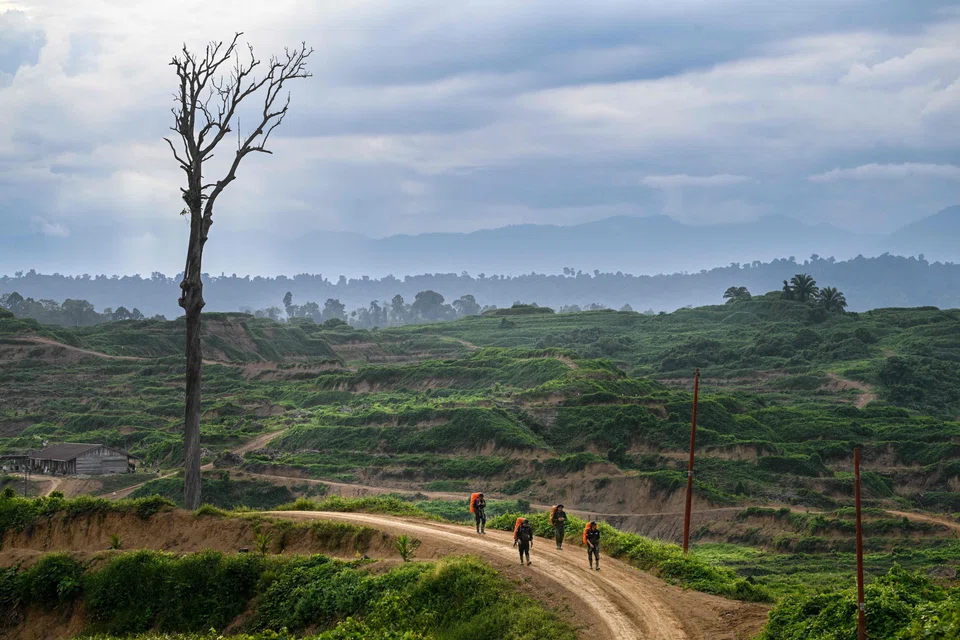
ASIA’S climate story is often framed as one of risk. But look closer, and a different narrative is emerging – one defined by home-grown innovation and opportunity.
We see this transformation unfolding across the region.
In Pakistan, a solar boom is reshaping daily life, from farmers irrigating fields with solar pumps to coastal families powering homes and small businesses through microgrids for the first time.
And in South Korea, rural communities are turning sunlight into a second crop, with agrivoltaic farms starting to revitalise local economies while generating clean energy for thousands of households.
Across nations, Asia’s climate leadership is becoming clearer. South Korea’s recent landmark decision to join the Powering Past Coal Alliance – making it the second Asian country to do so after Singapore, and the first with a major coal fleet – shows that Asian economies are beginning to lead credible coal-to-clean transitions while strengthening long-term resilience.
Collectively, these shifts mark a structural transformation in how Asia grows, works and powers itself.
From passenger to pioneer
For too long, Asia was seen as a passenger in the global climate journey, often led by others who set the pace. That era is over. Across the region, a new confidence is emerging, one that sees climate action not as a constraint, but as an engine of growth.
Asia’s climate story is, after all, deeply shaped by its energy choices. The region’s ability to meet its climate goals will be determined by how it transforms the way it produces, uses and finances clean energy. And that transformation is already under way, driven by governments, businesses and a growing ecosystem of catalytic and philanthropic capital shaping the conditions for scale.
Asia now accounts for more than half of all new renewable-energy capacity added worldwide each year, according to the International Energy Agency (IEA).
In South-east Asia alone, clean-energy investment reached US$47 billion in 2025, up from US$30 billion in 2015. Across the wider region, Japan and South Korea have also ramped up investment in clean energy, directing 92 per cent of total energy investment to clean energy compared with a global average of 66 per cent.
The economics of renewables have also shifted decisively.
Bloomberg New Energy Finance reports that the cost of clean energy technologies such as wind and solar continue to become cheaper, with costs projected to fall 22 to 49 per cent by 2035.
As costs continue to fall, technologies previously considered out of reach become viable, even preferable, for countries aiming to accelerate their clean-energy transition.
Where momentum can stall
Despite this momentum, the capital flows powering this transition remain uneven and insufficient.
According to IEA, South-east Asia alone would need more than US$190 billion in clean-energy investment by 2035 to stay aligned with its climate goals, which is five times the current level. Yet, a Boston Consulting Group analysis found that blended-finance deals in Asia totalled just US$16 billion between 2019 and 2023, less than 1 per cent of the region’s estimated investment potential.
At the same time, Asia – home to half the world’s population and the fastest-growing energy demand – produces more than half of the global emissions and yet receives only a sliver of global support. Less than 2 per cent of total global philanthropic giving goes to climate action, and, of that, only around 12 per cent flows to Asia.
This imbalance reveals a gap between what is possible and what is currently supported.
Aligning innovation, finance and policy
Bridging this funding gap requires more than new pledges – it’s about coherence. The region needs a new story of innovation and prosperity, grounded in strong policy and powered by home-grown capital.
Three shifts can help unlock the scale and quality of funding that Asia needs.
First, align policy to unlock private and public investment.
Stable, transparent and forward-looking policies remain the foundation of credible climate action. Clear renewable-energy targets, predictable regulation, efficient permitting and credible carbon pricing lower risk, mobilise industry and attract both domestic and international finance.
In Asia, where markets are dynamic, but policy signals are often less consistent, regulatory stability and long-term direction will determine whether ambition translates into real transformation.
Second, reframe climate action as prosperity agenda.
When climate ambition is positioned as a driver of growth and competitiveness, it draws in finance ministries, industry leaders and development agencies, expanding climate beyond its traditional environmental silo. This framing broadens fiscal support, mobilises industry incentives and transforms climate spending into long-term investment for resilience and economic revival.
Third, finance that prosperity from within Asia.
Reframing the narrative must go hand in hand with rebalancing where the capital comes from. Asia cannot rely on international finance alone to fund its transition. Regional capital – from sovereign and public funds, family offices, corporate balance sheets and domestic and regional philanthropy – must take a central role.
Local investment provides legitimacy, helps derisk early markets, signals confidence and attracts global investors to follow.
This is not just about filling funding gaps; it’s about building regional ownership of Asia’s climate future and turning ambition into sustained growth.
Asia’s decade of climate leadership
The coming decade will determine whether Asia is remembered as a follower in the global climate transition or as the architect of a new growth model that combines prosperity with sustainability.
Asia has both the need and the capacity to lead. When the region takes ownership of its transition, investing in its people, aligning its capital and scaling its home-grown solutions, it does more than secure its own prosperity. It also strengthens global confidence that climate progress and economic growth can move in tandem.
If the last two decades were about catching up, this one is about leadership. Asia is no longer a participant in the world’s climate story – it is writing the next chapter.
The writer is chief executive officer of Tara Climate Foundation
TRENDING NOW

Once staunchly pro-China, Malaysian Chinese businesses are now distancing themselves from Beijing

Cliff Tan has 7 million followers and a 4-month waitlist. Why won’t he expand his business?

Could stablecoins be the future of money?

Grab CEO’s wife Chloe Tong on life with Anthony Tan and finding her purpose

