Asia’s voice, America’s pivot: What will define the UN’s next 80 years?
Whether the United Nations will thrive, not just survive, well into the 21st century depends on the ties between the US and China
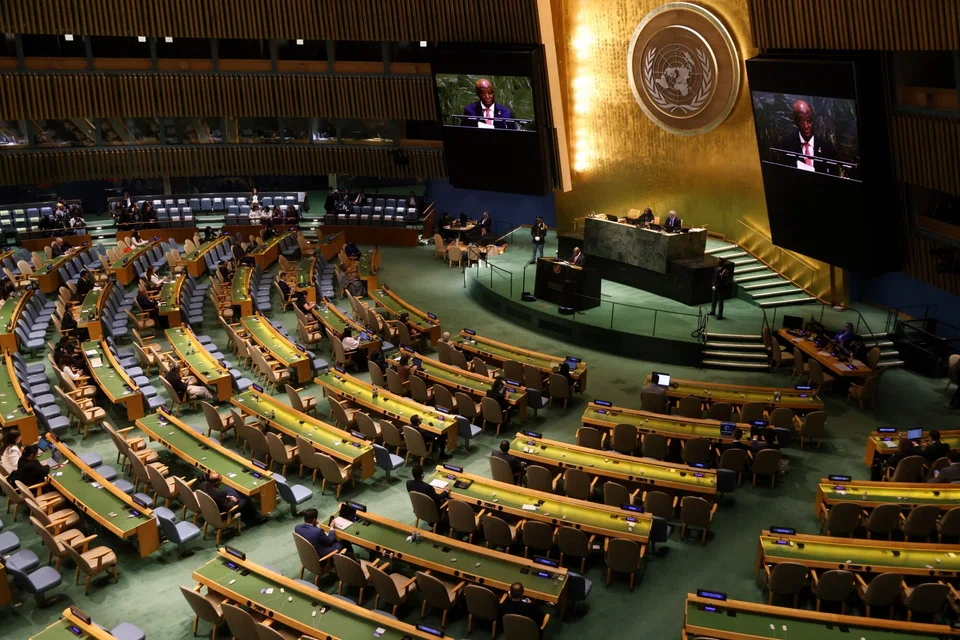
WHILE the United Nations (UN) rarely dominates global economic or political conversations, its 80th-anniversary General Assembly has provided a significant platform for Asian leaders. This week in New York City, their voices have been prominent.
Take Vietnam’s State President Luong Cuong for example – he used the trip to engage officials from the administration of US President Donald Trump over American tariff impacts. The timing coincided with the 30th year of the two countries’ diplomatic relations, and the second anniversary of their comprehensive strategic partnership.
The tariff agenda is critical not just for Vietnam, Asean’s second-most trade-dependent country, but also for South-east Asia more generally, as it is one of the most trade-reliant regions globally.
A recent report by the UN Development Programme found that the tariffs could reduce Vietnam’s exports to the US by around a fifth, positioning it as the worst-hit country in South-east Asia.
One issue that Vietnam is lobbying the US over is a Trump decision that might lead to a ban on some Vietnamese seafood exports next year. The US is among Vietnam’s largest seafood markets, with exports from January to August totalling around US$1.2 billion and accounting for just under 20 per cent of the South-east Asian nation’s total seafood shipments.
Overall, the US is Vietnam’s largest export market. Its exports to the US fell by 2 per cent in August – the first month the tariffs were in effect – compared with July. This included a 5.5 per cent decline in footwear, of which Vietnam is the world’s second-largest supplier.
Other Asian leaders who spoke at the assembly this week included Singapore’s Minister of State for Foreign Affairs Gan Siow Huang. Addressing the 60th anniversary of Singapore becoming a member of the UN, she reaffirmed the city-state’s support for a two-state solution in the Middle East.
However, like Japan and South Korea, Singapore did not join a growing number of other nations in recognising a Palestinian state.
Calling for greater multilateral collaboration and peace, South Korean President Lee Jae-myung urged the UN Security Council to add seats for non-permanent members. This would reflect changes in the international environment and enhance its effectiveness, he said.
UN turns 80 at troubled moment
This week’s diplomatic activity unfolds against the backdrop of the UN celebrating its 80th birthday. The world body was created out of the trauma following the end of the Second World War, with 51 founding states inking the charter in 1945. It came into force with the aim of preventing future wars and upholding human dignity and equal rights.
Yet, as many challenges as the UN is now facing, its 80th anniversary underlines its enduring resilience and legitimacy, despite growing concerns over its relevance in an increasingly troubled world.
There is still widespread recognition that global challenges can best be tackled through international, coordinated action, often led by the UN. And despite the decay of the post-1945 order, the dense web of post-war international institutions – with the UN at its heart – retains major relevance.
While these bodies are imperfect, and in need of significant reform, they have generally enabled international prosperity and security, especially with the world’s two most powerful countries, China and the United States, both being UN Security Council members.
The UN’s continuing relevance underlines the wisdom of the critical mass of nations that decided to change the course of history by committing to work together for peace. In the decades since, the global body has tolled unwaveringly for accord, dialogue and cooperation to promote human rights, the rule of law, sustainable development and fighting climate change.
Given the overall success of the UN, one of the many ironies of the current political era is the US administration’s change in view. The UN and fellow multilateral institutions – such as the International Monetary Fund and World Bank – were key parts of the post-war settlement championed by US presidents in the 1940s, and were subsequently cultivated on a bipartisan basis to bolster American global leadership.
Today, the Trump administration is widely viewed as hastening the collapse of that order. This surprises many across the world, since the post-1945 system has generally been beneficial for Washington.
Unlike his post-war predecessors, Trump has disowned many of the US-led institutions and alliances, promising instead an “America First” platform. On his first day back in power in January this year, for instance, he signed an executive order withdrawing the US from the World Health Organization (WHO).
US and China key to UN’s future
But dismantling is one thing, and building something new is another. Thus far, the US administration has failed to forge any comprehensive new Trump doctrine. Indeed, there has often been policy incoherence reflecting the president’s transactional style of governing.
This vacuum of US leadership is not the only factor contributing to the uncertainty surrounding the UN and the wider erosion of the post-war settlement in 2025’s volatile, uncertain, complex and ambiguous landscape.
“Despite the decay of the post-1945 order, the dense web of post-war international institutions – with the UN at its heart – retains major relevance. ”
There is growing geopolitical angst, too, evident in the tensions in the Middle East and Ukraine, not to mention wider conflicts in Sudan, eastern Congo, Haiti and Myanmar.
What makes this so worrying for the UN and other proponents of international peace is that it comes on top of existing turbulence. The multiple challenges now confronting the international order include the fact that Washington’s relations with Beijing are at one of their lowest points in decades.
Going forward, a fundamental driver of whether the UN will thrive, not just survive, well into the 21st century is the direction of those ties between the US and China. With the US exiting the WHO, and making wider cuts to the UN, China’s influence will increase.
Right now, the US-China relationship seems all set for growing bilateral rivalry – what some see as a new Cold War – that could lead to the dissolution of international cooperation, including over technology and wider trade issues.
However, the relationship may still contain unexpected potential for at least limited partnership, at the UN and beyond. Such growing bilateral cooperation, perhaps in the era after the Trump presidency, is most likely if stronger partnerships can be embedded in issues such as climate change – which may, in turn, enable more effective ways of resolving hard power disputes.
The writer is an associate at LSE IDEAS at the London School of Economics