Australia augurs latest phase of Europe’s diversification from China
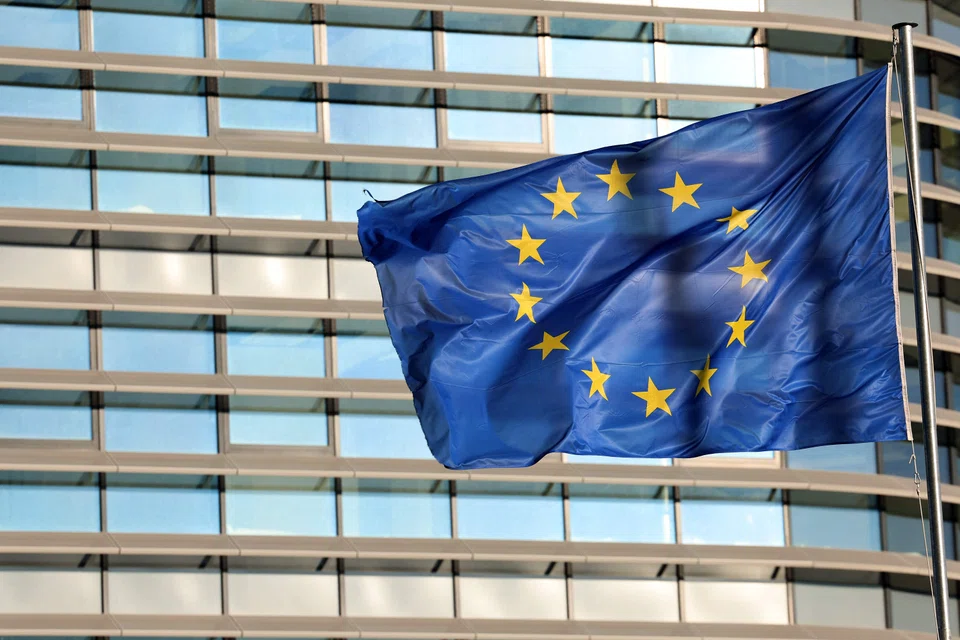
CANBERRA is over 16,000 kilometres from Brussels, yet the Australian capital has been top of mind for many European Union decision-makers in recent months, in the context of Europe’s economic plans to diversify from China.
China has experienced rapid gross domestic product growth for decades, and has built a strong global foothold in raw materials, especially critical minerals that are powering the digital and green transition. The high dependence of Europe on China for these minerals worries policymakers in Brussels, and is one of the key drivers of the EU’s economic diversification agenda.
In this context, trade talks between Brussels and Canberra collapsed last year, in large part because of disagreements over agricultural issues. This stemmed from the EU’s rules on geographic indicators, which would block Australian producers from labelling products with European-centric names, such as “prosecco” or “feta”.
The failure of the talks disappointed and concerned many across Europe in equal measure. Take the example of German Finance Minister Christian Lindner, who said if the EU “can’t make progress (on such an agreement) even with Australia, a liberal democracy firmly rooted in the Western world, that is concerning”.
Yet, the economic prize remains so significant for Europe that targeted talks kept going for a deal focused only on raw materials. This is because of the lure for the EU of greater access to Australia’s huge deposits of raw materials and energies, such as rare earths and green hydrogen.
The potential of these bilateral discussions was finally realised this week when a critical raw materials partnership memorandum of understanding (MOU) was agreed on Tuesday (May 28) between Canberra and Brussels, which is expected to come into force over the next six months. The MOU sets out cooperation in three main areas.
Firstly, integration of sustainable raw materials value chains, including networking, joint facilitation of projects, creation of new business models, and promotion and facilitation of trade and investment linkages, ensuring the well-functioning, sustainability, and resilience of these critical supply chains.
Secondly, there will be enhanced cooperation on research and innovation along the raw materials value chains, including on minerals knowledge and the minimisation of environmental and climate footprint.
Thirdly, there will be more cooperation to promote high environmental, social and governance standards and practices, as well as improved policy alignment. This will be driven by full respect of workers’ conditions and safety, and by the need for a sustainable and secure production of critical minerals.
The deal, which gives a shot in the arm to Europe’s economic diversification from China, is the 13th deal of its kind that the EU has now agreed.
EU Commissioner for Internal Market Thierry Breton said the partnership will “send a strong message across the entire raw materials ecosystem in the EU and in Australia”, and boost cooperation, investments and business opportunities.
Australian Trade Minister Don Farrell echoed this sentiment on Tuesday, saying that the new partnership “will encourage investment from the EU into Australian renewable energy projects”. He added: “Investment from our international partners is vital to achieving Australia’s full potential as a renewable energy superpower, and helps create more secure well-paid jobs for Australians”.
Building from the Australia deal, the next big piece of trade-related business that many European leaders would like to push on the economic diversification agenda is with Mercosur (Brazil, Argentina, Paraguay and Uruguay).
However, this is such a controversial agreement, over two decades in the making, that it may have to wait till 2025 at the earliest, after the next European Commission is bedded in, following June’s parliament elections.
Like the proposed EU-Australia trade deal, the potential European agreement with Mercosur stalled last year. In large part, this was because of opposition from French President Emmanuel Macron who visited Brazil late last year.
Macron’s chief concern was over agricultural issues, with farming lobbies politically very powerful in France. The big fear in Paris is that a Mercosur deal (which would create an integrated market of around 780 million consumers, removing an estimated four billion euros – or S$5.8 billion – of import tariffs on European products) would see a surge in agricultural exports to France, in particular, and the EU in general.
The vast Latin America continent, home to half a billion people, has the world’s largest reserves of arable land producing an estimated 15 per cent of global food production and 45 per cent of net international agri-food trade.
Yet, it was Latin America’s huge wider resources, including critical minerals and the largest share of renewables in the world, that attracted other European leaders. Indeed, the EU’s foreign policy chief Josep Borrell even said that the emerging market has the potential of becoming the “new Persian Gulf” given its critical mineral assets, such as lithium.
So, the failure to reach a Mercosur deal last year was hugely frustrating to some key European leaders, including Commission President Ursula von der Leyen and German Chancellor Olaf Scholz. They perceive that a deal would pull the two regions closer geopolitically amid a broader, international competition for influence. This has seen Beijing and Moscow try to strengthen diplomatic ties with resource-rich countries in Latin America.
Von der Leyen and Scholz are still pushing hard for the deal. Both of the leaders travelled to Latin America in the last 18 months to lobby for it.
The growing importance of Latin America to Europe is also seen in the EU’s new Global Gateway Strategy (GGS), which is mobilising up to 300 billion euros of investment globally for sustainable, high-quality projects from 2021 to 2027 in areas including green and digital transition; transport and energy infrastructure; health; education, skills and research; and sustainable finance.
Examples of GGS projects that the EU is launching in Latin America include critical raw materials value chains for lithium and copper; green hydrogen production; and expansion of electricity transmission networks.
Taken together, the Australian deal is therefore likely to lead to a European refocusing on an EU-Mercosur deal in the second half of 2024 or 2025, in a bid to cement the deepening of ties between the two powers. The fear in Brussels is that if an agreement is not concluded early in the new Commission, any later deal may take years more, if indeed it ever materialises.
The writer is an associate at LSE IDEAS at the London School of Economics