

Australia’s nuclear subs deal versus its China trade ties
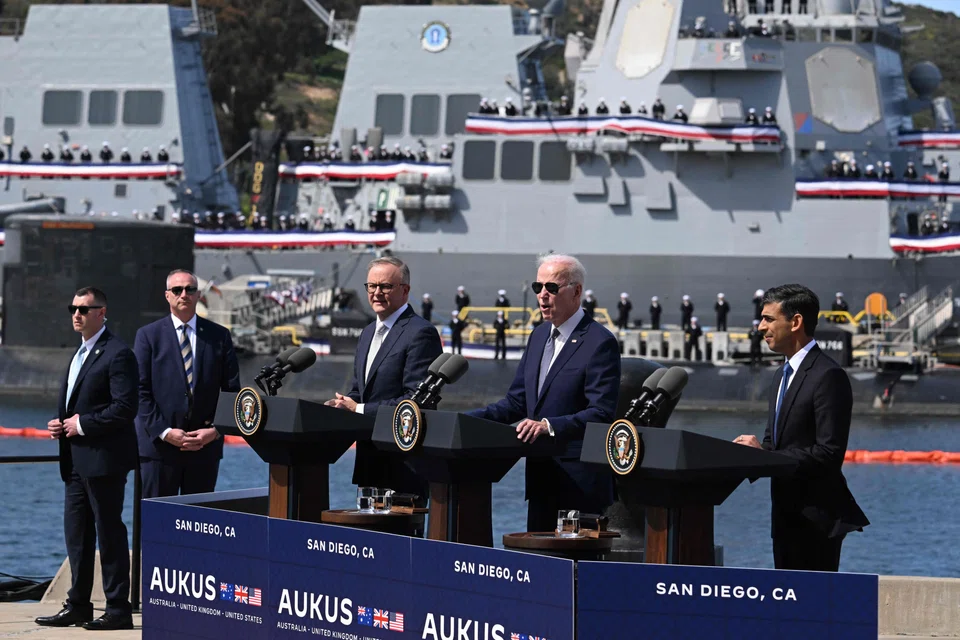
SINCE World War II, Australia has always looked to the US for its security. So it was again at last week’s Aukus deal with the US and Britain: it was to show Washington remains invested in its security.
The three-part accord will see US and British nuclear submarines make Australian port visits from 2027, when Australia would have built the infrastructure to host them. Then sometime in the 2030s, Canberra will get up to five used Virginia-class nuclear-powered boats – if the US legislature agrees to the sale. Finally, in the 2040s, Australia and Britain each will start building jointly designed nuclear-powered subs with some American components.
Several times in past decades, Australia has announced upgrades to its submarine fleet – all of which fell by the wayside. So there is some scepticism that this latest programme will get underway and be completed on schedule. Then there is the question of election cycles; none of the current leaders will be in office a decade from now. While British and American naval port calls may provide a sense of reassurance to Australians, such visits add nothing to Canberra’s own military capabilities. Substantive boosts to Australia’s military clout will come only when it gets those used subs, but that’s about a decade away.
Note also that the deal is not a full-fledged treaty, but rather an agreement on technical cooperation which also covers artificial intelligence (AI), AI navigation and hypersonic missiles, subject to change.
Then there is the question of how Australia’s neighbours will react. Indonesia and Malaysia have already announced their opposition, warning that the move will trigger an arms race. Jakarta has also lodged an objection that the sharing of military nuclear technology violates the Nuclear Non-Proliferation Treaty (NPT), to which all three countries are signatories. More importantly, even if there is a way to circumvent the NPT, such a deal would open the way for Russia and China to do the same for their allies. And if Jakarta’s entreaties are rebuffed, no one should be surprised if it seeks to acquire a matching nuclear submarine fleet. Cambodia has raised its objections about the idea, perhaps conscious that if Canberra does deploy its nuclear submarines in the South China Sea at some point, Phnom Penh would likely be pressed to provide a nuclear submarine port for China, its main political and economic patron.
Given that the Indian Ocean port of Perth is going to be a port of call for the US and British navies, the bordering countries will also be reassessing their own positions. India is in the process of acquiring three more nuclear submarines. Pakistan almost certainly will seek to match India. Teheran is likely to seize the opportunity to seek to do a similar deal with Moscow. South Africa recently hosted naval exercises with China and Russia.
The obvious reason for Australia’s military build-up is the fate of Taiwan amid China’s growing naval strength. If the US and China come to blows over the self-governing island, Australia fully expects to be fighting alongside the US. At the same time, China remains Australia’s biggest two-way trading partner, accounting for nearly one-third of its global trade.
How Canberra balances its economic fortunes with its geo-strategic position should be interesting to watch.
TRENDING NOW
CapitaLand, Far East, Sing Holdings team up for S$1.8 billion bid at S$910 psf ppr for Jurong Lake District site

‘If there’s a price to be paid, so be it’: George Yeo says Singapore must safeguard its reputation

Demand, tech capabilities position Apac and AI as Skyscanner’s next growth frontiers: CEO Bryan Batista

US agents, Singapore officials conducted Megaspeed check in June 2025; Alice Huang interviewed: US agencies

