

Bankers can expect a bumper bonus after standout year, but hopefully it won’t be an obscene sum
Bank profits hit all-time highs for the first nine months of 2024, with their share prices reaching multi-year peaks

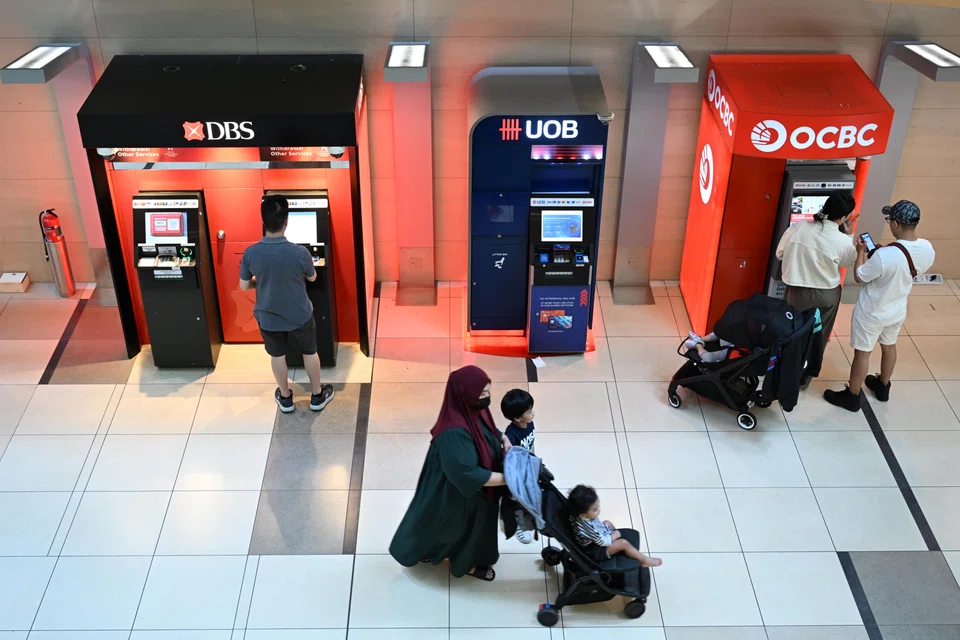
DECEMBER conjures up some wonderful imagery; it is a month filled with the smell of falling rain, festive goodies, fresh pine from Christmas trees – and year-end bonuses.
The mood must be especially sweet for some, such as the trio of Singapore banks that have had an outstanding year.
Bank profits hit all-time highs for the first nine months of 2024 (9M FY2024).
At Singapore’s largest lender, DBS, net profit for the nine-month period climbed 12 per cent year on year to a record S$8.8 billion, as total income rose 11 per cent to S$16.8 billion from growth in both the commercial book and markets trading.
OCBC’s net profit in the same period grew 9 per cent to a new high of S$5.9 billion, driven by broad-based income growth and lower allowances.
UOB’s net profit for the first nine months of FY2024 rose 5 per cent to S$4.5 billion on the back of strong fees as well as trading and investment income, while credit allowance declined.
The banks’ share prices have also reached multi-year peaks.
Shares of DBS closed at S$43.82 – its highest price – on Wednesday (Dec 4). With dividends reinvested, the counter has generated total returns of 52.9 per cent in the year to date.
OCBC is also hovering near its all-time peak. The counter closed at S$16.30, marking year-to-date total returns of 33.3 per cent.
UOB ended at S$36.65 on Wednesday – after hitting an all-time high the day before – to deliver total returns of 36.4 per cent so far this year.
For comparison, the benchmark Straits Times Index generated total returns of 23.9 per cent over the period – despite having been largely pulled up by the three banks in the first place.
Investors have few reasons to complain. And by all reckoning, bankers in Singapore should be rubbing their hands with glee at the prospect of bumper bonuses at the end of the year.
After all, the local banks are also flush with cash and could be tempted to spread some of this wealth around.
But a recent conversation with Standard Chartered chief executive Bill Winters puts this into perspective.
“During a time of rising interest rates, of course we perform better because we’re making more money. But to the extent that we’re making more money just because interest rates went up, you shouldn’t expect to get quite the same bumper payout,” he said in an exclusive one-on-one chat with The Business Times.
“Our performance has improved. But we also stress to our colleagues that we pay our variable compensation really as a function of how you performed against your targets, rather than how you performed relative to last year,” he added.
To be sure, the Singapore banks look on track to surpass their FY2024 targets.
For example, DBS at its second-quarter results briefing in August guided for FY2024 targets including a mid-single-digit per cent growth in net interest income, cost-income ratio at around 40 per cent, and net profit growth to be in the mid- to high-single-digit range.
For 9M FY2024, its net interest income is up 5 per cent; its cost-income ratio is at 38.7 per cent; and its net profit is up 12 per cent – giving it some allowance for a more moderate fourth quarter.
Clearly, its results for the first nine months of the year have mostly checked all these targets.
But while in absolute terms, the bank has had a standout year, the performance will be less remarkable if it ends up tracking these targets or just marginally exceeding them.
Surely, the bankers still deserve some generous payouts.
But the banks must ensure that bonuses do not appear excessive, compared to their performance against their targets.
TRENDING NOW

Once staunchly pro-China, Malaysian Chinese businesses are now distancing themselves from Beijing
AI can become superior to humans in certain aspects: TikTok’s Chew Shou Zi

DBS, OCBC, UOB face rate hike reality check

‘The market has spoken’: DBS CEO Tan Su Shan says market is repricing AI financing risks

