From bars to business: Why inclusive education is key to a stronger economy
The SUSS’ Prison School Project, which offers inmates a shot at earning business degrees, is a deeply human endeavour that will need broader societal support
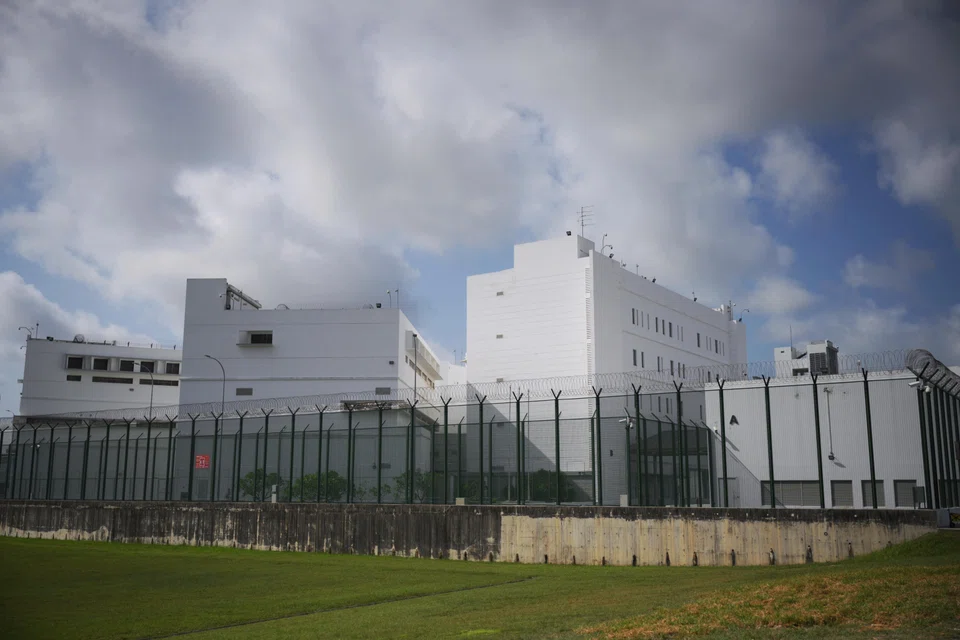
AS SINGAPORE continues to strengthen its position as a resilient, forward-looking economy, we must also ask: What does true inclusivity look like in our society and workforce? While we often associate the term “inclusive education” with efforts to support people with disabilities or learning challenges, there is another group too often left behind – ex-offenders.
At the heart of this discussion is a unique initiative led by the Singapore University of Social Sciences (SUSS), in partnership with the Singapore Prison School and the Singapore Prison Service: the Prison School Project. Launched amid the pandemic in 2020, this project offers incarcerated individuals the opportunity to pursue undergraduate business degree pathways while serving their sentences.
This isn’t just about education; it’s about unlocking human potential, reshaping social mindsets and reinforcing a key message – every individual, given the right tools and support, can contribute meaningfully to society and the economy.
Education behind bars: A dignified second chance
The idea that someone in prison can be enrolled in a university-level programme may seem unconventional, but it is a logical – and necessary – evolution in our approach to rehabilitation. The Prison School Project at SUSS offers inmates a structured and accredited academic pathway, beginning with specially curated courses in logistics, marketing, analytics and business management. Supported by faculty and associate lecturers who serve above and beyond their regular workload, the initiative is a testament to the university’s commitment to social good.
Education in correctional facilities is not new, but what makes this initiative stand out is that it offers a full undergraduate degree, not just vocational skills or basic literacy. The courses are adapted to suit the prison environment, with the support of the Singapore Prison School.
Beyond the walls, this degree is not just a certificate, a piece of paper. It is a symbol of dignity, and a stepping stone for inmates to re-enter society – not just as former offenders, but as trained professionals ready to contribute to Singapore’s economy.
Reducing recidivism, strengthening resilience
Education is one of the strongest predictors of post-release success. Studies globally show that access to higher education in prison reduces recidivism significantly. For a city-state like Singapore, which places a premium on meritocracy, efficiency and low crime rates, investing in the rehabilitation of offenders through education is not just a social initiative – it is a strategic economic one.
By equipping incarcerated individuals with skills relevant to the workforce, we reduce their likelihood of re-offending and increase their chances of securing stable employment. This has broader implications: reduced costs to the state, enhanced community safety and a stronger, more resilient workforce.
However, when ex-offenders continue their undergraduate studies post-release, they have to navigate diverse challenges such as finding employment while studying; financial instability; relationship building with family and friends; and reintegration with the society at large. Hence, the Prison School Project is looking towards supporting post-release reintegration into the university learning community through bridging programmes, mentorship and career readiness support, ensuring that learners are able to focus on their studies while balancing the other demands of life. This transition planning and support is a crucial component of the project’s long-term impact.
Breaking the stigma: A shared responsibility
While this initiative is driven by the university and supported by government institutions such as the Singapore Prison School, the Singapore Prison Service and the Yellow Ribbon Fund, it cannot succeed in isolation. The business community has a vital role to play.
Corporate employers in Singapore must begin to view hiring reformed individuals not as a charitable act, but as an investment in people – people who have worked hard to earn their second chance. The reality is that ex-offenders who graduate from programmes like the Prison School Project may be more disciplined, focused and motivated than their peers. Having overcome enormous adversity, they bring with them resilience, gratitude and a strong work ethic.
However, even with qualifications in hand, ex-offenders often face a wall of societal judgment. Employers may hesitate to interview them. Colleagues may question their credibility. These biases are not only unfair – they are unproductive. To build a truly inclusive economy, we must reshape our collective mindset around what it means to give someone a second chance.
Call to action: What businesses can do
Offer internships and apprenticeships: Businesses can provide structured opportunities for ex-offenders nearing release. These real-world experiences are crucial for building confidence and skills.
Create inclusive hiring policies: Review HR frameworks to ensure that a criminal record is not an automatic disqualifier. Instead, adopt a case-by-case approach that considers rehabilitation efforts and academic qualifications.
Partner with educational institutions: Collaborate with universities like SUSS to co-develop industry-relevant modules, offer guest lectures or even mentor incarcerated students. Your insights can help shape a future-ready curriculum.
Champion awareness: Lead by example. Employers who share stories of successful hires from unconventional backgrounds contribute to shifting public perception. These stories can be powerful tools in breaking the stigma.
Contribute to funding and resources: The private sector can support programmes like the Prison School Project through corporate social responsibility initiatives, scholarships and philanthropy.
Economic value through human capital
Singapore’s long-term competitiveness depends not only on our infrastructure or policies, but also on our ability to harness all our human capital. Individuals are released from the correctional system with the hope of rebuilding their lives. If they are left without support, they may return to crime or become disengaged from the economy. But if they are given access to education, training and employment, they can become net contributors to the nation’s prosperity.
This is not an idealistic notion – it is a practical one. Singapore has always thrived by turning constraints into opportunities. Our small size means we cannot afford to waste talent. That includes those who took a wrong turn in life but are ready to chart a new course.
The value of inclusive education lies not only in the academic qualifications earned, but in the ripple effects it creates: stronger families, safer communities and more diverse workplaces. When we choose inclusion, we don’t just change one life – we uplift entire systems.
A blueprint for change
With a total of 28 students enrolled since its launch five years ago, the Prison School Project has already begun to serve as a model. Most importantly, it is a deeply human endeavour – one that recognises education as a transformative force.
As the project looks towards expansion – with more courses, faculties and learners involved – it will need broader societal support. This is where you – the business leaders, the hiring managers and the decision-makers – come in.
Let us reframe our view of ex-offenders not through the lens of their past, but through the promise of their future. Let us embrace inclusive education as a foundation not only for social justice, but for economic growth. And let us do so together – as a united society committed to building not just a stronger economy, but a more compassionate one.
The writers are from SUSS. Dr Tay Huay Ling is associate professor, logistics and supply chain management. She is also the prison school coordinator at SUSS’ School of Business. Yeo Lay is dean of students, Student Success Centre, at SUSS.