

‘Basket case’ on its way to upper-middle income status despite turmoil
 Add BT as a preferred source

SINCE its inception in 1971, Bangladesh seems to get into the world’s headlines only for its woes. Indeed, at the time of the country’s independence, Nixon-era bigwig Henry Kissinger – perhaps smarting from humiliation for having backed the losing side – dismissed Bangladesh as a “basket case”.
If it isn’t political unrest, then it’s floods. Bangladesh sits astride the confluence of two mighty rivers, the Ganges and Brahmaputra, and that has made it vulnerable to floods, especially as climate change wreaks havoc on weather patterns.
Yet despite its handicaps, as the World Bank notes, the nation represents a remarkable story of poverty reduction and development. From being one of the world’s poorest nations in 1971, Bangladesh reached lower-middle income status in 2015. It is on track to graduate from the United Nations’ Least Developed Countries list in 2026.
So, while political unrest and the hasty departure of ex-prime minister Sheikh Hasina last week were dramatic, the country’s economic and social development is likely to continue apace. The immediate cause of the riots had to do with government jobs – the reinstatement of a quota system that allotted at least 30 per cent of civil service jobs to descendants of freedom fighters in Bangladesh’s war of independence from Pakistan.
Students started demonstrations in June after a High Court reinstated this quota, overturning a 2018 decision by Hasina’s government to scrap it. Her administration promptly launched an appeal to the Supreme Court. It was upheld. But the protesters, having tasted the power of taking to the streets, then demanded that she apologise for using excessive force against demonstrators. Estimates put the death toll at between 150 and 450 people, with several thousands injured in the wave of violence in the previous weeks.
Why are civil service jobs so important? Hasina’s time in office saw a steady rise in the standards of living. GDP per capita went past that of Bangladesh’s South Asian peers, including India. But the economy’s strong headline growth numbers also obscured a job crisis.
Navigate Asia in
a new global order
Get the insights delivered to your inbox.
The country has a population of 173 million, of whom 49 million are between ages of 15 and 29. Within this prime working age cohort, 40 per cent are estimated to be unemployed. Thus, Bangladesh has much in common with its neighbour India as far as youth unemployment goes.
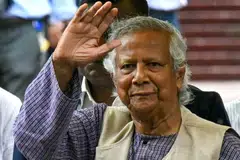
Nobel Peace Prize laureate Muhammad Yunus has been inducted as chief adviser to the interim government of Bangladesh. Opposition leaders from the Bangladesh Nationalist Party (BNP) have been freed. Tarique Rahman, the son of former BNP prime minister Khaleda Zia, is about to return from exile. He led a campaign against India’s purported influence on his country’s politics. Backing him are two radical groups, Jamaat-e-Islami and Hefazat-e-Islam.
Jamaat-e-Islami wants to impose syariah law in Bangladesh. The party was barred by the Supreme Court from contesting in the general elections. Now, Jamaat-el-Islami will be back in the fray. But given youth literacy levels and the general temperament of the people, the prospect of a Taliban-like movement talking hold in Bangladesh seems remote for the moment, despite anxious commentary in neighbouring countries.

Bangladesh aspires to attain upper middle-income status by 2031. If the interim government can clean up the electoral system and the debased institutions of state, there is every reason to assume that the country will notch the milestone.
Decoding Asia newsletter: your guide to navigating Asia in a new global order. Sign up here to get Decoding Asia newsletter. Delivered to your inbox. Free.
Share with us your feedback on BT's products and services
TRENDING NOW
On the board but frozen out: The Taib family feud tearing Sarawak construction giant apart

Thai and Vietnamese farmers may stop planting rice because of the Iran war. Here’s why

MAS convenes bank CEOs over AI cyberthreats; boards told to own risks, not leave to IT teams

Is it time to scrap COE categories for cars?

