

The battle for next-gen EV batteries takes off
Chinese tech still dominates, but could new innovation from South Korea and Europe catch up?

IT IS something of an industry truism that China’s electric vehicle (EV) industry has swept away everything before it.
China has almost 70 per cent of the global EV market. It is also the world’s leading EV car exporter. In 2024, Chinese EVs dominated the markets in Brazil, Colombia, Mexico, Uruguay, Indonesia, Malaysia, Uzbekistan, Morocco, Egypt, Jordan and South Africa, according to the International Energy Agency.
Just one EV manufacturer, BYD, reported that Britain has become its largest market outside China, with sales growing an astounding 880 per cent year on year in September. China has been able to race ahead thanks to battery innovation, low domestic energy prices coupled with the country’s dominance in rare earth technology. Beijing’s initial subsidies helped, of course. But is that the end of the EV story? Not by a long shot.
Recent reports coming out of the battery industry suggest that competition is coming in a big way. The new generation of EV batteries will have a competitive range of 800 km with a charging time of 12 minutes.
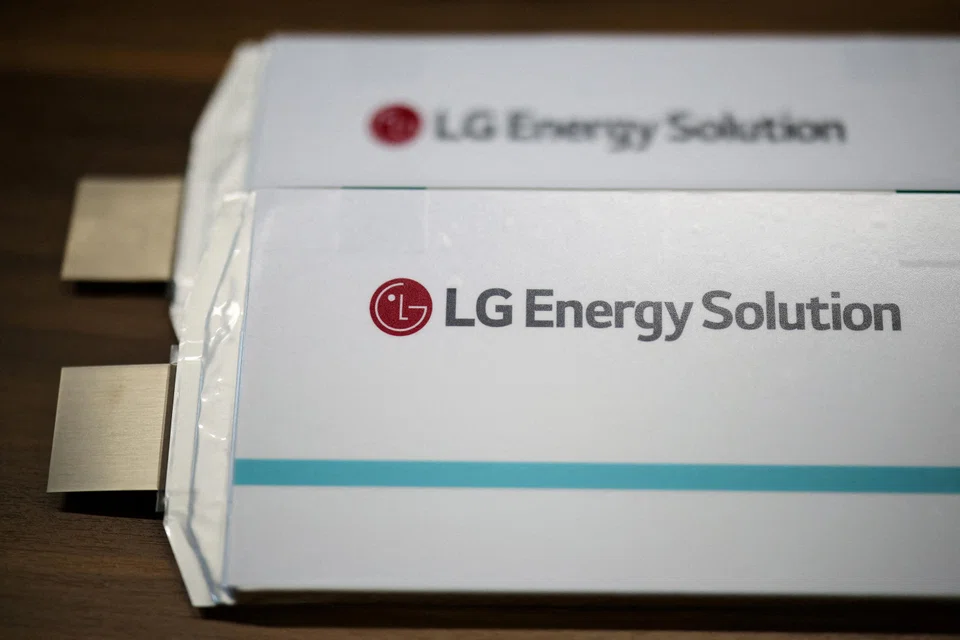
More importantly, the technology is not Chinese. South Korea’s LG Energy Solution has reportedly developed a lithium-manganese rich (LMR) battery. It is claimed that this new type of battery will become a viable competitor to lithium iron phosphate (LFP) batteries, the production of which China dominates currently.
The use of manganese offers a significant price advantage as it is said to achieve 33 per cent greater energy density than the LFP variety for the same cost. These batteries might also be safer because their manganese content lowers the risk of overheating and fire.
The science behind LMR batteries has been known for years, but development on a large scale was hindered by challenges such as voltage drop and reduced battery life span. Those problems have been overcome, LG Energy Solution reported earlier this year. Its proprietary manufacturing processes have given LMR batteries a lifespan comparable to that of the China-made varieties. America’s General Motors plans to fit the new LMR battery in large electric sports utility vehicles and electric trucks in 2028. Its joint venture with LG Energy Solution, Ultium Cells, is expected to start pilot production at its Korean facility by the end of 2027 and go on to commercial-scale production at a US factory in 2028.
Europeans also seem to be stepping up, thanks to EU battery regulation on the lifecycle of batteries – from its carbon footprint to recycling and waste management. British firm Anaphite reported that its innovative processes will reduce the cost and energy consumption involved in battery manufacturing.
Another British outfit, Ilika, is reported to have pioneered a new technique that makes its solid-state batteries safer than the lithium-ion batteries which are prone to thermal runaway – a dangerous condition where the battery overheats.
The Europeans recognise their EV industry has a distance to go before they catch up with China’s. They consider it strategically important for their EV industry to get not just cheaper and better batteries but, crucially, batteries produced in member countries.
None of this is to suggest the Chinese are being complacent. They are also turning their minds to solid state batteries and hope to get going by the end of this decade. Some of these innovative leaps may turn out to be duds. What is important to note is that, like the fable of the tortoise and the hare, the plodders sometimes win.






