

Beating climate change demands unwavering dedication
Climate Week NYC can build on the strides made at last year’s COP28, but only if governments and companies fulfill their promises
THIS year’s Climate Week NYC has begun with unusual momentum.
Last year’s COP28 United Nations climate summit in Dubai resulted in unprecedented commitments. Governments agreed to treble renewable-energy capacity and double the increase in energy efficiency worldwide. Half the oil and gas industry pledged to cut methane emissions by three-quarters. The World Bank and the African Development Bank announced that they would cut the number of households without electricity by 40 per cent. But are commitments being turned into action?
In some places, yes – and impressively so. China’s biggest solar companies now contribute more energy to the world economy than the oil industry’s giants.
The United States increased renewable-energy growth by 94 per cent in a single year, partly because of the federal incentives championed by President Joe Biden that have resulted in three times as many Americans investing their own funds in renewable energy, as economists had projected.
The European Union hit a new benchmark by generating 70 per cent of its electricity from zero-carbon technologies. Globally, electric cars now make up 17 per cent of total sales, and that number keeps rising.
In addition, batteries and other technologies – including new satellites that enable us to identify methane leaking from wells – continue to advance at a rapid pace. And as they do, costs keep coming down. The price of batteries has come down 90 per cent in only 15 years.
It’s fair to say that the engineers are doing their jobs, but the same cannot be said of many elected leaders.
While the world is moving away from polluting carbon and towards clean, healthy renewables at an unprecedented pace, we are still far behind where we need to be to slow global warming and the devastation of climate change.
Climate change is becoming increasingly destructive to our economies and health – and the price we are paying for moving so slowly continues to rise. The last year, for instance, has been the hottest in the history of the world. In Phoenix, temperatures reached 37.8 degrees Celsius for 113 straight days, a record.
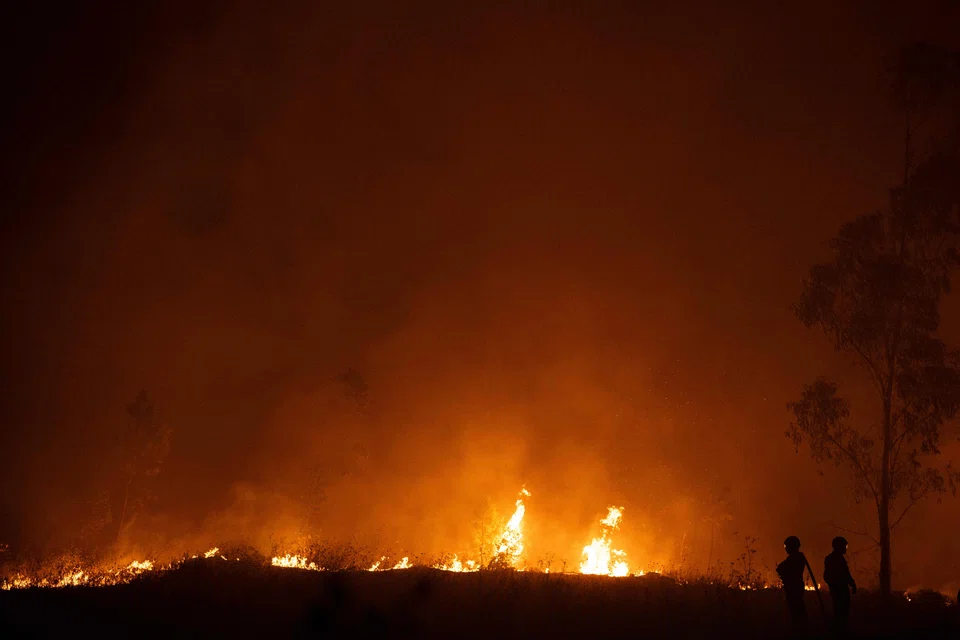
Historic heat has brought historic droughts, as well as wildfires and more powerful storms. Flooding has devastated communities around the world – and even whole countries and regions, as the people of Pakistan, eastern Europe, and west and central Africa can attest. In the US, flooding costs the economy an estimated US$390 billion a year, and 1 per cent of gross domestic product.
Coal and gas won’t go quietly
The coal and gas industries are not going quietly into the night. In fact, some of the very oil companies that pledged to stop their wasteful pollution have sued the US government for the right to avoid cleaning up their leaking wells.
But the problem isn’t only with fossil fuel companies, of course. While the scale of renewable-energy growth has exploded, it is still mostly concentrated in the Global North. Only 15 per cent of 2023 renewables investment went to Asia outside China, where the needs for energy are the greatest. Some three-quarters of a billion people in Africa and Asia lack electricity – and millions jeopardise their health to work in coal mines – despite Africa having the world’s greatest solar potential.
It’s imperative to move faster in breaking down barriers to the spread of renewable energy, especially in the Global South. And so, at this Climate Week, we need fewer pledges and more action plans to fulfil the promises made at last year’s COP.
There is wind at our back, but enormous obstacles – and unprecedented dangers – remain in front of us. Overcoming them will require building on our momentum in creating a sustainable global economy.
The writer is the founder and majority owner of Bloomberg, the parent company of Bloomberg News, UN Special Envoy on Climate Ambition and Solutions, and chair of the Defense Innovation Board






