COMMENTARY

The benign truth hidden behind currency fears

Currencies of developed nations tend to even out in the long term; so their short-term volatility can be overlooked
Summarise
    • Fears that “strong currencies” will hammer corporate profits on exports or cause “deflationary” effects are likely to be unfounded, argues the author.
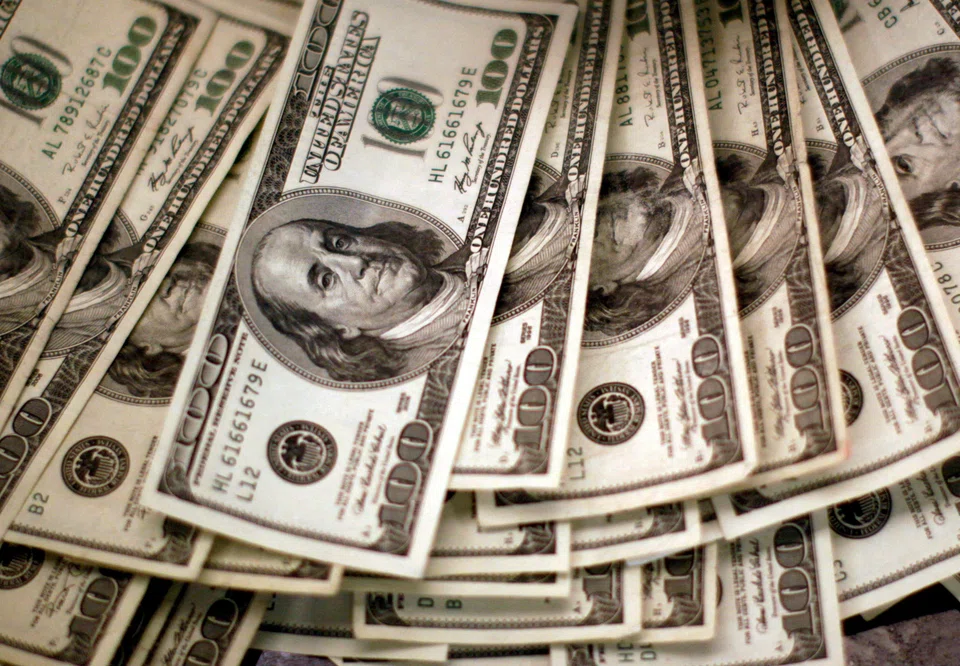
    • Fears that “strong currencies” will hammer corporate profits on exports or cause “deflationary” effects are likely to be unfounded, argues the author. PHOTO: REUTERS
    Published Mon, Nov 3, 2025 · 07:00 AM — Updated Mon, Nov 3, 2025 · 10:57 AM

    WHETHER a currency is strong or weak, someone always fears its swings. In 2025, it has been worries over US dollar “weakness”.

    Bears hype its 2025 plunge against the soaring euro, Swiss franc and “Asia’s Swiss franc” – the Singapore dollar – as a signal that investors are increasingly fleeing US assets.

    They point an accusatory finger at tariffs, “risky” policy moves, US Federal Reserve independence fears and more.


    No matter how a currency’s decline affects a nation, many presume it is awful for economies, wallets and stocks. Wrong!

    Despite common claims, swings in the currency of a developed nation predict little. Certainly not stocks’ direction – they never have consistently.

    US dollar weakness – the core of the current currency consternation – in 2025 is also not very unusual. Let me explain.

    Currency volatility is seen globally. But it really all hinges on America’s greenback.

    It isn’t just Singapore’s “safe haven” dollar, up 5 per cent versus the US dollar in the year to date as at Oct 24 – which some say is a prelude to greenback parity.

    In the same period, the euro gained 12.3 per cent, Britain’s pound 6.2 per cent and Switzerland’s franc was up 14 per cent.

    All that has much of the world fearing that “strong currencies” will hammer corporate profits on exports – or cause alleged “deflationary” effects.

    Conversely, the “weak” US dollar was down 4.8 per cent, 10.9 per cent, 5.8 per cent and 12.2 per cent against those respective currencies – or down 8.8 per cent against a trade-weighted basket of currencies.

    That has many fearful of higher US import prices, which could rekindle hot inflation. Or, that it shows faltering confidence in American assets. Pick your 2025 poison.

    Bears believe that the situation is bad; data disagrees.

    No visible pattern

    Let us start with America’s greenback and the S&P 500. US stocks rose in 44 of the 56 years since 1968.

    This could be split near-evenly between the times the greenback strengthened (24) and when it weakened (20). When stocks fell, the American dollar rose in six of the instances and declined in six.

    See any pattern? There isn’t one.

    For those who have fears over a strong currency, consider the euro: eurozone stocks rose in the 18 years since its 1999 debut.

    The euro strengthened against a 41-nation currency basket in 12 of those years – the most common result. It weakened in six, the exact number of times a stronger euro coincided with falling stocks. Again, no pattern.

    And, the Singapore dollar? After end-1967, Singapore stocks rose in 36 of the 57 years. They advanced alongside the Bank for International Settlements’ trade-weighted Singapore dollar index in 24 of those years and fell in 12.

    Seems like a strong Singdollar is bullish? Consider the 21 years in which the Singapore stocks fell. The currency strengthened in 11 of those years and weakened in 10. If you see a pattern there, also see your ophthalmologist.

    Yes, you can cherry-pick brief periods where panic over the strength of a currency drove a stock-market correction. You can always do that with any random phenomenon.

    Yet, for each of those, I can pinpoint the reverse – such as in late 2004, when rampant fears over a weak US dollar coincided with a steep fourth-quarter stock rally in the US and globally.

    Even in the shorter term, stocks and currencies show little relationship. Over the last 20 years, the weekly correlation between the US dollar and US stocks is minus 0.3 – very weak, given that 1.0 means identical movement and minus 1.0 is the exact opposite.

    The Singdollar’s correlation to the Straits Times Index is at 0.28. If currencies drove stocks directionally, you should see high correlations one way or the other – not these flimsy, flip-flopped relationships.

    Why is there so little effect on stocks? Markets see the lack of economic impact. A weak currency may make one country’s exports more competitive overseas, but it also makes imported components costlier – and vice versa for a strong currency. Plus, global exporting firms are keen currency-hedging experts.

    This is normal

    Further, there is nothing very unique about 2025’s weak US dollar.

    Looking back at the period before 2025 reveals that the American dollar sat at levels decried as “too strong” for years.

    Many say that the reasons for a weak greenback – and non-US currencies’ relative strength – are different now, stemming from broad panic over US President Donald Trump’s words and policies. This is said to be pushing central bankers towards the euro, China’s yuan or gold, and denting US dollar dominance.

    But currency markets treat Trump like any other US Republican president.

    Three-quarters of the time, the American dollar weakened against a trade-weighted basket during a president’s four-year term, strengthening on average only in their fourth year. This year, the greenback was down 8.8 per cent in the year to date as at Oct 24. At the same point in Trump’s first term, it was minus 8.3 per cent. This isn’t unusual. It is normal.

    Worries over currency moves overlook a basic truth: Currencies trade in pairs.

    Currencies of developed nations even out eventually in the long term into what resemble long, large, irregular sine waves – and will this time, too. Fear of a false factor is always bullish. So let others fret over their wiggles, while you enjoy this bull market.

    The writer is the founder, executive chairman and co-chief investment officer of Fisher Investments, an independent investment adviser serving both individual and institutional investors globally