

The best deal with Trump is no deal
Sometimes, the most strategic move is to stand back and let the costs of bad policy speak louder than diplomacy ever could
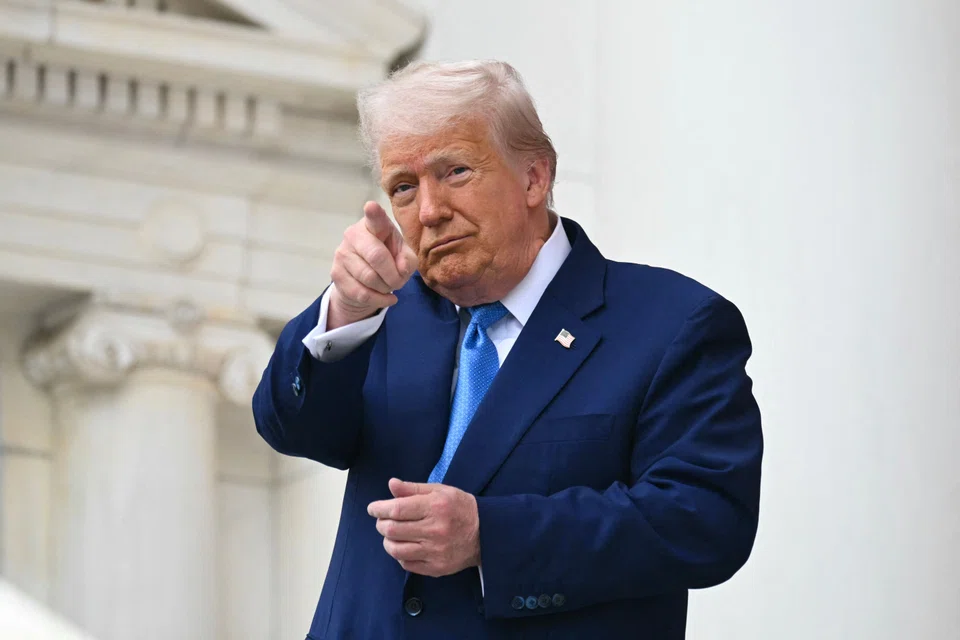
THE 46th Asean Summit took place this week against a backdrop of a changing world order, with multilateralism and globalisation in retreat. As Asean leaders confront the global economic uncertainty, created by the current US administration’s policies, the most strategic response to President Donald Trump’s tariff-driven approach is disengagement – not negotiation or appeasement.
Ignoring Trump is not passivity – it is strategic defiance. By refusing to be drawn into asymmetrical negotiations, Asean can safeguard its interests and let the costs of protectionism fall squarely on the US economy.
Trump’s depiction of China, Japan, South Korea, India, and Asean as job thieves is not just misleading – it is a deliberate distortion of economic reality. From 2021 to 2024, US unemployment averaged just 3.8 per cent – among the lowest not only in the developed world, but globally – exposing the falsehood that foreign economies are siphoning off American jobs. In fact, the US economy soared to a record US$29.3 trillion in 2024, retaining its status as the world’s largest economy, with per capita income of US$86,000.
Structurally, 81 per cent of US GDP stems from services, which employ 79 per cent of American workers – in fact 91 per cent when including the self-employed. Manufacturing, though politically resonant, accounts for only a sliver of employment. Tariffs, particularly against Asia, under the guise of “saving jobs”, distort this reality and risk harming the very global networks that power US growth.
For decades, Asean has contributed significantly to US prosperity. In goods, Asean’s supply of semiconductors and machinery is critical to sustaining US manufacturing competitiveness. At the same time, the region’s demand for American aircraft and defence equipment supports thousands of high-skilled jobs across the United States.
In services, Asean is a major destination for US exports – ranging from finance and education to digital platforms – contributing significantly to America’s trade surplus. In 2024, the US recorded a US$24.4 billion services surplus with Asean.
More broadly, US services exports reached US$1.11 trillion, while imports totalled US$812.2 billion, yielding a global services surplus of US$293.4 billion (Bureau of Economic Analysis). On investment, US firms channelled US$328.8 billion into Asean in 2024 alone, accounting for 22.5 per cent of total foreign direct investment into the region.
Risks of aggression
Yet, Trump’s tariff aggression risks unravelling this mutually beneficial relationship. Punitive tariffs risk alienating a trillion-dollar trade partner, disrupting supply chains, and weakening America’s own economic prospects.
For over five decades, Asean has anchored US prosperity – economically, strategically, and diplomatically – by supplying essential intermediate goods, absorbing US services exports, and generating trillions in annual revenue for American companies operating throughout the region.
How, then, should Asean respond to Trump’s destructive approach?
First, Asean should lead with principles. Trump’s exploitation of trade in goods imbalances to justify tariffs must not be rewarded with preferential treatment. Disengagement from Trump is a firm reaffirmation of Asean’s core values: non-alignment, multilateralism, and mutual respect.
Asean should underscore its unwavering commitment to rules-based trade and regional stability. It remains open to partnerships with any country that respects international norms and embraces equitable cooperation.
By insisting on World Trade Organization (WTO) principles of reciprocity and most-favoured nation (MFN) treatment, Asean rejects Trump’s zero-sum logic. These principles were reaffirmed in the Asean Leaders’ Statement of May 26-27, 2025 – a unified rejection of discriminatory trade practices. Asean must also partner other regions to uphold these rules. In an era of growing economic fragmentation, Asean’s adherence to multilateralism offers one of the few remaining anchors of rules-based global trade.
Second, Asean must mobilise the American business community, whose long-term interests lie in open, stable markets. These companies have profited enormously from Asean’s openness. It is time they defend the very conditions that enabled their success.
From Boeing to Apple, Microsoft, IBM, and Intel; from Freeport, ExxonMobil, and Chevron to platforms such as Starlink; from global consumer names such as McDonald’s, Coca-Cola, Nike, and Unilever to banks such as Citibank, Visa, and Mastercard; from insurers AIG and Chubb to law firms Skadden and Baker McKenzie and consultancies such as McKinsey and BCG – these firms flourish on open markets and regional cooperation.
Yet if influential corporations – such as Elon Musk’s Tesla and Starlink, or Meta (which owns Facebook and Instagram, whose leadership aligns with Trump’s nationalist agenda) or media outlets such as Fox News, which amplify protectionist rhetoric – continue to disregard Asean’s strategic relevance, the region must take note. These firms must harness their influence in Washington to counter economic nationalism. If they fail to speak up – or worse, remain complicit – Asean is right to reconsider the privileged access they enjoy in its markets.
Asean should make clear that market access is not a blank cheque. In today’s contested global economy, partnerships must be reciprocal. If US firms benefit from Asean’s openness but fail to defend the frameworks that enable it, Asean has every right to reassess their privileged access.
Last, Asean should let the US deal with the consequences of its own policies. Trump has made clear – through sweeping tariffs and nationalist rhetoric – that he has little regard for Asean, or for America’s own longstanding allies, including the European Union, Canada, Japan, and South Korea. He is unlikely to change.
He responds neither to diplomacy nor to data, but only to two constituencies: his domestic political base and a narrow circle of business elites. So let them feel the impact. If Trump slaps tariffs on Asean, it will be US firms – those dependent on South-east Asian supply chains – who will bear the consequences: higher costs, logistical delays, and eroded competitiveness. Ultimately, they may be the only voices he listens to.
Strategic discipline
Trying to reason with Trump is a dead end. Asean should instead invest in building economic resilience: deepen regional integration, diversify trade partners, and expand strategic alliances. Let the pressure come from within. This is not retreat – it is strategic discipline. Sometimes, the most strategic move is to stand back and let the costs of bad policy speak louder than diplomacy ever could.
Moving forward, following the conclusion of the Asean summit and the Asean-GCC-China Economic Forum, there is now a critical window for Asean to assert a bold economic agenda. The region must double down on intra-Asean trade, fully utilise the Asean+1 free trade agreements and Regional Comprehensive Economic Partnership (RCEP), strengthen Asean+3 with China, Japan, and Korea cooperation, and deepen strategic ties with partners across the EU, Middle East, Eurasia, Latin America, and Africa.
Diversifying not only trade and investment but also currency use and payment systems will be essential to building a more autonomous and future-ready Asean.
As Trump turns inwards, Asean must turn outwards.
The writer is secretary general of the International Economic Association. The commentary reflects her personal views.
TRENDING NOW

Once staunchly pro-China, Malaysian Chinese businesses are now distancing themselves from Beijing

Stocks to watch: HPL, Aims Apac Reit, Zico, Advanced Systems Automation, ComfortDelGro

‘How many will survive?’: Bubble fears arise as China’s humanoid robotics face reality check
Smaller board lots can’t fix a market run by three banks

