

Between war and rate cuts
Sizing up the risks will be critical for businesses and investors, and taking in both good and bad news will be a necessary practice
DO YOU want the good news first, or the bad? More than a few jokes begin that way, and the line can also describe the world at present. After much anticipation, the US Federal Reserve cut interest rates substantially in September, and markets bubbled to exuberance. This is not only in the United States but across many markets, including our region.
Yet in this same period, Israel struck leaders of Hezbollah as well as Houthi-held positions in Yemen, and began bombarding Lebanon, on top of the still ongoing assault on Hamas in Gaza. Iran, the backer of these groups, retaliated with a barrage of rockets and now there is concern of Israel retaliating, perhaps to directly strike Iran and even target oil production.
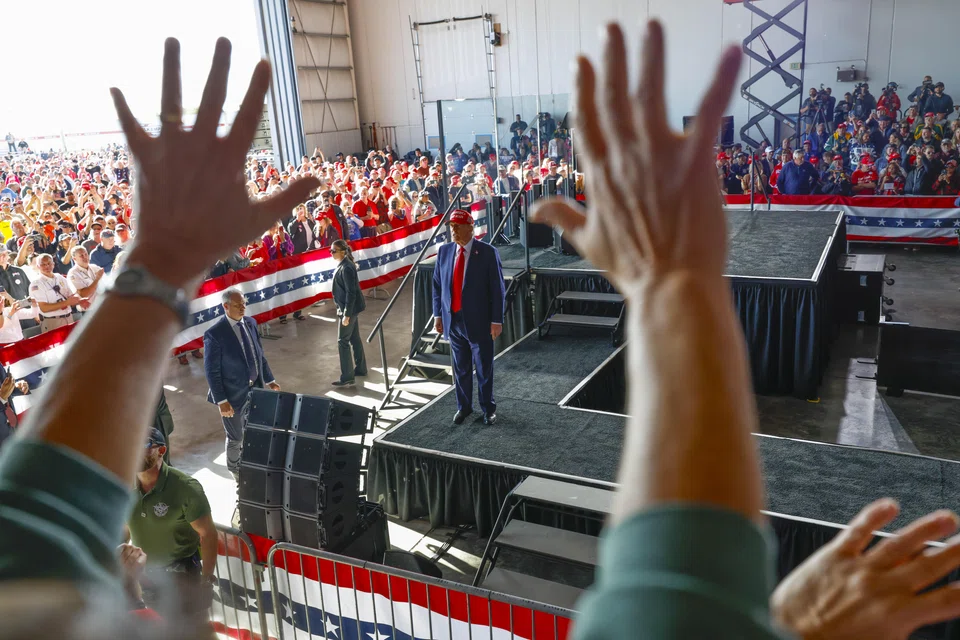
The US needs to actively intervene. But the US presidential race is entering the home stretch in a contest that remains too close to call and that has already witnessed two assassination attempts.
Surveying the political risks, some investors and businesses might pause and even shift towards safe havens. But totems of stability like the US dollar and gold have seen only a mild uptick and not a surge. To the contrary, a “risk on” attitude seems widespread. This seems to be listening to the good news of the rate cut first, and also second, and negate the bad news.
Why?
Long-anticipated background noise
It has been a year since hopes for a rate cut were first voiced. Moreover, most investors mostly stayed on the sidelines last year. Anticipation grew, like the first shoppers in a queue waiting for the store to open its great sale. Now with a rate cut “discount” that’s even better than expected, investors are in no mood to heed alarm bells.
Some feel that the risks, moreover, are known and already priced in. The conflict in the Middle East is now one-year old. The US election – even with so many other elections around the world – is always going to be the most important and hotly contested. There is a sense that political risk factors have been normalised, receding into background noise – especially the war in Ukraine.
Conversely, expectations have grown that money – and there is a lot of it in the world – needs to look for higher rates of return. The sluggish growth of the post-pandemic economy reinforces that ambition, and the resilience of the US economy has fed hopes.
This is reinforced with China now taking steps to tackle the country’s economic malaise. The hope is the two largest economies in the world will be back on track. Even with lingering Sino-American tensions, their economic resilience could drive growth across much of the world.
I am not one to burst bubbles but there should be caution against popping the champagne too early. There are opportunities, especially in our region, but there are also good reasons to rein in the animal spirits that often drive markets and instead proceed with eyes open.
Complexity of connections
The risks are not merely normal background noise but have escalated. Most clearly, the current situation in the Middle East represents a broadening of the conflict far beyond Gaza and Israel’s initial retaliation.
If Israel and Iran were to trade retaliatory responses with increasing force, the situation could tip into a full-blown war that no one wants. Iran recently elected a reformist leader and cannot afford to be seen as weak. On the other hand, no one seems willing or able to restrain Israel’s Benjamin Netanyahu – not even the US.
This is especially when the Americans are in election mode. But the schism in the country will continue even after Nov 5. There is also risk that the heated campaign could tip into turbulence and contestation over the results, with a prolonged impact on focus and attention.
The complexity of effects should not be underestimated. As Middle East tensions rise, the common indicator is the price of oil. This has edged upwards but remains currently relatively low, below US$100 per barrel.
Recall that the Russian invasion of Ukraine drove prices above US$120. It may be prudent to consider that prices would surge in the possible scenario that Saudi Arabia – the key oil producer – is embroiled or even directly attacked by Iran.
This could spark inflationary pressures, especially when we add the possibility of further disruptions in supply chains. Already, much of shipping between Europe and Asia is incurring considerably increased time and costs by avoiding the Red Sea. If the conflict spreads or escalates, this can ripple through the supply chains of many goods, and further drive cost pressures.
Taken together, higher oil prices and disrupted logistics and manufacturing could make inflation the offspring of conflict. This could then bring the question of interest rates back on the in-tray of central bankers. The goal of taming inflation is not a one-time solution, but something that could recur and bears watching.
Adjustments of policy – including rate cuts – can be reactive to new factors driving up costs. And those factors are not always and only bad news. Good news too can drive inflation.
Strong job numbers in the US, and the potential that China will resume growth that spurs consumption are good news but also could stir inflation. For certain resources and goods, the transition towards carbon neutrality and clean energy could increase what some call “green-flation”.
Another factor to watch are the spending ambitions of governments. Fiscal spending can boost demand to spur growth and be tied to some good cause such as building infrastructure or creating jobs by giving incentives to high value investors. But many such plans are larger than what the coffers – weakened during the pandemic period – can bear.
This would then necessitate government borrowing, that could crowd out allocation to the private sector and increase inflationary pressures. Notable and large-scale plans are being considered in Thailand and also Indonesia, as well as in the US. If Donald Trump wins the election, some analysts anticipate he will cut taxes and implement ambitious giveaways that will considerably increase government debt.
The pre-pandemic years were marked by growth across many parts of the world, and remarkably, these were achieved in tandem with low inflation. While inflationary pressures have receded for now, it should not be assumed we have now again found the magic combination of growth and low inflation.
The recent rate cut cannot be the only consideration, and the market seems to have underpriced the risks of geopolitics and of inflation reigniting. Sizing up the risks will be critical for businesses and investors; and taking in both good and bad news will be a necessary practice.
The writer is chairman of the Singapore Institute of International Affairs and senior consultant at WongPartnership law firm






