Beyond energy chokepoints: Breaking the Hormuz stranglehold
Why Asia’s green hydrogen success is a critical path to sovereignty
ASIAN markets are breathing a collective, if shaky, sigh of relief – for now.
At the time of writing, Brent crude had fallen to US$87.44 a barrel – a staggering US$32 drop from the peak of nearly US$120 on Mar 9.
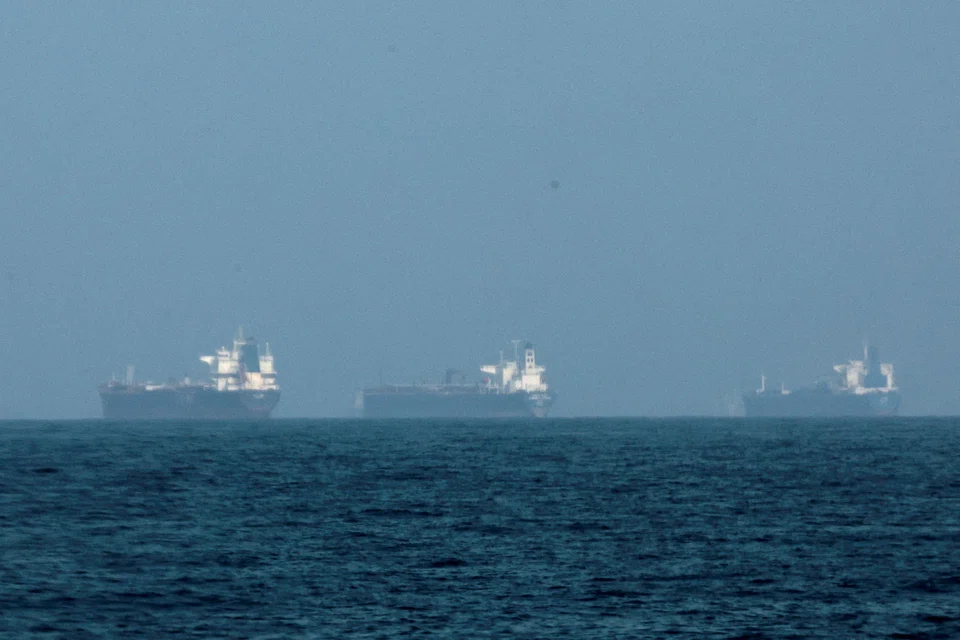
In response, the Kospi has surged 9 per cent and the Nikkei 225 is up nearly 4.8 per cent, clawing back ground lost during the peak of the Musaffah 2 crisis, where a United Arab Emirates-flagged tugboat was hit by explosions at the Strait of Hormuz.
But we must ask: For how long will this last?
The smoke over the strait is more than a sign of regional conflict; it is the dying breath of an energy era that has held the Asia-Pacific hostage for a century.
The recent market “recovery” is not a return to stability – it is a temporary reprieve. For the Iron Triangle (shipping, energy, finance), the lesson of the last 48 hours is visceral: Energy sovereignty cannot be found in a narrow strait. It must be engineered through a global liquid hydrogen (LH2) supply chain.
The fossil fuel trap: a failed status quo
The volatility we are witnessing, where Brent swings 20 per cent in a single trading session, is a systemic tax on Asian industrialism.
US President Donald Trump’s dismissive comments aboard Air Force One suggesting the conflict is “pretty much complete” may have calmed the algorithms, but they deliver a hard truth: The traditional “protector” of the sea lanes is no longer a guarantor of stability.
While prices “plummet” back to US$90 a barrel, Singapore’s VLSFO (very low sulphur fuel oil) bunker fuel remains stubbornly high at US$1,105 a tonne, up nearly 50 per cent from February lows. For the shipowner, the “blackmail” remains.
The Asia-Pacific hydrogen hedge
While the Strait of Hormuz remains a geopolitical trigger, the infrastructure to bypass it is going to live in a multibillion-dollar “green reality”. Asia is currently leading a strategic “counterstrike” to replace scarcity with technological abundance.
In March 2026, the Western Green Energy Hub in Australia secured major agreements to supply pure green hydrogen to Japanese and South Korean partners. The Lumsden Point expansion in the Pilbara is fast-tracking to feed renewable energy directly into Asian liquid hydrogen supply chains.
Simultaneously, Hyundai Motor Group has announced a nine trillion South Korean won (S$7.8 billion) investment in the Saemangeum Hydrogen Hub, featuring a massive 200 megawatt PEM electrolyser to ensure domestic energy self-sufficiency.
The technical barriers of the past are being crushed by “steel in the water” projects. In January, Kawasaki Heavy Industries signed the contract for a 40,000 cubic metre LH2 carrier – 30 times the size of its predecessor, the Suiso Frontier. This vessel is the maritime equivalent of the first supertanker, providing the foundation for a supply chain that ignores the Persian Gulf entirely.
Technical challenges vs industry solutions
Critics point to physics as a barrier to widespread adoption of hydrogen. But the perceived physics barriers of hydrogen are being dismantled by sea-proven engineering.
Volumetric density is managed through -253 liquefaction and vacuum-insulated containment – technologies already operational via Kawasaki and Chart Industries – while HD Hyundai’s active re-liquefaction systems eliminate boil-off fuel waste.
Structural risks such as embrittlement are neutralised by International Maritime Organization-mandated 316L stainless steels, and ignition profiles are mitigated by the high-velocity venting and ultrasonic detection systems utilised on vessels such as the MF Hydra.
Crucially, multi-stage hydrophobic filtration from Toyota and Nedstack now shields fuel cells from 99.9 per cent of marine salt aerosols, ensuring long-term reliability in high-humidity trade corridors.
These industrial solutions transition LH2 from a theoretical challenge to a bankable maritime asset. However, cost and volume are still an issue. This is where wind propulsion plays a crucial role.
To make the LH2 supply chain bankable, we must address the energy-to-load-ratio problem first.
Wind propulsion is the only “fuel” that cannot be blockaded. By integrating rotor sails and suction wings, shipowners reduce on-board power requirements by 10 to 30 per cent. This efficiency lowers the volume of LH2 needed for deep-sea voyages, making the transition economically viable today.
Breaking the blackmail: a call to action
The “green hydrogen counterstrike” replaces geopolitical scarcity with technological abundance. We call upon stakeholders to take action.
Asian governments: Treat the International Maritime Organization’s 2026 Net-Zero Framework as a national security mandate. Implement Marshall Plan-style funding – specifically Contracts for Difference – to bridge the price gap between volatile US$90 a barrel oil and stable green hydrogen.
Shipowners: Stop waiting for “the right time”. Every day a tanker sits idle in a conflict zone is a day that should have been spent commissioning a hydrogen-ready vessel or a rotor sail.
Investors: Redirect capital expenditure from fossil-fuel-dependent assets to the Japan-New Zealand Hydrogen Corridor and Australian export hubs.
Sovereignty is a choice. The current relief in Asian markets is a dangerous illusion. If we remain tethered to the Strait of Hormuz, we remain subject to the whims of regional instability and the shifting priorities of distant superpowers.
The success of Kawasaki, the ambition of Hyundai and the resource wealth of Australia provide the blueprint. We can either stay tethered to a maritime chokepoint or lead the transition to the hydrogen age.
For the Asia-Pacific, energy sovereignty is not a climate goal – it is the only way to survive the 21st century.
The writer is founder and chief executive officer of Zero Emissions Maritime Technology and secretary-general of the Zero Emissions Ship Technology Association