Beyond Hormuz: Asia’s energy goals need a new road map

This moment is a pivotal opportunity for Asean to force a transition from security to self-sufficiency
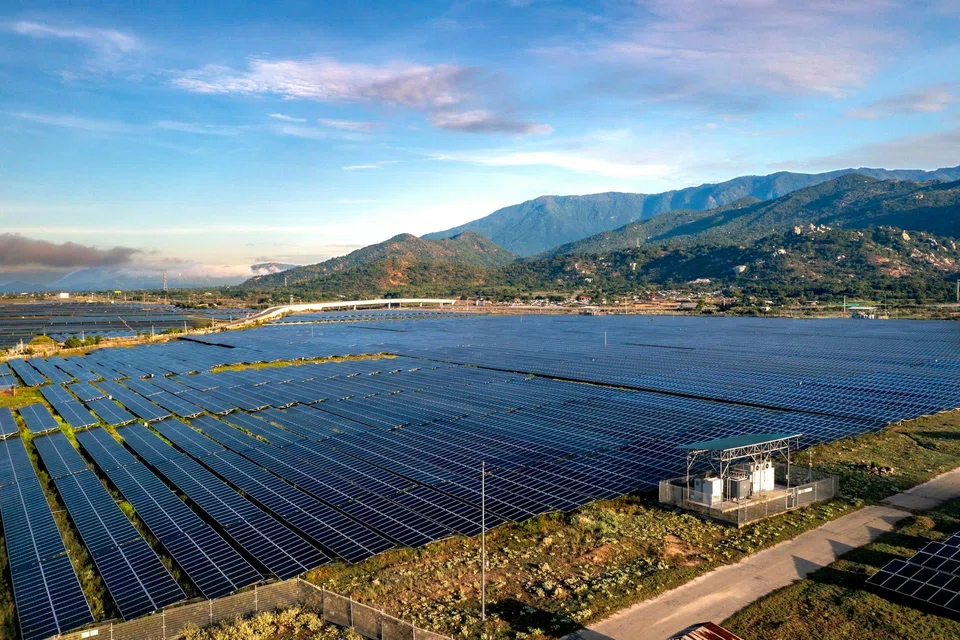
    • With an abundance of solar and wind, Asia has a credible path to reduce the region's vulnerability to energy crises.
    • With an abundance of solar and wind, Asia has a credible path to reduce the region's vulnerability to energy crises. PHOTO: PEXELS
    Published Mon, Apr 27, 2026 · 07:00 AM

    THE conflict in the Middle East has exposed vulnerabilities in Asia that analysts have long warned about but policymakers have been slow to act upon.

    The pursuit of energy security and the region’s dependence on fossil fuels is a critical strategic liability, not just an environmental one.

    Most Asian countries – blessed with abundant solar, wind and other clean resources – have long had a credible path open to them to reduce this vulnerability.


    If a few key historical decisions had been made differently, the current crisis could have been substantially less consequential for the region’s economies and people.

    The question now is not whether Asia needs to transition away from imported oil and gas, but how fast and through what pathways.

    In the short term, damage control is the only option. In many cases, that means coal.

    DECODING ASIA

    Navigate Asia in
    a new global order

    Get the insights delivered to your inbox.

    China, in the face of broad criticism of its coal power policies, has been making the point for some time that its world-leading renewables programme can only succeed if domestic coal underpins the country’s energy independence until clean energy is adequately scaled and intermittency conquered.

    However, the crisis goes beyond that energy independence.

    Energy security can be thought of as having the means to meet energy requirements at a reasonable price. This involves both the energy infrastructure and the access to the fuels that power it.

    Most Asian countries lack China’s domestic options, but their import dependency requires a stable global trade and security environment, which are no longer reliable assumptions.

    The ultimate goal, therefore, should be energy self-sufficiency, which only renewable energy can provide.

    Underpinning it all is the question many Asian leaders have largely avoided: the extent to which energy security has been pursued to the detriment of genuine energy resilience. 

    Some argue that means moving from, for example, a reliance on imported Middle Eastern gas to a reliance on imported Chinese solar panels. I disagree.

    It is fundamentally different to have the infrastructure and rely on importing the fuels than it is to import the infrastructure and get the fuel (that is, sunshine or wind) for free. Import it now and you can always build your own solar or wind production capabilities over the medium term.

    Self-sufficiency requires the vision to implement structural transformation across three interconnected fronts: power systems, the industrial base and regional cooperation.

    The most urgent priority is to accelerate renewable power deployment. The economics have been tilting inexorably in favour of that since even before the current conflict erupted.

    Combining renewable resources with storage and flexible generation will enable Asian countries to both limit their reliance on imports and shield their economies.

    The second front is broader decarbonisation and the progressive severance of Asia’s industrial base from its dependence on oil and gas. This means moving towards becoming “electrostates” – through the electrification of everything.

    This is achieved by electrifying transport and heavy industry, rethinking supply chains that have been engineered around cheap, imported fossil inputs, as well as investing in green hydrogen and more energy efficiency.

    It will require long-term planning now, as well as financing, to upgrade the infrastructure. But the alternative – permanent exposure to geopolitics beyond the region’s control – is costlier still.

    The third front is regional grid integration. The abundance of solar and wind throughout Asia is complementary, because the sun shines and the wind blows at different times.

    The Asean Power Grid initiative has been designed to create transnational distribution and power trading, which would make the infrastructure costs cheaper, speed up renewable deployment and make South-east Asia more self-sufficient.

    But progress has been far too slow and decisions have not been taken that could have put the region in a very different position.

    Underpinning it all is the question many Asian leaders have largely avoided: the extent to which energy security has been pursued to the detriment of genuine energy resilience.

    Reversing that vulnerability means building the domestic and regional clean energy infrastructure to make such dependencies obsolete.

    The Hormuz crisis will end but the structural weakness it has exposed will not, unless Asian governments treat this moment as an opportunity to force a transition that is long overdue: the transition from energy security to energy self-sufficiency.

    The writer is director of research at Asia Research and Engagement

    Decoding Asia newsletter: your guide to navigating Asia in a new global order. Sign up here to get Decoding Asia newsletter. Delivered to your inbox. Free.

    Copyright SPH Media. All rights reserved.