

Beyond US aid, Ukraine needs European allies to step up
It is 800 days since Russia’s invasion, and the stakes are growing higher
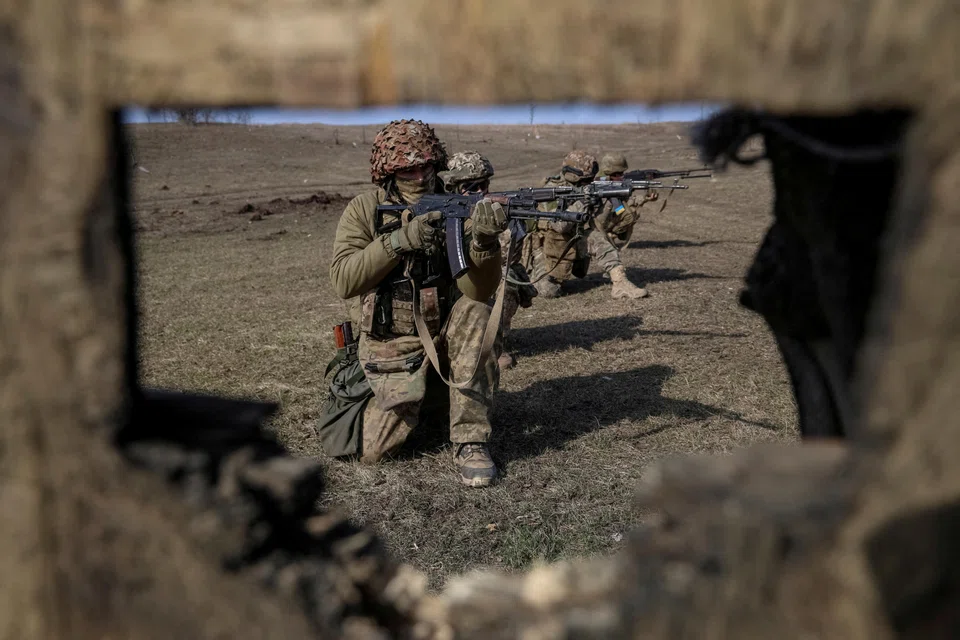
THE United States’ fresh aid allocation to Ukraine, worth US$61 billion, may prevent any massive Russian breakthrough this spring or summer – but is probably not a game changer that will fundamentally alter the course of war.
Friday (May 3) marks 800 days since Russia’s invasion of Ukraine in February 2022, and attention is now moving to the urgent need for a long-term strategy for Ukraine.
While the US aid may well prevent Ukraine from losing in 2024, it won’t in itself provide a pathway to victory for Kyiv. Getting further large chunks of US aid to Ukraine may be challenging from 2025, if the war still continues then.
With the US presidential election in November, there is the significant possibility that former president Donald Trump – who is sceptical about Ukraine and its war effort – may win.
Even if Joe Biden is re-elected, this may take place alongside a Republican-controlled House of Representatives or Senate, or both.
Europe’s crucial role
It’s now time for other Western allies, especially Europe, to step up to the plate. Whether Trump or Biden wins, there may still be a critical gap that only Europe and its allies, including Japan, Canada and Australia, can try to – at least partially – fill.
What the Brussels-based club has done, already, is start to move forward with around half the previously promised European Union aid to Ukraine – 50 billion euros (S$72.8 billion) over the next four years. This is to give Kyiv more predictability for its strained budget.
Beyond this, the Italian-chaired G7 is also looking at ways to seize US$300 billion in frozen Russian assets this year.
However, much more thinking and action is needed about how the 27-member EU and other allies, such as the United Kingdom, can best contribute to the resilience of Ukraine in the medium to long term.
This includes military assistance, security guarantees and wider economic support such as access to the EU’s massive single market.
A starting point for this forward commitment, beyond the unprecedented support that Europe has provided so far, is Brussels moving forward with accession talks for Ukraine to potentially join the EU. Beyond that, the West can also put Kyiv on to a pathway to possible membership in the North Atlantic Treaty Organization.
Moreover, important commitments can be made on reconstruction.
The rebuilding of Ukraine may approximate that of Western Europe after the Second World War, Eastern Europe after the Cold War, and the Western Balkans after the breakup of Yugoslavia.
It will cost many hundreds of billions of euros, and be the most ambitious post-war reconstruction effort in the 21st century.
If Western allies beyond the US can now step up to the plate in this way, it may yet turn the tide of the war, especially if Biden also wins re-election in November. Militarily, the boost for Kyiv could be significant.
Politically too, the national consensus behind Ukraine President Volodymyr Zelensky’s leadership could renew itself again.
While his approval rating remains high by international standards, trust in him fell significantly last year, according to the Kyiv International Institute of Sociology.
High stakes
The West should have no doubt that while Russian President Vladimir Putin remains in power, Moscow will continue to put huge resources into its war effort.
This includes massive military manpower: Putin revealed last year that a total of over 600,000 Russian troops are currently fighting in Ukraine, and almost 250,000 of them are soldiers who were called up to fight alongside professional military counterparts.
The stakes are high. If Russia wins, it could move closer to controlling around a quarter of global wheat exports. Moscow could seek to weaponise this key food stock in a way that it has sometimes done with energy before.
But if Ukraine can continue to match Russia beyond 2024, there remains the outside chance of a political surprise In Moscow. Putin’s regime may be significantly more fragile than it seems, as last June’s Wagner mutiny showed.
A growing number of Western intelligence veterans, including former UK MI6 chief Richard Dearlove, believes that Putin could yet be vulnerable to a coup, especially in a continuing war of attrition.
The year 2024 is therefore the moment for Europe to double down on its commitment to Ukraine.
European powers have huge incentives to support Kyiv so that planning can begin in earnest for what may be a difficult 2025, if the war is still ongoing.
The writer is an associate at LSE Ideas at the London School of Economics






