Beyond US-China rivalry: triangular geopolitics of critical minerals is reshaping global trade
The high-tech West, processing-intensive China and the resource-rich Global South must cooperate, not decouple
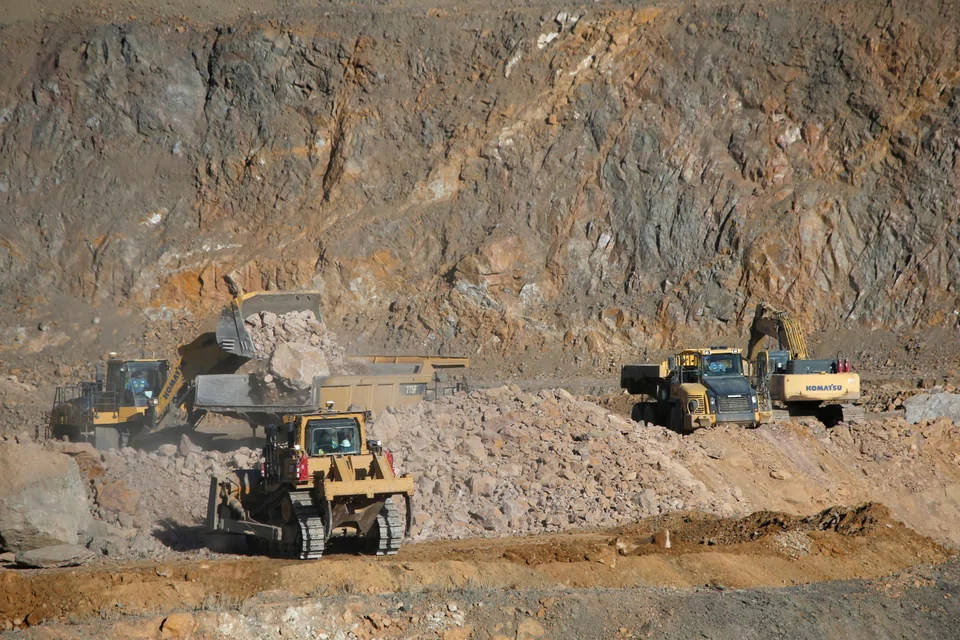
THE geopolitics of critical minerals entered a new phase recently when the Group of Seven (G7) announced plans to reduce dependence on any single supplier of rare earth elements and permanent magnets.
Under the initiative, G7 members aim to reduce reliance on a single source to below 60 per cent by 2030, with a longer-term goal of reaching 50 per cent.
The move reflects growing concerns about supply chain resilience and economic security. Yet, it also highlights a broader reality: The competition over critical minerals can no longer be understood simply as a contest between the US and China.
A more useful framework is to view the evolving landscape of critical minerals as a triangular relationship involving three major groups of actors.
Each occupies a distinct position within the global value chain, and each has legitimate, but sometimes competing, interests.
The first consists of Western economies that possess advanced technologies, financial resources and consumer markets.
The second is China, which has developed extensive processing, refining and manufacturing capabilities in many critical-mineral value chains.
The third comprises resource-rich countries in the Global South. These countries hold a large share of the world’s reserves of lithium, nickel, cobalt, copper and rare earths.
This triangular structure is increasingly shaping the future of globalisation.
Leverage used by resource-rich developing nations
Perhaps, the most important yet underappreciated development in this new structure is the growing leverage used by resource-rich developing nations.
Increasingly, these countries are seeking to move beyond the traditional model of exporting raw materials. Indonesia’s downstream processing strategy has become one of the most prominent examples, while similar initiatives are emerging in Africa and Latin America.
These nations are determined to capture a larger share of value creation, promote domestic industrialisation and strengthen their bargaining position within global supply chains.
Their success or failure will determine whether the emerging critical-mineral economy contributes to more balanced global development, or reinforces existing inequalities between developed and developing economies.
This resource nationalism is rewriting the rules of globalisation.
For much of the past four decades, production was organised around comparative advantage and supply chains optimised for cost reduction. Economic interdependence was widely viewed as a source of stability and prosperity.
Today, geopolitical tensions, technological rivalry and supply chain disruptions have pushed governments and businesses to place greater emphasis on resilience and security.
The world is moving from an era of efficiency-driven globalisation to one increasingly shaped by risk management and strategic considerations.
Three structural forces drive this demand for critical minerals: a new wave of industrialisation, the exponential computing needs of artificial intelligence, data centres and digital technologies, and the global transition towards low-carbon development, requiring materials such as lithium, nickel and cobalt.
In effect, the world is not reducing its dependence on natural resources; it is shifting that dependence from fossil fuels to critical minerals.
Significant structural imbalances
Yet, while demand is growing rapidly, supply remains characterised by significant structural imbalances.
Major mineral reserves are concentrated in countries such as Australia, Chile, Indonesia and the Democratic Republic of Congo.
Processing and refining capacity, however, is heavily concentrated in China, while consumption is largely driven by advanced industrial economies.
This separation of resource ownership, processing capability and end-market demand has created a highly interdependent global supply chain that no single country can fully control.
Increasingly, geopolitics is reshaping the way these channels operate. Export controls, investment restrictions, industrial subsidies, local-content requirements and strategic stockpiling have become more common.
As governments seek to reduce vulnerabilities and strengthen supply security, their efforts are also contributing to market fragmentation. The consequences extend far beyond the mineral sector.
Growing operational complexity
The technological strengths of Western economies, China’s processing advantages and the resource endowments of the Global South could, under normal conditions, be combined through open trade to achieve an efficient global division of labour.
Yet, the current landscape is encouraging duplication of capacity, relocation of production and the construction of parallel supply networks.
For businesses, this means higher procurement costs, increased compliance burdens and growing operational complexity.
Companies in sectors ranging from renewable energy and electric vehicles to advanced manufacturing and defence technologies are being forced to diversify suppliers, build strategic inventories and maintain redundant production arrangements.
While these measures may enhance resilience, they inevitably erode economies of scale, passing inflationary pressures down to global consumers.
And because critical minerals sit at the foundation of the digital economy, advanced manufacturing, green industries and defence technologies, disruptions at the upstream level can quickly spread across entire industrial ecosystems.
The implications are particularly significant for the global green transition. The achievement of climate goals depends on affordable access to critical minerals and efficient international industrial cooperation.
As supply chains fracture into competing regional blocs, the costs of renewable energy deployment and battery production are likely to rise. Geopolitical rivalry is therefore becoming one of the most significant human-made obstacles to global decarbonisation.
Against this backdrop, the central challenge is not figuring out a way to decouple, but instead cooperate under new conditions. Complete self-sufficiency is neither realistic nor economically efficient.
The technological strengths of advanced economies, China’s processing capabilities and the resource endowments of the Global South remain fundamentally complementary. No single country or group can independently dominate every stage of the critical-mineral value chain.
For businesses, adaptation will be just as important as diversification. Companies will need to move beyond pure cost-minimisation to develop supply chain strategies that balance efficiency with resilience.
This may involve building multiple sourcing channels, strengthening regional partnerships, increasing investment in recycling and alternative materials, enhancing compliance capabilities and participating more actively in international industry standards and governance frameworks.
Rather than deepening geopolitical fragmentation, a more sustainable path forward would involve strengthening multilateral cooperation: reinforcing rules-based trade, developing more inclusive mechanisms for supply chain governance, and supporting resource-rich developing countries in upgrading their industrial capabilities through investment, technology transfer and infrastructure development.
Such an approach will not eliminate competition, but it can help ensure that competition remains compatible with broader global interests.
History suggests that every major phase of international order has been built around a strategic resource.
In the 20th century, that resource was oil. Today, it is critical minerals.
The emerging competition is therefore not simply about securing resources; it is about shaping the rules, institutions and balance of power in the next global era. The contest over critical minerals reflects a deeper transition in the nature of globalisation itself.
The world is unlikely to return to the efficiency-driven model of the past, but neither is it destined to fragment into isolated blocs.
The more plausible outcome is a new form of globalisation that balances efficiency with resilience, openness with security and competition with cooperation.
Whether critical minerals will become a source of division or a foundation for shared prosperity will depend on whether the West, China and the Global South can find ways to compete and cooperate at the same time.
The writer is an associate professor at the Lee Kuan Yew School of Public Policy at the National University of Singapore
This essay is part of New Global Order, a series which explores how the changing world landscape is reshaping business, politics and beyond.
TRENDING NOW
He built the Vingroup empire. Now South-east Asia’s richest man is handing some key roles to his sons
Despite the de-dollarisation debate, demand for dollar liquidity in Asia is growing
Singapore’s new data centres must use renewables. Can they overcome the hurdles?
Tokyo reverses baby bust with AI matchmaking and generous subsidies