
Biden and Xi ‘sit out’ COP28, but Europe doubles down
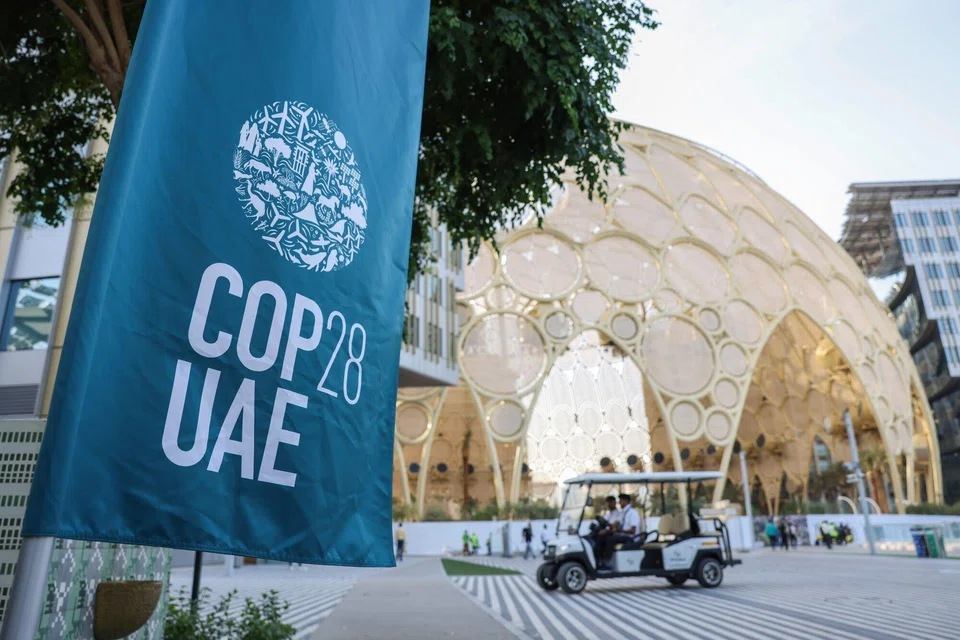
    • Many leaders from EU are expected at the COP28 climate summit. The bloc has become a big player in climate negotiations, partly through the power of example.
    • Many leaders from EU are expected at the COP28 climate summit. The bloc has become a big player in climate negotiations, partly through the power of example. PHOTO: BLOOMBERG
    Published Thu, Nov 30, 2023 · 05:00 AM

    THE high-profile COP28 climate summit opens on Thursday (Nov 30) in Dubai, United Arab Emirates, without key leaders such as US and Chinese presidents Joe Biden and Xi Jinping in attendance.

    One of the other world powers that will fill this vacuum is the European Union (EU) which sees the event as critical for delivering the goals of the 2015 Paris deal. The influence of Europe, plus China and the United States, in global climate talks is illustrated by the fact that they, in combination, account for around half of greenhouse gas emissions.

    While Xi and Biden will sit out COP28, for different reasons, multiple EU leaders will be at the big event, including European Commission President Ursula von der Leyen and European Council President Charles Michel. This reflects the fact that the EU has a huge stake in the summit.


    First, the EU has become one of the three big players in climate negotiations. This is partly through the power of example, with the bloc slashing its greenhouse gas emissions by around one-third compared with 1990.

    Second, the EU has been an early, influential mover on green innovation, including developing the world’s first carbon market in 2005. A key announcement that Europe is expected to make at COP28 is a new, international Critical Raw Materials Club, following the finalisation of the EU Critical Raw Materials Act.

    Third, Europe has also been at the fore of existing climate trends. The continent has warmed more than twice as much as the rest of the world over the past three decades and experienced the greatest temperature increase of any continent, according to the World Meteorological Organization. From 1991 to 2021, temperatures over Europe warmed at an average of 0.5 degree Celsius per decade, the report said, while the global average was 0.2 deg C.

    A reason Europe is warming so fast is that a significant part of the continent is sub-Arctic and Arctic, Earth’s fastest-warming region, as well as changes in climate “feedbacks”. For example, fewer clouds over Europe during summers means more sunlight and heat.

    While Europe has long been a leader in tackling climate change, many had speculated that its ambition might be tempered by the “twin shocks” since 2020 – Russia’s invasion of Ukraine, and the Covid pandemic. The impact of these has been huge, elevating the urgency of energy security.

    This has led to a big European effort in securing energy pacts, with around 120 deals clinched in recent years with other powers, mainly in the Middle East. These agreements have mainly focused on new gas and liquefied natural gas supplies as a transitional source in the movement towards clean energies.

    Given this new investment in gas, Europe’s decarbonisation pathway will be complicated in the coming years. However, the EU has nonetheless “doubled down” on its hugely ambitious Green Deal, and is still cutting its emissions overall.

    The EU’s State of the Energy Union Report 2023 highlights how the REPowerEU plan and emergency legislative measures have also helped to avoid energy-supply disruptions and promote renewable energies. In 2022, 39 per cent of electricity was generated by renewable sources and, in May 2023, wind and solar surpassed for the first time total fossil fuel-based electricity generation. EU-wide greenhouse emissions are estimated to have fallen 3 per cent last year.

    At COP28, the EU is encouraging all parties to agree on global energy goals to deliver on three core objectives. First, phasing out unabated use of fossil fuels globally, making sure that fossil fuel consumption peaks ahead of 2030, and phasing out fossil fuel subsidies that do not help achieve a just transition.

    Second, moving towards a fully or predominantly decarbonised global power system in the 2030s, leaving no room for new coal power. Third, tripling global installed renewable energy capacity by 2030 and doubling the rate of energy efficiency improvements by 2030.

    Europe is encouraging such high ambition because of the current challenges facing climate diplomacy. This includes the dark geopolitical context following the pandemic and Russia’s invasion of Ukraine. Plus, the strains between the Global North and South on climate issues as countries seek remediation for climate loss and damage. This has shifted mindsets, at least temporarily, in much of the world, making it much more difficult to see the kind of international agreement on this agenda made prior to the Paris climate summit in 2015.

    And this despite the warnings from the United Nations in a major report in September that the world is way off track to tackle climate change. The study asserted that the globe remains headed for a temperature rise of up to 2.6 deg C and must take urgent action.

    In this context, Dubai is unfortunately unlikely to see a wide series of big, new national climate pledges. Instead, there will be a key focus on implementing existing promises.

    In what may therefore be a challenging COP, the overall key goal is consolidation to keep global climate diplomacy “alive” during this difficult period. And in so doing, creating a “bridge” to the second half of the 2020s, which Biden has called the “decisive decade” for humanity to tackle global warming.

    For while there are many short-term challenges, there is some room for longer-term optimism. For instance, an International Energy Agency (IEA) report in September found that a small window of opportunity remains for keeping the landmark Paris climate agreement alive because of the remarkable growth in clean power that is expected to further accelerate in coming years.

    But the IEA highlighted that even stronger measures will be required in the second half of the 2020s to have any chance to deliver on the 1.5 deg C target. The world body warned of the negative impact of increased fossil fuel investments and what it said are “stubbornly high emissions”. If the world fails to expand clean energy fast enough, measures such as carbon capture and storage technology will be required at scale, it added.

    Key climate stakeholders are therefore seeking to develop a post-COP28 road map into the second half of the 2020s, including stronger climate deal implementation through national laws to make delivery most effective. As Europe has shown, these legal frameworks could then be replicated in more countries, and progressively ratcheted up, as climate ambition increases, helping create what could yet be a key foundation for sustainable development in the decades to come.

    The writer is an associate at LSE IDEAS at the London School of Economics


