

Biomimicry: What architects can learn from termites and elephants
No animal is too tiny or large to provide ingenious solutions

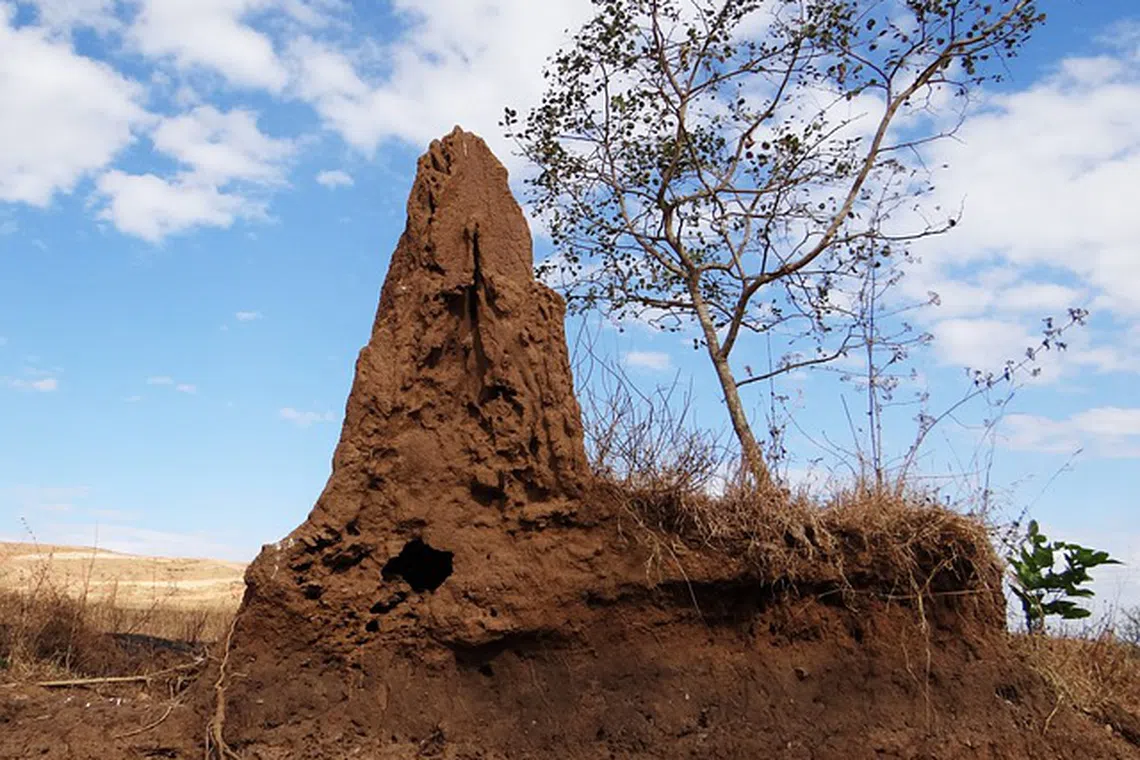
TERMITES are often vilified as pests, but they are, in fact, some of nature’s finest engineers.
Some species of termites build massive mounds that are self-cooling, almost like in-built air conditioning. These mounds – made of soil, saliva and dung – have an intricate network of tunnels linked to a central chimney. Warm air inside the mound rises and escapes through the chimneys, drawing in fresh waves of cool air.
“It’s quite a beautiful system, almost like a lung,” says Dr Anuj Jain, founding director of bioSEA, a company that specialises in the esoteric field of “biomimicry” design.
As the name suggests, biomimicry is all about learning from nature to solve human design and engineering challenges. For Dr Jain – a certified “biomimic” – the humble termite is an incredible source of inspiration.
I saw this for myself at an exhibition at the National Design Centre in late September, where bioSEA showcased several biomimicry innovations.
One exhibit was inspired by termite mounds. bioSEA designed bricks with channels running through their cross-section. Using such wall panels in buildings can increase the exchange of fresh air from the outdoors. This is especially at low wind speeds, when air flow is most needed.
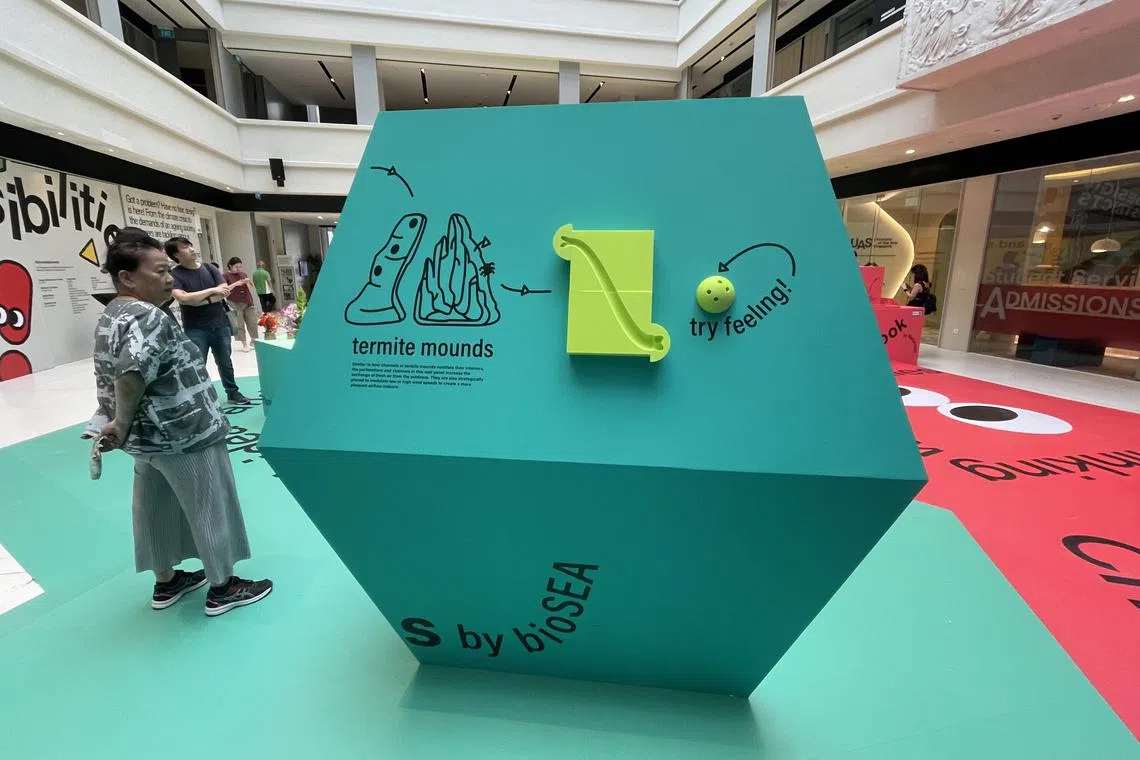
The design of the channels follows a special branching pattern found in nature, called Murray’s Law. “It’s the same law for branching that happens inside our lungs, in trees and for blood vessels. That creates a lot of diffusion,” Dr Jain explains.
The design is part of a broader project by bioSEA, to use biomimicry to create building facades that can perform better in tropical climates and cool down the interiors.
Another of bioSEA’s designs is inspired by the Namib desert beetle, which lives in one of the driest regions on Earth.
SEE ALSO








This beetle is something of a magician, conjuring water from thin air. Its back is filled with bumps designed to condense droplets out of the air and into a series of channels that collect the fresh water.
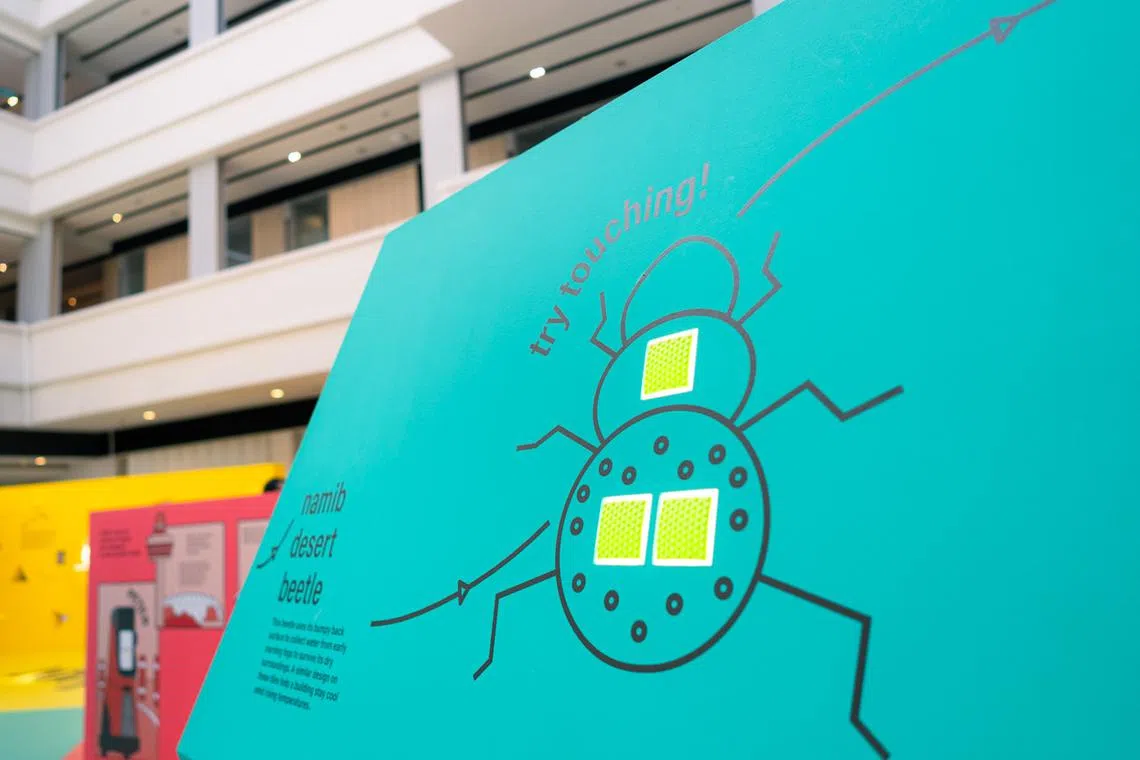
“That’s ingenious, and we were inspired by that to ask, how can we create a pattern which optimises condensation? We did a lot of tests and came up with many variations; this is the most optimised one,” Dr Jain says, pointing to several small green tiles covered in bumps.
When used on the exterior of buildings as textured walls, such tiles can not only collect water, but also cool down the building.
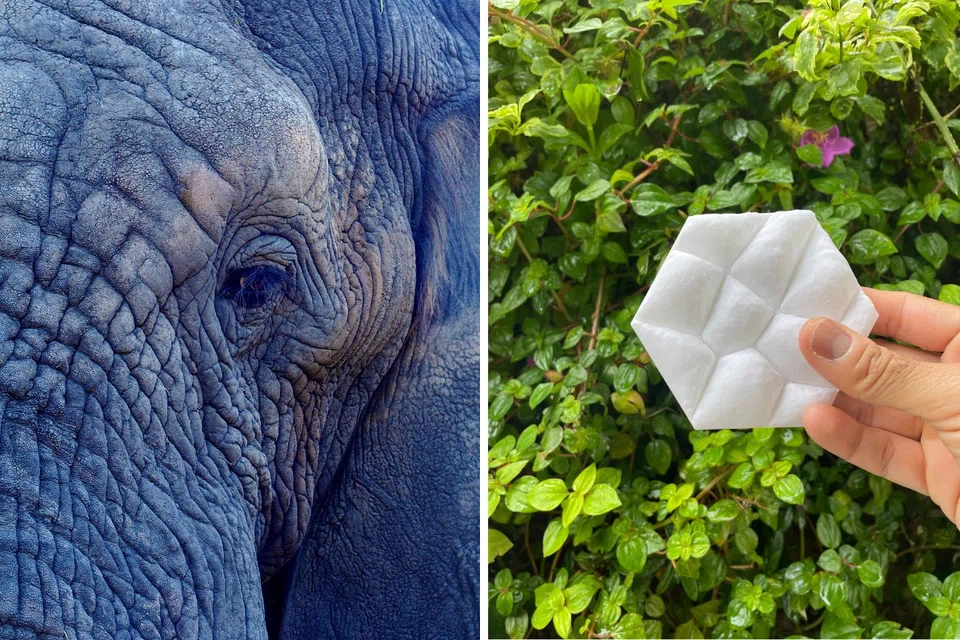
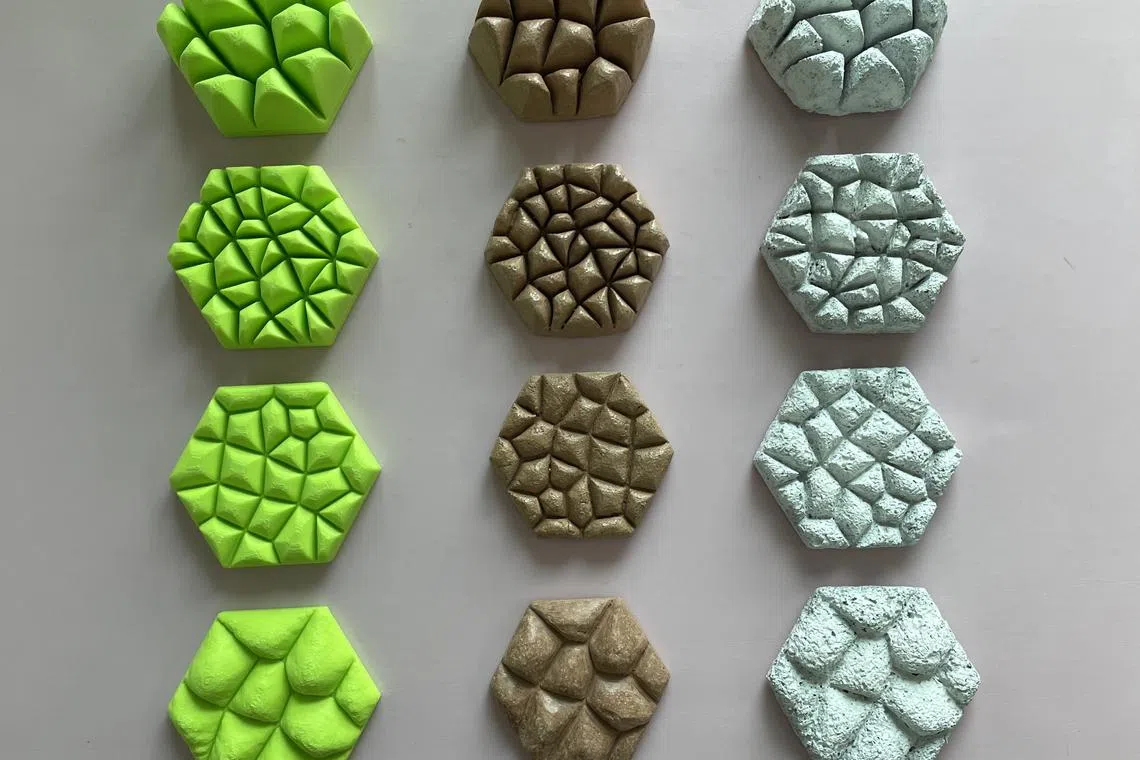
Yet another innovation that bioSEA has come up with is the “elephant skin tile”. If you’ve ever wondered why elephants are so wrinkly, it’s because the numerous folds trap moisture, keeping them cool in the hottest of environments.
Just like an elephant’s skin, bioSEA’s tiles are covered with fractal-like bumps and cracks. This increases the surface area for water to evaporate and creates air pockets to cool the building.
As a National Geographic writer once mused, any self-respecting elephant would decline an offer of anti-wrinkle cream. Perhaps smooth finishes on buildings are overrated too.
Sense of wonder
The biomimicry movement gained traction among designers and engineers in 1997, when the term was popularised in a book by biologist Janine Benyus.
Many great innovations have been shaped by biomimicry. For instance, birdwatcher and engineer Eiji Nakatsu led the redesign of Japan’s Shinkansen train based on three aerodynamic features found in birds: owls’ serrated wings, penguins’ rounded bellies and pointed Kingfisher beaks.
More people in Singapore are starting to express interest in biomimicry. But time is needed for adoption, notes Dr Jain.
“Just like any other new technology, it’s a disruptive technology. People will have the question of what is the return on investment, have you tested it enough?” he says.
“I don’t think there is anything unexpected there. Any new technology will have those questions, until there are enough people in the industry and they cross the threshold where it then becomes accepted.”
As an aside, I ask Dr Jain about his favourite animal, and he cites a soft spot for elephants, cockatoos and butterflies. He even did his PhD on the ecology and conservation of tropical butterflies.
Beetles are dear to him too. It was the Namib desert beetle in particular that stirred his interest in biomimicry in 2005. Then a third-year undergraduate in engineering, he came across a fascinating research paper.
“A mechanical engineer was looking at the Namib beetle to design a better plumbing system to capture more water. That just blew my mind, because I’d never read anything like that. I had an interest in nature and I was studying engineering. I was like – oh my god, I can link them somehow,” he recalls.
Hearing Dr Jain’s story, it strikes me how biomimicry isn’t just about improving urban landscapes or fighting climate change. The field is wonderful simply for how it kindles our intrinsic, child-like sense of wonder about the natural world.
Biomimicry is humbling – a reminder of how humans can’t beat the ingenuity of nature. Mimicry is after all the sincerest form of flattery.
Biomimicry is just one of many weird and wonderful phenomena out there that can teach us plenty about the world we live in. Every month, this column will go off tangent from the news and look into more curiosities in various fields, from finance and economics to science and psychology, or even beyond.
Decoding Asia newsletter: your guide to navigating Asia in a new global order. Sign up here to get Decoding Asia newsletter. Delivered to your inbox. Free.
Copyright SPH Media. All rights reserved.






