

Blood in the water from US office Reits could draw highly speculative investors

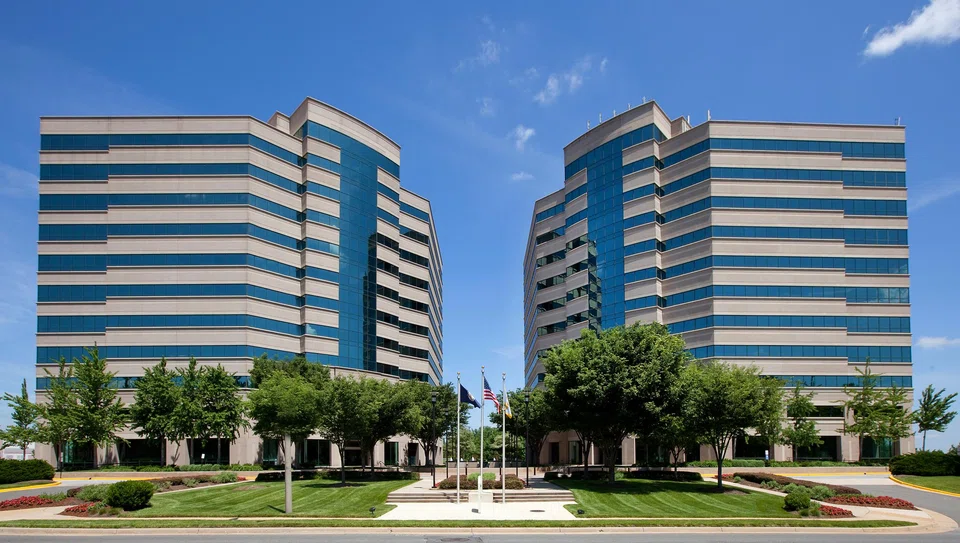
INVESTORS buy into Singapore-listed real estate investment trusts (S-Reits) for their stable distributions. But of late, the three US office S-Reits – after completely halting all or most of their distributions – no longer fulfil the needs of those seeking yield.
Manulife US Reit (MUST) was the first to stop distributions last year, after breaching a debt covenant, when its proportion of unencumbered debt to unencumbered assets crossed 60 per cent after portfolio valuations fell.
Earlier this month, Keppel Pacific Oak US Reit (Kore) went down a similar path, pre-emptively suspending distributions from H2 2023 to H2 2025 on the back of a portfolio valuation decline and increased gearing.
The Reit’s leverage rose to 43.2 per cent – still below regulatory and debt covenant limits. However, the manager said banks are reluctant to lend above 45 per cent leverage for Reits with assets primarily based in the US.
Last week, Prime US Reit withheld 90 per cent of distributable income to meet capital expenditure needs and provide creditors with the assurance that Prime would reinvest cash flows in the business alongside its lenders.
The Reit will still pay cash distributions, although its distribution per unit (DPU) for the second half was less than a 10th of that in the corresponding period the year before.
The drastic steps reflect the tough realities for the US office sector, which has faced a double whammy of changing work patterns and a higher interest rate environment. With lenders also reluctant to lend to the space, managers have little choice but to pause distributions, even though some unitholders rely on them.
Such counters are no longer likely to be of any interest to income investors who seek reliable, stable cash flows. But investors with a higher-risk appetite or more speculative objectives may be more keen.
Bearish mood
To be clear, the overall situation for the US office sector does not look particularly rosy.
Morgan Stanley analysts cited in a Business Insider article this month that said that America’s office market was in flux, and that prices have further to fall amid “secular” challenges. They warned of a 30 per cent peak-to-trough price correction in the sector.
Bloomberg also reported that deals in the US are starting to pick up, revealing just how far real estate prices have fallen. The article noted that brokers in Manhattan have started to market debt backed by a Blackstone-owned office building at a roughly 50 per cent discount, while a prime office tower in Los Angeles sold in December for about 45 per cent less than its purchase price a decade ago.
The bearish mood has already been reflected in the prices of all three US office S-Reits. Over the past year, they have been the worst-performing counters on the iEdge S-Reit Index, plunging between 67.4 and 78.9 per cent as at Tuesday (Feb 27).
Institutional investors have been net sellers, with the three Reits facing net outflows of nearly S$120 million last year. On the other hand, retail investors have been buyers of the three counters, with net inflows of nearly S$121 million in 2023.
Retail interest
The interest from retail investors is likely due to the steep discounts, with MUST, Prime and Kore currently trading around 0.2 times their book values.
At these levels, some may feel that the counters have found a floor, with most of the risk and uncertainty already priced in.
Investors may also be considering what they could get if the Reits were to liquidate their portfolios, even at steep discounts.
Based on Kore’s latest balance sheet, back-of-the-envelope calculations suggest that selling the investment properties at around a 44 per cent discount would still leave net assets amounting to around the Reit’s current market cap of US$134.7 million.
For MUST and Prime, a sale of investment properties at less than 36 and 40 per cent discount of their respective valuations may leave unitholders some upside over the current trading price.
Investors may also be hoping that the US office market is just in a cyclical downturn, and a recovery could come in the next few years.
Some of the Reit managers have said in recent earnings calls that they expect markets to come back in 2025, and they also believe that attractive opportunities – even better than the Global Financial Crisis – may emerge in the US real estate market.
Calculated risk
Low valuations and high volatility bring potential for outsized returns, but proceeding with ample caution is key.
While investors sent Prime’s units rallying last week, after learning they would still get a small DPU, it is important to look beyond near-term payouts.
Prime’s gearing remains high, and the Reit still has to refinance US$600 million of credit facilities by July. It remains to be seen whether the Reit can manage this, given lenders’ reticence over the granting of loans to the US commercial sector.
Selling assets at steep discounts in an unconducive market is something that most managers would probably want to avoid.
Meanwhile, MUST has already undergone a unitholder-approved recapitalisation plan, after breaching loan covenants last year.
This gives it a longer runway to execute on asset sales, but investors need to consider how much the loan from its sponsor may weigh on performance in the future. The Reit’s gearing – currently at 58.3 per cent – is also the highest in the S-Reit sector.
None of the trio would suit a typical Reit investor, and it would be a long bumpy ride before any of them re-rate closer to their book value – if at all.
But investors with a very-high risk appetite may find that the current valuations present an opportunity for significant upside if there is an eventual recovery in the US office sector.
TRENDING NOW

Once staunchly pro-China, Malaysian Chinese businesses are now distancing themselves from Beijing

Cliff Tan has 7 million followers and a 4-month waitlist. Why won’t he expand his business?

Grab CEO’s wife Chloe Tong on life with Anthony Tan and finding her purpose

Singapore F1 to proceed despite haze; no changes planned to outdoor entertainment

