

Bondi attack: A grim reminder for security across Australia and Asia
The concern for security agencies is the potential for radicalisation to fester undetected within family units
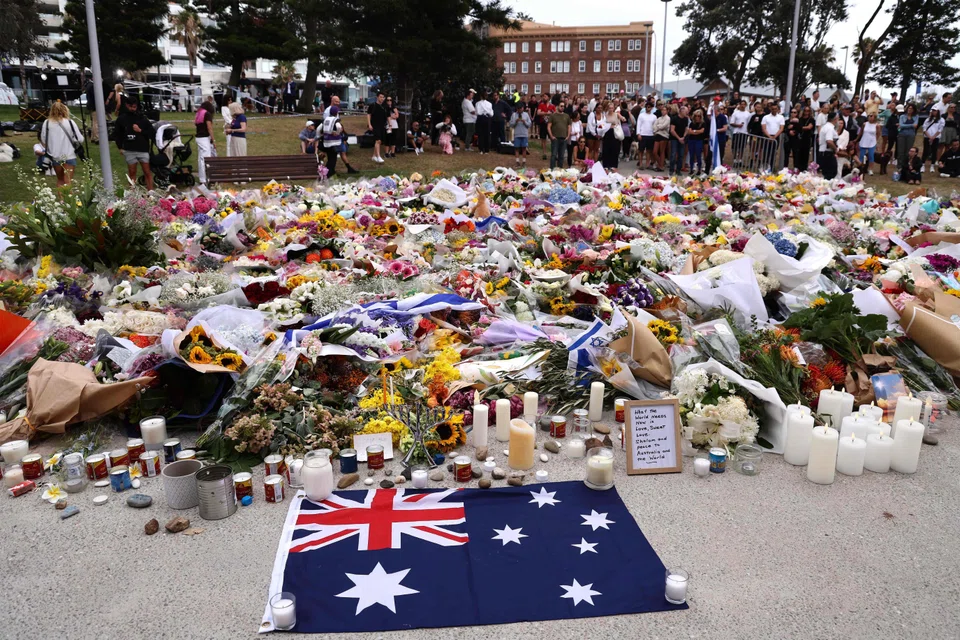
BONDI Beach’s Festival of Lights celebration has been held in the same location on the first night of Hanukkah for decades. However, Sunday’s (Dec 14) terror attacks by two gunmen may have far-reaching consequences well beyond the future of that key Jewish event in Sydney.
The shooting, which killed 16 people, appears linked to Islamic State (IS) ideology. It is the country’s deadliest incident since the 1996 Port Arthur massacre, which claimed 35 lives and prompted a sweeping package of gun reforms.
Context for the attacks
For Australia’s neighbours in Asean, particularly Singapore and Indonesia, the Bondi incident is a stark reminder that the region’s shared security bubble remains fragile. Intelligence agencies across Asia have long coordinated on counter-terrorism, knowing that ideology – and attackers – can easily cross borders.
The Sunday attacks were conducted by a father and son with ties to IS. This is the same group that has conducted or inspired terror attacks across the world for over a decade, including in Asean.
This mirrors the security landscape in South-east Asia, where IS-inspired cells have proven resilient despite the group’s territorial defeat in the Middle East. Just as Jakarta and Surabaya have battled sporadic, ideology-driven violence over the last decade, Sydney is now grappling with growing radicalisation.
Australian broadcaster ABC reported that two IS flags were found in the car of the Bondi Beach gunmen. Prime Minister Anthony Albanese said the pair were “clearly” motivated by “extremist ideology”.
While the attacks have surprised many, it is no huge shock to security experts. Last year, Albanese raised the nation’s terrorism threat level for the first time in a decade, as conflicts such as the Gaza war appear to have driven a new wave of anti-Semitism and Islamophobia. This move brought Canberra’s alert posture closer to that of Singapore, where the Internal Security Department remains vigilant against self-radicalised individuals influenced by online narratives.
The Bondi area is a key centre of the Jewish community – one of the two largest in Australia, the other being in Melbourne.
Albanese last year elevated the likelihood of an attack on Australian soil as “probable”, the midpoint of Australia’s five-tier National Terrorism Threat Advisory System. At the time, he noted that “more Australians are embracing a more diverse range of extreme ideologies, and it is our responsibility to be vigilant”.
Director-General of the Australian Security Intelligence Organisation Mike Burgess also warned that his agency “anticipates an increase in politically motivated violence... Attacks are likely to occur with little or no warning and will be difficult to detect”.
Political fallout
This warning manifested tragically in Bondi. ABC reported that the younger attacker, 24-year-old Australian-born Naveed Akram, who is currently in hospital, was previously examined over his close ties to a Sydney-based IS terror cell. Counter-terrorism police believed he and his father pledged allegiance to IS.
According to Albanese, Naveed Akram first came to the attention of authorities in October 2019. He had been “examined... and the assessment was made that there was no indication of any ongoing threat”. Sajid Akram (Naveed’s father), killed at the scene by police, arrived in Australia in 1998 on a student visa from an undisclosed country.
Last weekend’s attacks highlighted the continued capability of IS, despite its diminished organisational capacity. However, the political narrative has shifted beyond IS. In particular, there are concerns that the “globalisation of the intifada” slogan is gaining traction. This phrase refers to calls for international solidarity with Palestinian uprisings against Israeli occupation.
Israeli Prime Minister Benjamin Netanyahu has criticised Albanese, saying he had warned Albanese that his “call for a Palestinian state pours fuel on the anti-Semitic fire. It rewards Hamas terrorists. It emboldens those who menace Australian Jews”.
For authorities in Australia and South-east Asia, the Bondi attack underlines key fears. The first is the possible ongoing influence of returning fighters from the Syrian conflict, battle hardened with greater terrorist capability and resolve. The International Centre for the Study of Radicalisation at King’s College London estimated that Syria received tens of thousands of foreign fighters from more than 70 countries.
The importance of this link to Syria was shown in the 2015 Paris terror attacks by IS which killed 130 people. For instance, Omar Ismail Mostefai, one of the Bataclan attackers, reportedly went to Syria in 2013 and returned to France in 2014.
The concern for security agencies is not just these individuals returning, but also the potential for radicalisation to fester undetected within private family units – as seen tragically with the father-son duo in Bondi.
While IS organisational capability has diminished, the Australia attacks serve as a grim reminder for the region: the ideology remains potent, and the group continues to inspire significant attacks.
The writer is an associate at LSE Ideas at the London School of Economics
TRENDING NOW

Once staunchly pro-China, Malaysian Chinese businesses are now distancing themselves from Beijing

Looking beyond looming CEO succession, should UOB potentially pursue a transformative merger?

Could stablecoins be the future of money?

Grab CEO’s wife Chloe Tong on life with Anthony Tan and finding her purpose

