

Boost market with public money or implement ‘value-up’ programme? Maybe just do both
In the end, improving the vibrancy of the Singapore market comes down to companies acting in a manner that benefits all their shareholders

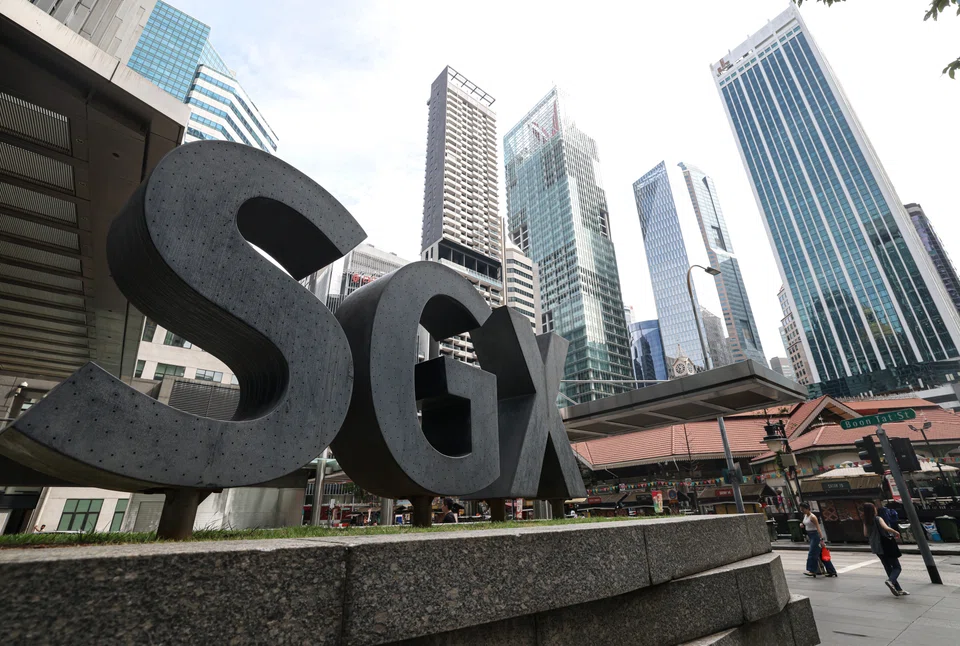
SOME market watchers might have been disappointed that Minister for Trade and Industry Gan Kim Yong was rather guarded in his remarks earlier this month about the hotly debated topic of using public sector money to shore up the local stock market.
“While there have been suggestions to channel sovereign monies into our equities market, it is not practical to rely on sovereign monies alone to sustain these funds and to support the equity market,” Gan said, during a speech at an event marking the silver jubilee of the Singapore Exchange (SGX).
“Instead, any use of public funding has to catalyse commercial capital for trading interest in our equities market to be sustained over the long term,” he added.
Gan went on to say that the review group set up by the Monetary Authority of Singapore (MAS) in August last year to recommend measures to strengthen the local market is studying how to ensure that any developmental capital from the government is deployed in a fiscally prudent manner.
He noted during his speech that the MAS review group is also looking into how the Singapore market can better attract high-quality, mid-sized listing candidates from around the region, as well as streamline regulations in order to reduce the compliance burden on listed companies while also enhancing investor confidence.
Several measures have been introduced over the years to reinvigorate the local market – including subsidising the cost of obtaining a listing, introducing special purpose acquisition companies (Spacs), and tightening the rules governing delisting.
Yet, even as the Straits Times Index rallied strongly last year, delistings continued to outpace new listings by a wide margin.
The possibility of the MAS review group recommending the use of public money to boost the market is widely seen as a potential game changer.
“Previous attempts at addressing the issues of the stock market have been incremental and focused on the supply side. We need to be more holistic in our approach, and, more importantly, give equal emphasis to the demand side of the marketplace,” said SGX chairman Koh Boon Hwee in the group’s most recent annual report.
Old hands in the market instinctively understand how channelling a portion of the country’s domestic savings into the local stocks might bring an end to the current dysfunction in the ecosystem.
As more money flows into the market, companies could become more inclined to meet the financial performance and governance expectations of investors in order to garner higher market valuations for their shares. Meanwhile, controlling shareholders could become more interested in growing their companies than taking them private.
The improved market vibrancy would, in turn, begin drawing promising listing aspirants from around the region.
There are risks
So, will the MAS review group soon recommend that the government begin farming out money to fund managers with mandates to invest in undervalued Singapore stocks? Why is it not moving more quickly?
Clearly, there is a real risk of public funding failing to immediately catalyse commercial capital.
The US Federal Reserve is now expected to cut rates at a slower pace, and 10-year Treasury bond yields have soared over the last few months. This could keep the US dollar strong, and drain capital from Asian markets.
Against this backdrop, the public money channelled into Singapore stocks may do little to slow the pace of delistings or attract more new listings. Indeed, the funds investing in undervalued Singapore stocks on behalf of the public sector may well end up having to accept an exit offer or two.
What can be done to mitigate this risk? Perhaps the MAS review group should consider emulating Japan and South Korea, by directly encouraging companies to address any undervaluation of their shares.
Some of Singapore’s heavyweight companies – such as Singtel and Hongkong Land – have delivered strong returns over the past year on the back of initiatives to unlock value and seize new growth opportunities. If more companies were to follow their example, a great deal of private sector capital could be mobilised.
In the end, improving the vibrancy of the Singapore market comes down to companies acting in a manner that benefits all their shareholders. Steering public sector funds into the market is one way of achieving this, but introducing a Singapore version of South Korea’s “value-up” programme could be another.
Perhaps the MAS review group should just do both.
TRENDING NOW

Motoring tycoon Peter Kwee is back in court: Here are his previous legal battles

Demand, tech capabilities position Apac and AI as Skyscanner’s next growth frontiers: CEO Bryan Batista

Beyond the greenback, Vietnam’s big borrowers turn to Asian-currency bonds

Nvidia’s outlook cut to stable by Moody’s on governance concerns

