Brazil rebuilds reputation after decade of crises
THE reputation of Brazil, the largest and most influential country in Latin America, took a battering during the era of controversial former president Jair Bolsonaro. Yet, there may be signals of a rebound in the nation’s popularity as it begins its 2024 chairing of the G20.
This week, the Brazilian G20 year kicks off in earnest with the first big ministerial meetings. On Wednesday (Feb 21) and Thursday, foreign ministers meet in Rio de Janeiro, followed next week by a central bank and finance ministers session in Sao Paulo.
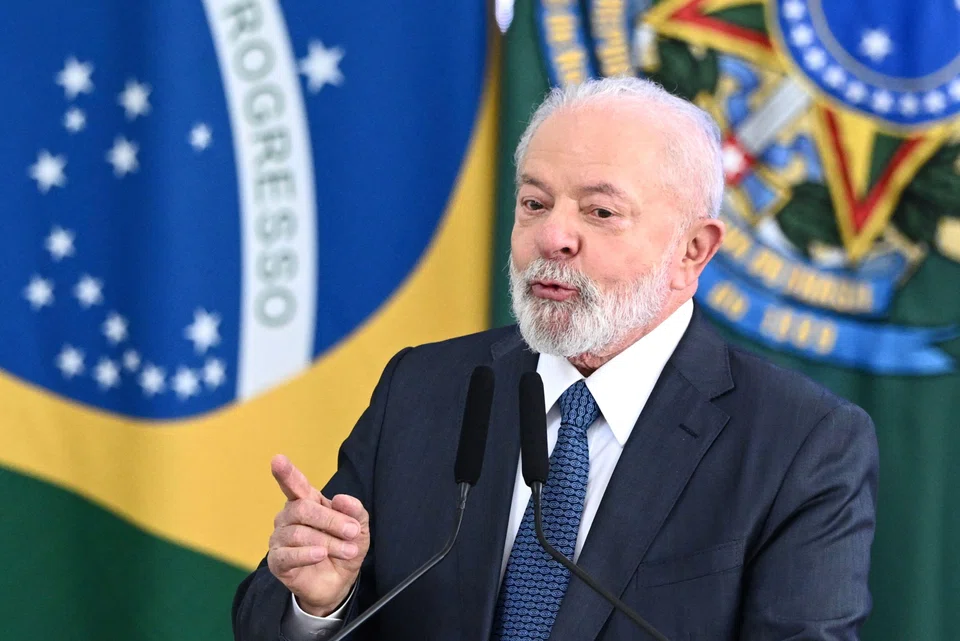
One of the key catalysts for the change in fortunes in Brazil’s reputation in the last year has been the return to office of President Luiz Inacio Lula da Silva. His tag line that “Brazil is back” has been a key message in his travels to more than two dozen nations since his election, engaging more than 50 heads of state, including two kings and the Pope.
Part of the reason for the generally positive reception that Lula has received, despite missteps along the way, is climate diplomacy. His policies have helped to significantly reduce deforestation in the Brazilian Amazon, the so-called lungs of the earth, rebuilding credibility for climate talks after the era of Bolsonaro who was nicknamed the “Trump of the Tropics”.
One of the big ambitions for Lula is to showcase Brazil as an international leader again. He is looking to use not just the powerful G20 platform, but also his hosting of the COP30 climate summit next year, to project further his nation’s return to the global stage after years of self-inflicted international isolation.
Part of the reason that Brazil is being feted again is its huge natural resources. Multiple powers, including the European Union and Japan, are seeking to reach a trade deal with Lula and the leaders of the three other Mercosur nations (Argentina, Paraguay and Uruguay) to help with the diversification of supply chains from China.
Brazil and the wider, vast Latin America continent, home to half-a-billion people, has the world’s largest reserves of arable land, accounting for an estimated 15 per cent of global food production and 45 per cent of net international agri-food trade; plus, huge wider resources, including critical minerals, and the largest share of renewables in the world. The EU’s foreign policy chief Josep Borrell has even said that the region has the potential of becoming the “new Persian Gulf”, given its critical mineral assets such as lithium.
Brazil also has wider ambitions under Lula to lead the Global South of developing nations. While the country has the strongest credentials of any Latin American nation to do this, especially after its recent chairing of Mercosur, China and India also covet this position; so, Lula will have his work cut out.
One of the distinctive ways that Brazil will be using its G20 to appeal to the Global South is food security, building from wider platforms such as emerging technologies and digital infrastructure, which China and India have championed too. Brazil sees itself as a genuine agri-superpower, including as an international breadbasket to the Global South.
Since major investments in the 1970s, Brazil has become the world’s second-largest exporter of agricultural products with specialities in produce including meat, coffee and corn. Multiple large economies, including in the Global South, now rely heavily on Brazil to deliver their food needs. During the G20, Lula will formally announce Brazil’s intention to launch a global alliance against hunger and poverty, probably at the leadership summit in November.
Yet, there are also challenges for Lula in realising this Global South leadership ambition, including the changed geopolitical and geoeconomic context from his first two terms in office from 2003 to 2010. Then, Brazil was a key voice for the developing world, while remaining independent on the world stage from both the United States and China, partly through its membership of the Brics club.
Now, the global landscape has become more complex as US tensions with China grow in today’s post-pandemic world, and particularly since Russia’s invasion of Ukraine. Since 2010, Brazil has also become increasingly dependent on China, now the South American country’s main trading partner, which buys around two-fifths of its farm exports.
Yet, while Lula is unlikely to achieve all of his global leadership goals, the turnaround in Brazil’s fortunes has been significant. He has already made much headway in his goal of restoring Brazil’s reputation as a key emerging market plus a modern, vibrant and stable democracy.
In 2010, when Lula last held office, the nation had finally seemed ready to prosper after the legacy of brutal military rule from 1964 to 1989.
Yet, the subsequent period for Brazil was a deep disappointment and threatened the return to democracy.
By 2016, the country, mired in recession, had shed about 1.5 million formal jobs, and had double-digit inflation with its debt downgraded to junk status by major credit ratings agencies.
Moreover, 2016 saw Rio de Janeiro become the first South American city to host the Olympics which proved to be a troubled affair. Not only did the Brazilian government have to make significant spending cuts to the Games budget, given the financial downturn, but the Zika virus outbreak was also a major challenge.
The woes culminated in the rise to power in 2018 of former army captain Bolsonaro on a populist wave of support that included nostalgia for the previous military dictatorship; and this alongside a host of controversial policy positions, including relaxing gun laws and shredding environment legislation such as Brazil’s commitment to the Paris climate-change treaty.
Taken together, the depths of these crises underline how far the country has come, reputationally, under Lula since he took office in 2023.
While the full extent of his leadership ambitions, including of the Global South, is unlikely to be realised, he has largely turned the page on the political and economic troubles of the past decade.
The writer is an associate at LSE IDEAS at the London School of Economics