

Breaking the Groundhog Day cycle for Singapore construction
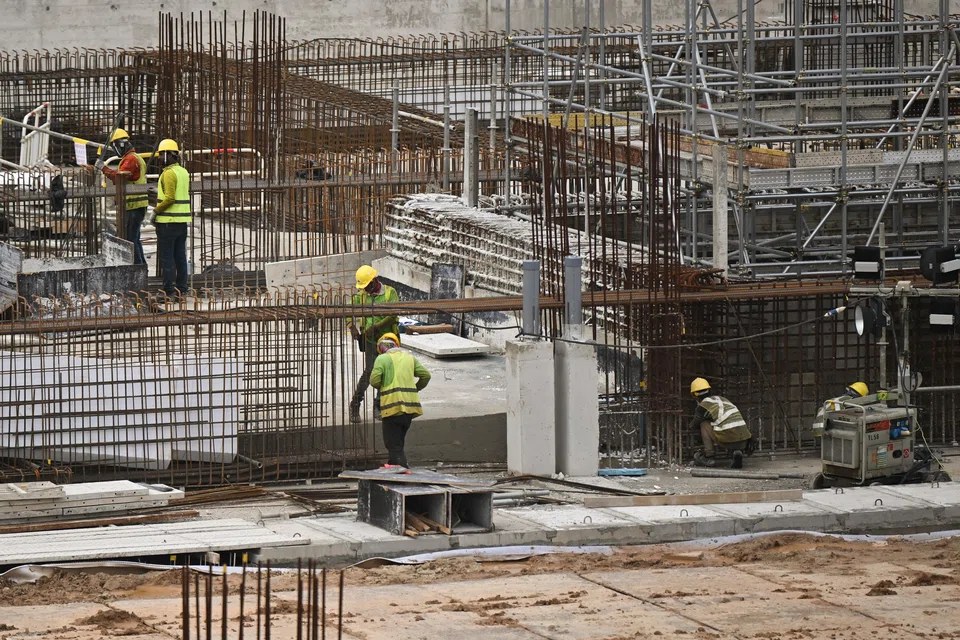
IN THE cult classic Groundhog Day, Bill Murray’s character finds himself trapped in a time loop reliving the same day over and over again. Much like the cyclical pattern of the film, Singapore’s construction sector continues to be plagued by persistent challenges time and time again. From labour shortages to supply-chain issues, rising costs of raw materials and workplace accidents, the array of challenges remains wide-ranging.
Yet, amid these challenges, many construction professionals are sanguine as the economy continues to recover. Singapore’s total construction demand has been projected at between S$27 billion and S$32 billion in 2023 – and that’s before taking into account mega-infrastructure projects such as Changi’s Terminal 5 and Tuas Mega Port.
According to Procore’s How We Build Now 2023 benchmark industry report, which surveyed the sector’s decision-makers, 90 per cent of Singapore’s construction leaders are confident about their industry’s prospects in the next 12 months.
While opportunities abound for construction businesses in Singapore, the challenges only add to the pressure that these businesses are facing. To break free from this cycle, the construction sector must find a long-term solution to their problems.
Overcoming construction’s headwinds
Big Tech has seen the immense value of data for years, and the construction industry is starting to see the vast potential of grounding decisions in data as well. It allows businesses to gain a holistic understanding of their project portfolio, adds predictability to their projects, streamlines processes, and promotes more sustainable practices by analysing criteria such as energy usage, materials, and waste management.
It has become critical in today’s digital era to leverage data. For perspective, the construction industry produces some 2.5 billion gigabytes of data each day – in the form of company e-mails, scheduling tools, communication platforms, wearable devices worn by workers or sensor devices embedded in equipment, blueprints, financials, drones, and elsewhere. But despite the almost limitless supply of data, a staggering 96 per cent remains completely untapped.
Procore’s benchmark report found that, on average, professionals in Singapore estimate that they could save up to 22 per cent of total spending on projects just by managing data more efficiently.
Bulldozing past the obstacles
There’s no doubt that unlocking data would be a game changer in the construction industry. The problem is not knowing where to start. Procore’s benchmark report shows that in Singapore, more than half of construction professionals were not confident about successfully developing and implementing a data strategy.
When it comes to data, especially in the construction industry where each project involves many stakeholders across different functions, the golden rule is to ensure that data is stored in a system as a single source of truth. Using pen and paper to manage records at a job site may be quick and convenient, but stakeholders that are off-site may not be able to receive information fast enough to aid decision-making.
Construction businesses need to embrace technologies such as construction management platforms to serve as the central repository for data to be collected and used. Stakeholders can receive the data 24/7 and gain better visibility into issues and risks early to make impactful decisions. Corporate goals and benchmarks can also be used to measure progress and outcomes at any stage, which further optimise the project management.
Ultimately, unlocking data acts as a tool to better manage resources and foster increased collaboration among multiple stakeholders in a construction lifecycle.
The future of construction lies in data, and companies will have to do more to harness the power of data and intelligence to build smarter, more efficiently, and safer. It’s time for construction businesses to shift from a defensive approach (focusing on shorter-term goals such as reducing waste and risks), to a more offensive approach (using data to your advantage to make longer-term decisions that help your business grow).
By leveraging the appropriate tools, businesses can proactively analyse and predict potential challenges that may emerge in the future. This approach allows companies to reduce risks and ultimately facilitate scalability and growth.
We are now in a new era of smarter construction – one where data, insights, and interconnected platforms are fuelling the digital transformation movement in the industry. Fast-moving construction companies that take the leap to adopt data will gain the competitive advantage. And with a bit of push, we may be able to break the Groundhog Day cycle and reap the benefits of a golden era of construction.
The writer is regional manager of Procore in Asia
TRENDING NOW

Three ex-employees of Envy group join Ng Yu Zhi in bankruptcy

He built the Vingroup empire. Now South-east Asia’s richest man is handing some key roles to his sons

Grab CEO’s wife Chloe Tong on life with Anthony Tan and finding her purpose
Incidence of civil servants buying property near unannounced MRT stations ‘a concern’, but may not establish misconduct: PSD

