Brexit reset is big moment, but whisper it quietly
The politics of it remains challenging for the Labour government
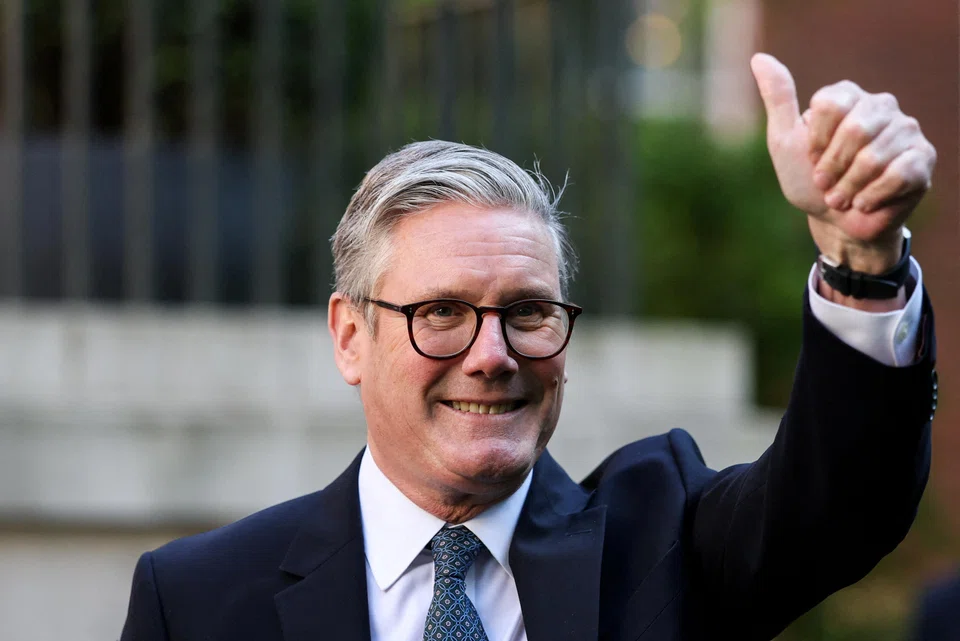
UK PRIME Minister Keir Starmer completed on Monday (May 19) his third significant, recent international deal with a Brexit reset with the European Union. Yet, don’t expect him to give a victory lap any time soon, despite his current need for political wins.
The UK government is clearly pleased with the Brexit agreement: Business and Trade Secretary Jonathan Reynolds gave it “eight of 10”, while Starmer said that “Britain is back on the world stage”. The deal builds from the recent UK-India trade agreement, and the UK-US tariff deal.
The EU accord covers agri-food and fishing, defence, plus energy. The UK government claims the net impact will add nearly 10 billion euros (S$14.6 billion) – around 0.3 per cent of GDP – to the UK economy by 2040.
For instance, closer electricity market ties could see more UK wind power exported to the continent and more French nuclear energy imported to the United Kingdom through new interconnectors. Closer cooperation on emissions through linking the UK and EU Emissions Trading Systems will also aim to boost European energy security in the wake of Russia’s 2022 invasion of Ukraine.
On defence, Brussels and London have resolved to boost their ties on maritime security, information-sharing, military mobility, space security, cyber issues and countering hybrid threats. Senior UK and EU officials will meet at least every half year to talk about defence and foreign policy.
On Monday, EU countries separately confirmed that they have in principle agreed on proposals for a 150 billion euro fund aimed at boosting Europe’s defence, known as Security Action for Europe. The plan, which the UK now hopes to join, will be financed through joint borrowing and give loans to EU members and certain other countries such as Ukraine for security projects.
After the challenging start Labour has had in office since last July, the government could be forgiven for not lauding over the new EU agreement and its other recent international successes. This is not least as business has broadly welcomed the EU deal, with London stocks having ended Monday’s trading session at seven-week highs.
More work to be done
However, such political grandstanding is unlikely to happen anytime soon. Firstly, it is clear from the nine-page UK-EU Cooperation Agreement that much negotiation remains. These deeper details may really matter with much in Monday announcements focused around agreements, in principle, rather than the final word.
This key point is emphasised by multiple business groups, including the UK Institute of Directors, which welcomed “a new era of collaboration”. The industry body added that “we recognise that this is just the beginning. With elements not yet set in stone, there will be further effort required to ensure that what has been promised is delivered for the benefit of the UK economy, the business environment and wider British society.”
Secondly, as much as the Brexit reset has long been an ambition for the government, in large part for economic reasons, the politics of Brexit remains challenging for Labour. Take the example of the conservative-leaning UK newspapers on May 20, exemplified by the front pages of the Daily Telegraph’s (“Kiss Goodbye to Brexit”) and the Daily Express (“Brexit surrender deal”).
One of the biggest focal points for criticism is fishing, which has become a hugely politically salient area of the UK economy. London and Brussels have reached a new 12-year agreement that Conservative leader Kemi Badenoch and Reform UK chief Nigel Farage have slammed as a sellout to EU coastal countries, notably France, which did not want to continue to endure the uncertainty and time-consuming nature of annual fish quota talks.
Despite the significance of the agreement, Labour would welcome EU-related issues to take more of a back seat in UK politics, far removed from the controversy and prominence of the period from around 2015 to 2021. Starmer has asserted that it is time to move on from “political fights” of the past about Brexit, and Monday’s summit was the first major UK-EU meeting to be held in London since the 2016 referendum.
Labour’s bet appears to be that as long as the UK does not sign back up to the fundamental architecture of the EU, including the Single Market and Customs Union, the UK public will accept a deeper partnership between London and Brussels. Another brake of the ambition of any Brexit reset is that Brussels is wary of granting London the benefits of bloc membership without the obligations that come with this, including financial contributions to the EU budget.
Voter volatility
This political balancing act reflects the fact that Labour remains well aware of the intensity with which Brexit continues to realign the UK electorate. Since at least 2016, there has been a significant change in how multiple demographic groups vote, with age and education increasingly important determinants of behaviour.
This in a context of unprecedented levels of voter volatility in the post-war era. This has been driven, in part, by a series of electoral shocks in the last two decades, including the 2008 financial crisis.
Traditional partisan voting patterns are eroding faster than ever. This reached a pivotal point in the 2019 so-called Brexit general election, which yielded a new UK electoral map with the Conservatives winning a wide number of previous longstanding Labour strongholds, especially in the so-called Red Wall of the English North and Midlands. In so doing, then-prime minister Boris Johnson won the largest Conservative majority since Margaret Thatcher in the 1980s.
Fast forward to last year’s general election, and while the salience of Brexit was not as strong as in 2019, vote choice was centred around two big blocs. Firstly, right-of-centre parties – the Conservatives and Reform UK – which had supported Brexit. Secondly, centrist and left-of-centre parties, which had mainly opposed Brexit, including Labour, the Liberal Democrats, and Greens.
In 2024, vote switching tended to be within these blocs, as most Conservative defectors switched to Reform UK, whereas Labour’s gains and losses were primarily split between other centrist and left political parties.
So the voter churn within these cohorts, associated with Brexit, continue to underpin UK voting behaviour. This link between age, education and bloc support is now a significantly stronger predictor of vote choice than they were before 2016.
Taken together, the UK’s politics of Brexit therefore continues to restrain government action on a game-changer deal with the EU. Nonetheless, Monday’s agreement is a significant reset with the potential to drive deeper UK-EU cooperation into the 2030s.
The writer is an associate at LSE IDEAS at the London School of Economics