

Brexit’s fifth anniversary fires up new negotiations
THE phrase “time flies when you’re having fun” refers to how the passing of years seems to be faster during enjoyable periods of one’s life, or in wider history. Yet, the last half-decade too in Europe has sped by fast, albeit in a different, relatively pessimistic epoch for the region.
Since 2020, Europe has experienced the worst pandemic in a century, the largest war on the continent since 1945, and the biggest energy shock since the 1970s. Far from being a belle epoque of peace and prosperity, it has been much more of a time of troubles.
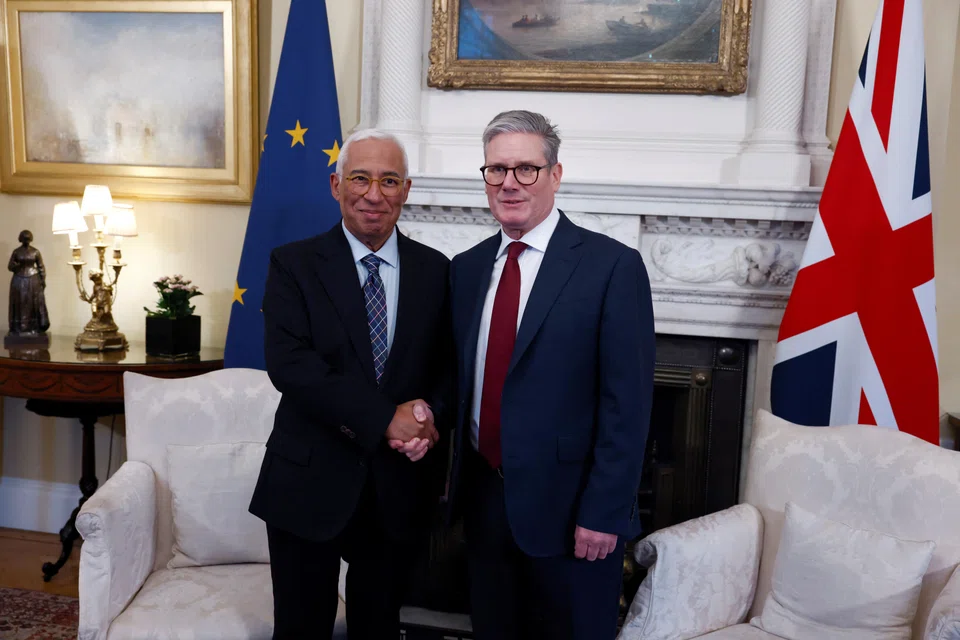
While this misfortune is unrelated to Brexit per se, it frames the context for the upcoming renegotiations of the 2020 EU-UK Trade and Cooperation Agreement (TCA), alongside US president-elect Donald Trump’s return to the White House. TCA is the deal agreed at a fast pace between London and Brussels to cement a post-Brexit relationship.
In a UK political landscape in which there is next to no possibility of the United Kingdom rejoining the European Union in the 2020s, there is nonetheless appetite from both sides to deepen ties. The TCA is a “hard Brexit” deal that saw the UK’s economic ties with the EU significantly reduced, at the instigation of then prime minister Boris Johnson.
Indeed, the EU-UK agreement may be the first trade negotiation in history where barriers went up, rather than down, compared with the status quo, and is only therefore a starting solution to future UK-EU economic collaboration.
For instance, the deal is a key obstacle for parts of the services sector which account for a large part of the UK and EU economies.
Yet, significant as the UK-EU economic retrenchment is under the TCA deal, defence and security policy did not feature in the agreement at all. At the time, this was a surprise, as a proposed future relationship on this front had been extensively previewed.
Talks before 2020 had pointed to significant future cooperation in this area, including with the UK being potentially invited to participate in EU military initiatives, and participating in EU foreign-minister meetings. Yet, the Johnson team shifted position during the TCA negotiations, despite the largely complementary nature of UK’s and EU’s positions on many key global issues.
Part of the challenge with the 2020 TCA is that it was struck in just eight months. So what has been called a bare-bones agreement was the almost inevitable result.
Developments since 2020, including Russia’s invasion of Ukraine, highlight the potential value of greater UK-EU post-Brexit cooperation regarding security and foreign policy. So it is likely that a deal on this pillar will be done in 2025.
On the economic front, what is becoming clearer five years from the signing of the TCA is that it has created structural impediments to trade that aren’t improving significantly. This has been highlighted by national business groups such as the British Chambers of Commerce, and not just politicians. Proposals for additional UK side deals with the EU include on issues such as import value-added tax, veterinary services, plus professional services, to smooth out the rough edges of the 2020 agreement.
The EU got much of what it wanted from the TCA, including a zero-tariff, zero-quota deal for goods, by which it runs a surplus with the UK. Meanwhile, Brussels gave away little on services which is a UK strength. The longer the agreement remains unchanged, the more pressing it is for London to reform it.
It is in this context that there is growing support for a closer UK economic relationship with the EU. For some, such as the Liberal Democrats and Scottish National Party, this means rejoining the Brussels-based club.
However, with UK Prime Minister Keir Starmer having ruled out EU membership, and the Conservative Party now having very few pro-Brussels legislators in its midst following purges under Johnson’s premiership, it is unlikely that the country will go back into the club during this political generation.
UK political opposition to EU-related issues such as the free movement of labour remains very strong. So much so that London remains wary of even slimmed-down initiatives like a youth mobility programme that would make it easier for UK and European youngsters to access time-limited visas to live and travel across Europe.
So the Labour Party’s focus is now much more on making Brexit work better for the UK, with the centre of debate increasingly turning away from “Brexit versus Remain”. A key, pragmatic reason for Starmer taking this stance is the political turmoil that engulfed the nation for much of the period since the 2016 referendum, with no clear post-Brexit settlement emerging under the Conservatives. If Starmer had sought to rejoin the EU, a hugely disproportionate part of the energies of his government would have needed to be focused on this touchstone issue.
What this means, however, is that the 2025 EU-UK renegotiation is probably not going to be as ambitious as some 2016 Remainers would like. What happens in the next few months may not be a one-time-only process; rather, it is likely that the period beyond may see further UK-EU bilateral deals to refashion the partnership, potentially in a similar scenario as the recent Swiss-EU relations.
The Swiss example is interesting in its parallels with the issue regarding the UK. In 1992, Switzerland voted by 50.3 per cent to 49.7 per cent against joining the European Economic Area, which is an extension of the EU’s single market to member states of the European Free Trade Association. In the period since, Switzerland has negotiated a series of deals with the Brussels-based club.
If the UK experience with the EU proves similar, it will be one of the great ironies of the 2016 referendum. That is, despite the plebiscite that saw around 52 per cent of the population apparently voting for cutting ties with the Brussels-based club, London has had to devote huge attention to Europe since then.
Almost a decade after the 2016 referendum, the UK’s future relationship with the EU is still far from being completely defined, despite massive efforts to do so. Moreover, views on the relationship the nation wishes to have with the club could well change significantly over time, in a more or less integrationist direction, as political and public opinion evolves.
The stakes in play are therefore big, not just for the UK, but also for the EU. A deeper, more constructive partnership, which is now more likely under Starmer’s government, can bring benefits for both sides at a time of significant global geopolitical turbulence.
The writer is an associate at LSE IDEAS at the London School of Economics
TRENDING NOW

Singapore identifies 7 firms responsible for haze fires, notices issued urging action: Grace Fu
DBS remains analysts’ pick ahead of Q3 earnings after Singapore banks’ share slump

High Court rules against Julius Baer’s Singapore trust arm in US$50 million family trust dispute

Could stablecoins be the future of money?

