Brics+ wall has growing Middle East cracks
At the upcoming Brics Foreign Ministers meeting, New Delhi will seek to shift the bloc towards greater geoeconomic focus
WHILE global attention is fixed on the long-awaited meeting between US President Donald Trump and China President Xi Jinping, another key diplomatic event is happening in Asia.
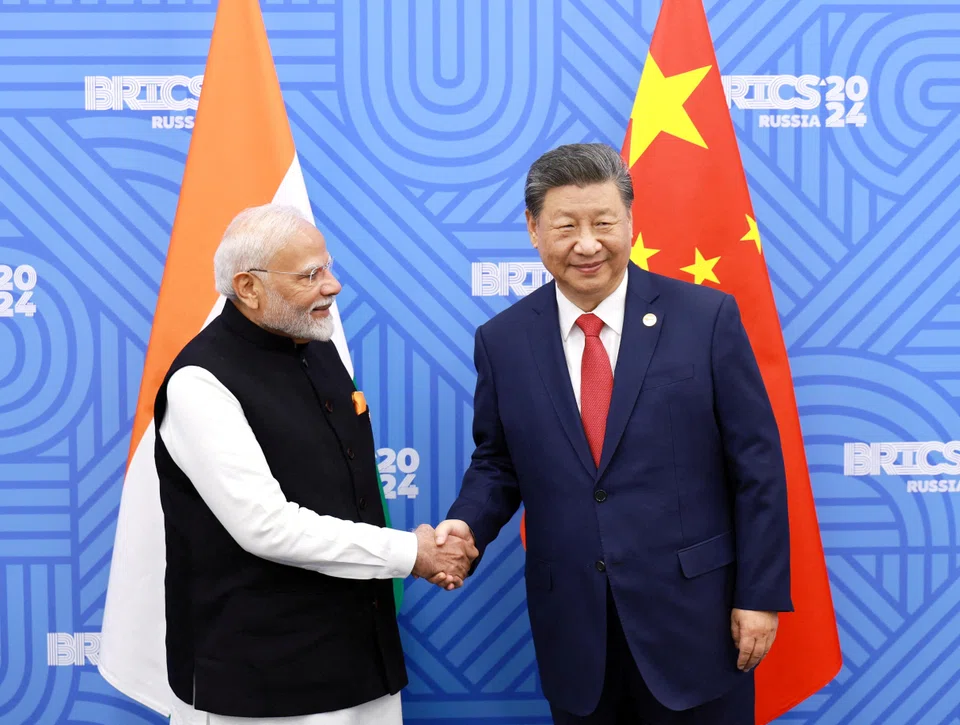
India, as the 2026 chair of the Brics forum, will walk a tricky diplomatic tightrope on May 14 and 15 as the bloc’s foreign ministers meet in the country. New Delhi must prevent intra-group geopolitical divisions over the Middle East crisis from widening into a historic rupture.
The goal is to keep Teheran from using military force against other members for the first time since the bloc’s founding.
On Apr 24, a Brics+ meeting of deputy foreign ministers and special envoys in New Delhi ended without a joint statement on the Middle East tensions, despite major diplomatic efforts. This forced the chair of the meeting to issue a face-saving statement instead.
The war has seen Iran, alongside Russia and China, seek to adopt common positions on the conflict. Meanwhile, other Brics+ members such as the United Arab Emirates and Egypt, which have historically been US allies, have sought different pathways forward.
The Middle East conflict has intensified a core challenge for the Brics+. A bloc that was originally founded along economic foundations of four key emerging market nations – Brazil, Russia, India and China – now faces growing geopolitical fissures as it expands.
While intra-Brics trade surged to US$1.17 trillion in 2024, these economic gains are being overshadowed by strategic frictions.
Wider Brics+ geopolitical angst
Geopolitical tensions go well beyond Iran. India and China remain at odds over border issues and the bloc’s strategic direction. (India is also a member of the Quadrennial Security Dialogue group alongside the US, Australia and Japan.)
New Delhi has consistently sought to focus the bloc on geoeconomics, with an agenda that includes South-South economic and financial cooperation as well as reforms of international financial institutions to give developing countries greater voice and representation.
By contrast, China seeks to shift the forum towards supporting its broader geopolitical goals, including the Belt and Road project and the Global Development Initiative.
The two powers also disagree on anti-US policies and de-dollarisation. China and Russia have pushed for alternative payment systems and a common Brics currency or reserve asset. Indian Commerce Minister Piyush Goyal previously dismissed the idea of a Brics currency as “impossible”.
These disagreements have proliferated as the bloc’s membership expanded to 10 nations, including Indonesia. Saudi Arabia has been invited to join the group, but has not formally accepted.
The bloc has handed partnership status to 10 other nations, including Malaysia, Thailand and Vietnam in Asean. Nations such as Myanmar have also expressed interest in collaborating with the Brics+ forum.
The fast-growing heterogeneity of the club may dampen fears in some quarters of the world that the bloc could become a concerted, anti-Western alliance.
Brics+ refocus on geoeconomics
Given these tensions, India is doubling down on Brics+ becoming an increasingly institutionalised forum for emerging market cooperation.
Despite the diverging long-term economic trajectory of members – China’s output, for instance is now about 50 times that of South Africa – the bloc’s collective economic story remains strong.
In 1992, the share of global growth accounted for by G7 countries was some 45.5 per cent while that of Brics was around 16.7 per cent. In 2023, these figures were dramatically different at about 29.3 per cent (G7) and 37.4 per cent (Brics), respectively.
India is also aware that, in recent decades, over 40 per cent of the growth in global gross domestic product came from the Brics+ countries. Going forward too, the average rate of economic growth in the bloc is expected to be higher than G7 economies.
The overall theme of India’s chairing of the Brics+ this year is “Building for Resilience, Innovation, Cooperation and Sustainability”. This reflects what Prime Minister Narendra Modi calls a push forward with a “people-centric and humanity-first approach”.
The four key pillars in this framework – cooperation, innovation, resilience and sustainability – are designed to use geoeconomic glue to hold the Brics+ wall together.
The bloc was originally formed for its vast economic potential, and New Delhi wants to emphasise this as it seeks to overcome growing geopolitical fissures, intensified by the current tensions in the Middle East.
The writer is an associate at LSE Ideas at the London School of Economics
TRENDING NOW
Fed hike throws Singapore banks a margin lifeline; UOB likely to benefit more
He built the Vingroup empire. Now South-east Asia’s richest man is handing some key roles to his sons
From Haidilao to Oriental Kopi: How some of Asia’s favourite F&B players are faring in 2026
Floods compound Philippine growth woes from public-works scandal