

Bright prospects for Singapore tourism, but hotel players will need to fight hard to thrive
With stiff competition, owners need the right models to win

[SINGAPORE] Singapore’s tourism sector had a good 2025. International visitor arrivals hit 16.9 million and tourism receipts reached a record S$32.8 billion.
Compared with last year, visitor arrivals could rise, but tourism receipts might dip slightly this year. Still, the Republic could be on track to reach its goal of S$47 billion to S$50 billion in tourism receipts by 2040.
Huge investments that are being made to boost Singapore as a travel destination should help drive long-term growth in visitor arrivals and tourism receipts.
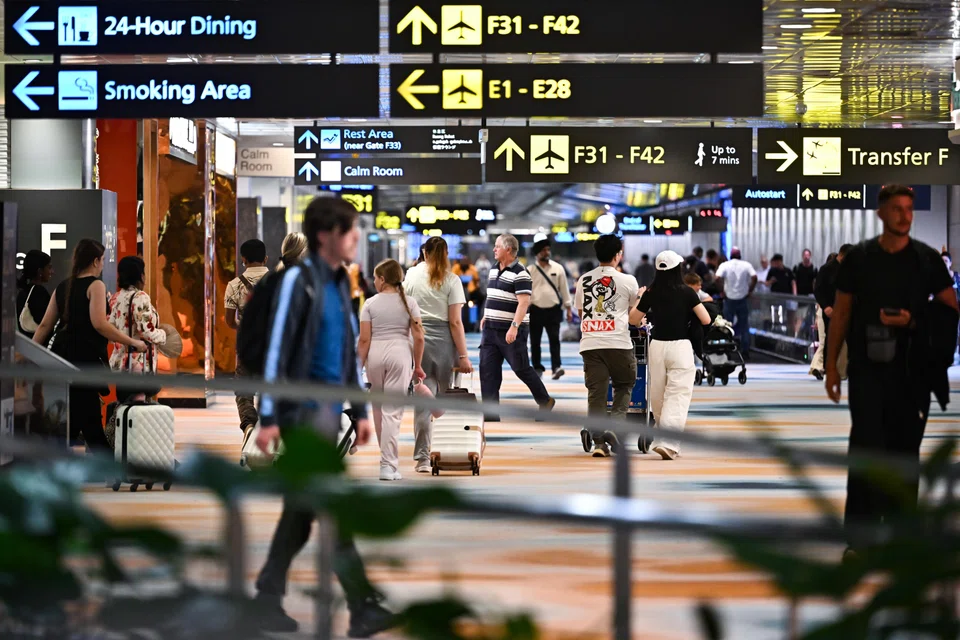
Changi Airport’s capacity will expand significantly when the mega Terminal 5 becomes operational in the mid-2030s.
Aided by the completion of the Marina Bay Cruise Centre Singapore expansion, the Republic is growing as a leading cruise hub.
Large sums are being poured into expanding the two integrated resorts, Marina Bay Sands (MBS) and Resorts World Sentosa.
MBS’ expansion will include a 15,000-seater state-of-the-art entertainment arena, an all-suite hotel with a rooftop public attraction and additional meetings, incentives, conferences and exhibitions (Mice) space, among others.
The Straits View area, near Marina Bay, has been identified as the potential location for the Downtown Mice Hub, which will reinforce Singapore’s position as a major Mice city.
New attractions such as Rainforest Wild Adventure East at the Mandai Wildlife Reserve and the Singapore Oceanarium have opened recently.
Meanwhile, new developments are in the works for Orchard Road and Sentosa, while Gardens by the Bay has announced the development of the new Wetlands by the Bay.
Early this month, plans were unveiled to transform Sentosa and the 120-hectare Pulau Brani over the next two decades.
In addition, Singapore is growing its wellness offerings.
Recently, a ground-breaking ceremony was held for the country’s first large-scale wellness attraction in Marina South, Therme Singapore. It is a seven-storey facility slated to open in 2030 featuring thermal pools, water slides and saunas.
Drawing more visitors
Given the various initiatives to boost Singapore’s competitiveness as a travel destination amid rising global competition, will many more visitors, including high-spending ones, flock here? I think so.
Singapore sits in a peaceful region and boasts strong public security as well as good infrastructure. In a world driven by geopolitical tensions, the Republic is well placed to grow strongly as a Mice destination.
In 2025, Mice tourism receipts grew by over 35 per cent from a year ago to reach S$2.3 billion.
Being a peaceful and safe destination with good infrastructure should also make the Republic appealing to the rising number of affluent older travellers in a world where populations are rapidly ageing in many places.
Moreover, as a home to many wealthy people, Singapore has much to offer visitors seeking premier experiences including high-end shopping, fine dining, luxury accommodation, top-grade medical services and various bespoke services.
Add to all the above, Singapore has great air connectivity with many places, particularly in Asia, where rising wealth is driving growth in international travel. Top sources of international visitor arrivals in 2025 included China, Indonesia, Malaysia, Australia and India.
Outlook for hotels
Given the bullish long-term outlook for visitor arrivals to Singapore, is the future rosy for hotel owners and operators? Not necessarily so, in my view.
Sure, visitors to our shores will need accommodation. And hotels here are spared competition for short-stay visitors from owners letting out all or part of their homes. The minimum stay period for public and private homes are six and three months, respectively.
Still, hotels might compete with serviced apartments, which have a minimum stay period of seven days.
Also, Johor Bahru in neighbouring Malaysia could emerge as a cost-effective base for visitors to Singapore, with travel on the Johor Bahru-Singapore Rapid Transit System (RTS) Link likely to be easy and affordable. The RTS Link is expected to commence operations in a few months’ time.
Critically, expect intense competition among hotels in the Republic. This is especially as the government will likely help ensure adequate supply of hotel rooms to cater to growing demand.
Singapore’s hotel sector has an inventory of over 74,000 rooms. Average occupancy rate in the first five months of this year ranged between 75 and 88 per cent.
Revenue per available room (Revpar) was about S$211 in April and S$200 in May.
Revpar, which is derived via multiplying average room rate by occupancy rate, is a key indicator of a hotel’s performance. To optimise revenue, an operator needs to balance filling up rooms with achieving good room rates.
In turn, driving revenue is important because much of a hotel’s operating costs are fixed, and operating costs are high in Singapore.
Perhaps, a hotel with a clear point of differentiation can score big on both occupancy and room rate, as is the case with the iconic MBS at the top end of the market.
For Q1, MBS achieved an occupancy rate of 95.7 per cent and average daily room rate of US$1,006, giving it Revpar of US$963, up about 9 per cent year on year.
Can other five-star hotels here offer unique experiences in a crowded market? What should mid-tier hotels do to stand out? Can budget hotels offer a strong value proposition, say with better service levels or uniquely designed rooms?
As an asset class, hotels in a key gateway city such as Singapore continue to draw keen investor interest.
Recently, CapitaLand Ascott Trust announced the sale of its upscale 336-unit hotel The Robertson House by The Crest Collection at Unity Street for S$360 million or nearly S$1.1 million per key.
The hotel, which sits on land with a remaining lease term of about 79 years, is being sold at 4 per cent above end-2025 book value and an exit yield of 2.3 per cent based on earnings before interest, tax, depreciation and amortisation in 2025.
Doubtless, Singapore’s safe haven status and strong tourism outlook will draw investors to pay lofty prices for hotels here.
However, given high entry prices and skinny initial yields, an investor needs to get much right for a hotel investment here to pay off.
Choosing whether to outsource management, finding a suitable operator and getting the right branding as well as positioning matter.
Furthermore, there may be a need to make timely pivots as consumer trends change and incur major capital expenditure on upgrading works periodically to ensure a hotel looks fresh and appealing.
While rich rewards might be available for hotel owners here, it’s a jungle out there – only players with strong teams and business models will thrive.
TRENDING NOW

Government to bring forward raising of retirement age, give employers more financial support to create flexi-load jobs
Former minister Maliki Osman, Revolut chairman join Asia Gulf Holdings advisory board

Is Manila Asia’s new dining hot spot?
Simba at risk of losing operating licence over spectrum misuse

