
A brighter shade of green
Transforming Singapore’s older buildings for a sustainable future
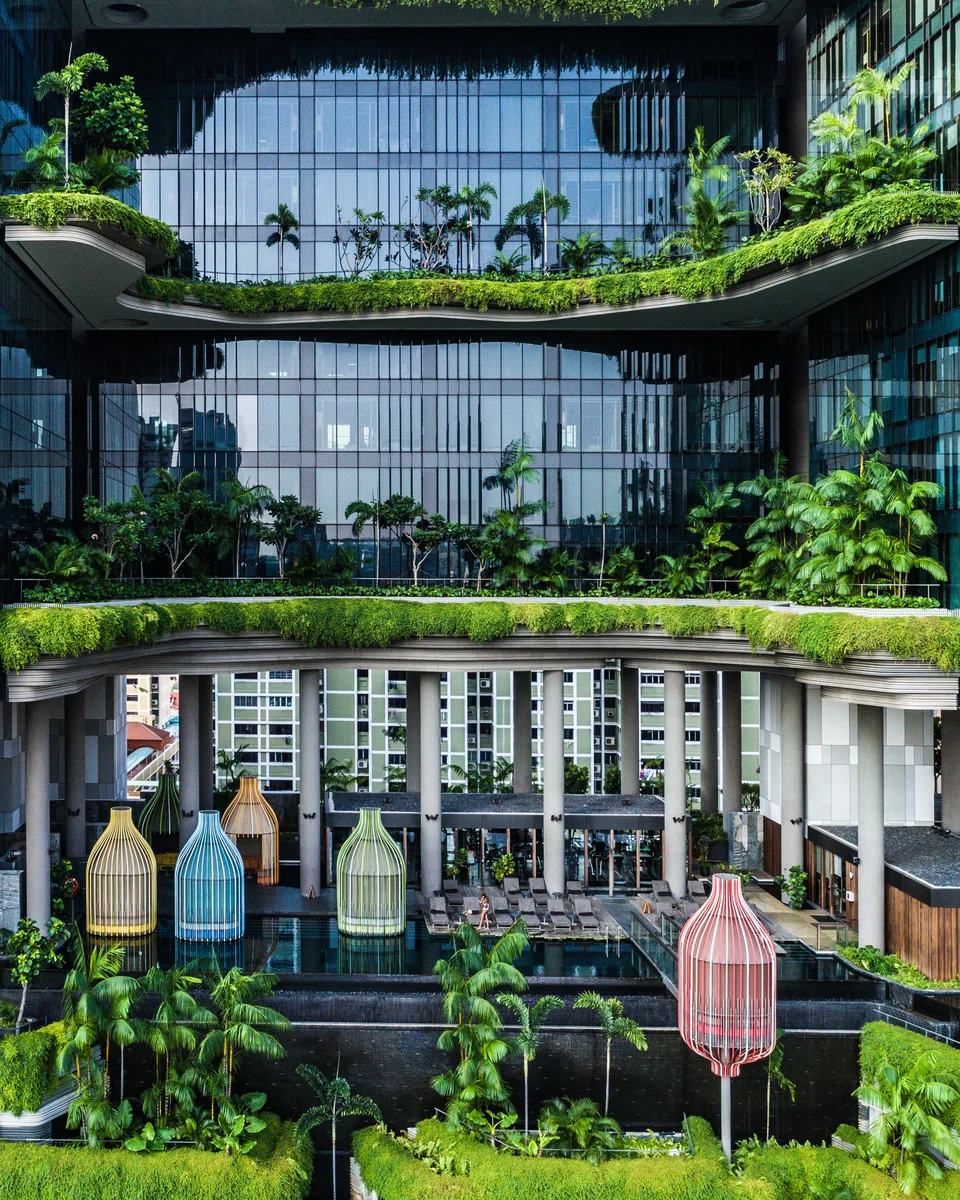
WHEN PARKROYAL COLLECTION Pickering was completed in 2013, one of the first things that came through its doors were the sustainability-related accolades and certifications – including Singapore’s Green Mark Platinum rating, the nation’s highest environmental certification. The hotel’s green reputation makes sense considering its rainwater harvesting system, motion sensors for energy regulation, and solar cells to illuminate 15,000 sq m of tiered “sky gardens”, each featuring dozens of plant varieties that purify the air.
The architects of the building achieved these feats of engineering in part because they designed and built the hotel entirely from the ground up. With an empty plot of land to work with, they were able to incorporate an extensive number of sustainability features into the blueprint itself.
However, not every building project has the advantage of a blank canvas.
Barriers to retrofit: Challenges faced by Singapore’s ageing buildings
Singapore’s skyline is a testament to its rapid development, but it also represents a sustainability challenge. While the city-state is aiming to green 80 per cent of all buildings by 2030, only 58 per cent of the buildings have been greened as of December 2023. Furthermore, the remaining buildings to be worked on are on average 26 years old, presenting unique energy efficiency and sustainability challenges.
For instance, older buildings may not have been designed to accommodate modern green technologies, such as solar panels or green roofs. These buildings may also contain outdated cooling and lighting systems, which tend to be inefficient and difficult to replace without major disruptions.
The financial barrier to entry is also high for such projects, especially for buildings with limited capital reserves. For example, a full heating, ventilation, and air conditioning (HVAC) system upgrade for a medium-size commercial building can cost millions of dollars; installing a building-wide smart energy management system might require rewiring and new sensors throughout the structure; upgrading to high-efficiency windows or adding external shading devices can be expensive, especially for tall buildings.
These costs can be particularly challenging for older buildings that may already face higher maintenance expenses. Moreover, traditional financing options might not be readily available or attractive for such projects, as banks may perceive them as risky investments.
A cost-effective approach to sustainability
This is where the Singapore Green Building Council (SGBC) comes in. As part of its mission to propel Singapore’s building and construction industry towards environmental sustainability, one way that SGBC helps building owners ease into retrofit projects is through the certification of firms that can perform Energy Performance Contracting (EPC).
Under an EPC arrangement, building owners can work with accredited EPC firms, which provide technical expertise and financial solutions through initiatives such as the Zero Capital Partnership scheme. This scheme covers the upfront costs of upgrades, allowing building owners to implement necessary improvements without significant initial investments. EPC firms also collaborate closely with building owners to set specific energy efficiency targets or guarantee energy savings, thereby ensuring the financial viability of the retrofitting process.
Already, such EPC arrangements have been implemented in some of the most prominent buildings in Singapore.
The Adelphi, a mixed-use development built in 1985, underwent a major retrofit of its chiller plant and fittings, resulting in annual energy cost savings of about S$500,000 and a reduction of 137 tonnes of carbon dioxide emissions per year. Ngee Ann City, which was built in 1993, also underwent its energy efficiency retrofit under an EPC arrangement and saw a reduction of more than six million kilowatt hour per year, equivalent to up to 20 per cent in energy savings. These success stories demonstrate that with the right approach, even older buildings can achieve remarkable energy efficiency and sustainability improvements.
Key considerations for successful EPC implementation
That said, EPC is not a magic bullet. Instead, its success is highly dependent on careful considerations and implementation. Here are some key points for building owners to consider.
Before embarking on an EPC project, a thorough energy audit must be conducted to identify all potential areas for energy savings, from major systems such as HVAC to smaller elements such as lighting and plug loads. The audit serves as the foundation for the entire project, helping to set realistic goals and prioritise interventions.
The choice of an EPC firm, too, is critical. Look for EPC firms with a proven track record in similar buildings and a strong financial standing. Consider their technical expertise, project management capabilities, and willingness to provide long-term support. On this front, SGBC maintains an extensive list of accredited EPC firms to choose from.
As part of the retrofit project, it is important to also implement robust systems for measuring and verifying energy savings. This not only ensures that the EPC firm meets its contractual obligations but also helps in identifying additional opportunities for improvement. Consider, for instance, how the EPC project fits into the building’s long-term sustainability strategy. This might include planning for future upgrades or integrating with other sustainability initiatives. To facilitate discussions between building owners and EPC firms, SGBC has developed resources together with the Building and Construction Authority and industry stakeholders, which includes a standard Energy Performance Contract for Buildings template for the procurement of services in relation to energy efficiency retrofits, installation of renewable energy facilities, ventilation and cooling system optimisation, lighting retrofits and adoption of smart building systems.
Lastly, considering how disruptive such projects can be, building owners have the responsibility to maintain early and ongoing communication with their tenants. Educate stakeholders about the benefits of the EPC project, addressing concerns and incorporating feedback where possible. This can help build consensus and smooth the implementation process.
Eco-conscious appeal
Today, the built environment sector plays a crucial role in Singapore’s net-zero strategy, and events such as the upcoming International Built Environment Week and International Green Building Conference are key platforms for the industry to explore better alignment with these goals. Given Singapore’s dense urban landscape and status as a business hub, where buildings contribute over 20 per cent of carbon emissions and consume more than a third of the nation’s electricity, innovations and sustainable practices to reduce emissions are vital to supporting our net-zero drive.
Besides, what is good for the environment is good for business, too. By improving energy efficiency, lowering water consumption, and cutting waste, sustainable upgrades can significantly lead to reductions in operating costs. In the long term, these upgrades might even serve to increase a building’s market value and appeal to eco-conscious tenants and buyers.
Therefore, the next time an existing building requires a facelift, perhaps it is a good idea for building owners to consider going deeper for a brighter shade of green.
The writer is chief executive officer of the Singapore Green Building Council (SGBC)



