

Does Singapore have the stomach to back a local chip player?
Without a national champion, the Republic’s semicon industry is dependent on foreign giants

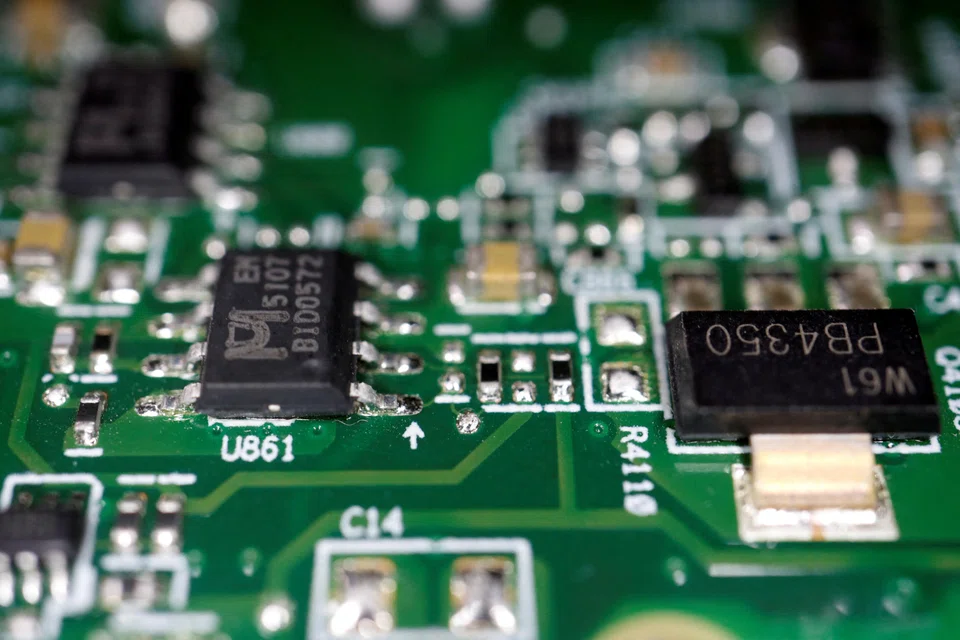
THE semiconductor industry is a major contributor to Singapore’s economy, accounting for 8 per cent of gross domestic product – yet, it has no national champion.
This is in stark contrast to other key sectors, such as finance or oil and gas, which have local players that are bound tightly to the nation such as DBS and Seatrium, respectively.
Amid turbulent times for the global semiconductor scene, one might ask: Could semicon giants someday abandon Singapore?
Why worry?
Granted, Singapore has an established position in the industry, producing more than a tenth of the global semiconductor output.
Industry head honchos cite the ability to bring in and attract global talent as a main reason to keep their research and development operations in Singapore.
On the manufacturing front, they praise Singapore for its precision engineering prowess, comparable with the likes of Japan and Germany. For chipmakers already present in the Republic, it seems easier to expand existing plants here than to open fresh ones elsewhere.
Government efforts aim to sharpen this edge. Enterprise Singapore and other agencies connect local companies to foreign ones, creating greater synergy between small and medium-sized enterprises (SMEs) and large multinationals.
Industry trends may also be cause for optimism. Some watchers expect demand to remain ahead of supply. The semicon pie will grow large enough to be split across South-east Asia, with a rising tide of investments lifting all ships.
Yet, before the latest Covid-19-induced supply chain snarls and geopolitical pressures, the local industry could have seemed to be a sunset one – especially after the 2009 sale of formerly Temasek-backed contract chipmaker Chartered Semiconductor Manufacturing.
In September that year, Abu Dhabi’s then Advanced Technology Investment Company bought the company for S$2.5 billion, including Temasek’s 62 per cent stake.
Analysts saw the deal as an admission that Singapore was no longer competitive against markets such as Taiwan, as global chip prices slumped and capital expenditure remained high.
Excitement in the industry faded. Students who would have otherwise gone into engineering were lured into the biomedical and finance industries, which had seemingly better prospects.
Today, high capital expenditure costs remain an issue, and leading-edge innovation requires big bets – which Singapore may be unable or unwilling to make.
In 2018, US chipmaker Intel showed signs of stress when it failed to deliver on its 10 nanometre (nm) chips, which were considered leading edge at the time. Its shares have floundered since then.
Years before, the company helped develop the same extreme ultraviolet (EUV) lithography technology that Taiwan Semiconductor Manufacturing Company (TSMC) uses to make chips. But Intel bet on sticking with older machines and more complex techniques – which led it to fall behind eventually.
Once bitten, twice shy
Today, TSMC is the only company that produces leading-edge 3 nm chips. Companies such as Intel, AMD, Apple and Nvidia rely on it to manufacture their best chip designs.
Sensing this to be a geopolitical risk, the United States passed the Chips and Science Act to spur domestic capabilities – and possibly shape Intel, a major beneficiary of the Act, into a national champion of sorts.
This March, Intel announced it would receive US$8.5 billion from the US government to fund its expansion in Arizona, New Mexico, Ohio and Oregon, especially in leading-edge chip manufacturing.
In May, it was reported that the company had acquired all of Dutch semicon supplier ASML’s stock of its next-generation high numerical aperture EUV lithography machines this year. The five to six of these machines that ASML produces annually are estimated to cost about 300 million (S$440 million) to 400 million euros each.
One simple answer to the question of why Singapore lacks a chipmaking champion is that, given the vast sums involved, it could be futile to try creating one.
The sort of large-scale industrial policy adopted by China and the US – featuring massive subsidies and incentives – is difficult to outdo.
Even though semicon innovation is happening at home, it is unclear whether local investors are willing to take risks in the sector again. Perhaps the bitter memories of Chartered’s losses in the noughties continue to haunt the sector.
Singapore-headquartered Silicon Box, which is focused on chiplet manufacturing and innovation, closed a US$200 million financing round in January this year. This brought its valuation up to more than US$1 billion.
Chiplet designs are currently used by companies such as AMD and Apple to build the next generation of semicon chips.
Yet the company received no capital from Singapore, despite being headquartered here, noted its co-founder and chief executive Han Byung Joon.
Han said that the company is considering a listing, but it faces a dilemma: list on the Singapore Exchange and risk having the stock “go nowhere”, or list on US markets and potentially be ignored as small fry.
Han had previously served as chief executive at Stats ChipPAC, another Singapore mainboard-listed company that was privatised in 2015 after being bought by a consortium led by China’s Jiangsu Changjiang Electronics Technology.
The absence of Singapore investors is unfortunate, and stands in contrast to the healthy interest that workers are now taking in the industry.
Record numbers of students are seeking to enter notoriously difficult integrated circuit design courses in universities. Some local companies, such as Grand Venture Technology, provide scholarships and have sought to replace manufacturing’s blue-collar image with one of cutting-edge automation.
Some might argue that in the absence of a local champion, Singapore can simply continue to rely on global players continuing to site themselves here.
But there is at least one major risk: a possible weakening of the precision engineering sector that supports Singapore’s chip companies.
Anecdotally, some local SMEs seem unwilling to upgrade their chip-related capabilities and are instead content with serving other industries such as medical and aerospace.
They likely missed the opportunity to refresh their companies with new talent and leadership in the years between Chartered’s sale and the latest boom in semiconductor investments.
Asked if they would upgrade their manufacturing techniques or upskill their workers to ride the latest chip wave, some older SME bosses said they saw no need to take such risks.
It all comes back to how much risk Singapore – be it investors or players – is willing to stomach to push the sector to greater heights. At the moment, the nation’s risk appetite does not seem very high.
Or as one boss said: “Everyone wants stability, no one wants drama.”
TRENDING NOW

Once staunchly pro-China, Malaysian Chinese businesses are now distancing themselves from Beijing

Looking beyond looming CEO succession, should UOB potentially pursue a transformative merger?

Could stablecoins be the future of money?

Grab CEO’s wife Chloe Tong on life with Anthony Tan and finding her purpose

