

To build or not to build: Do e-commerce players need third-party logistics providers?
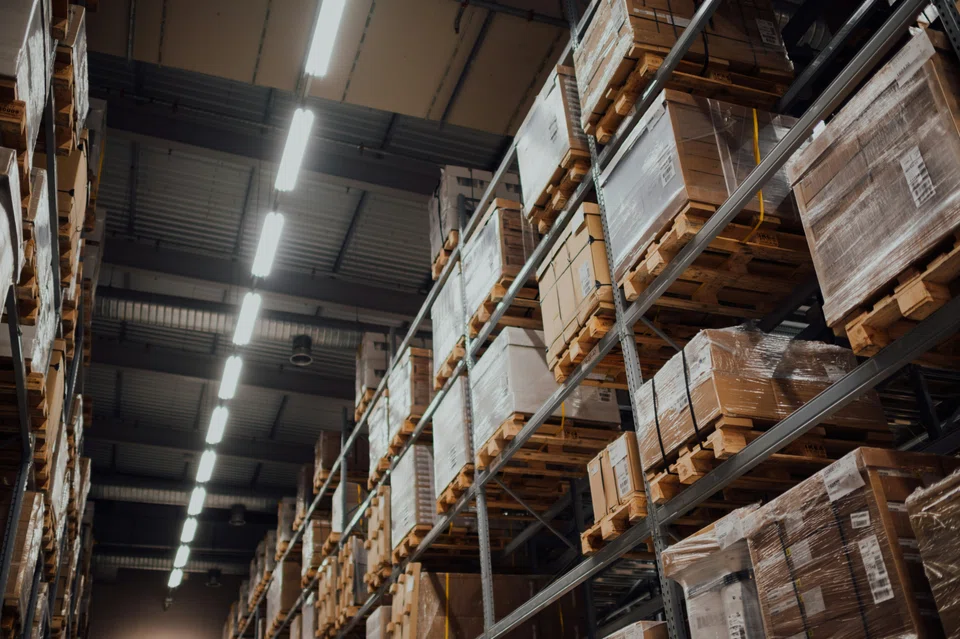
DOES it matter how your parcels arrive at your doorstep? Most shoppers would say no – but for e-commerce players, arriving at the right answer to this question can mean the difference between success and failure.
With total revenue set to surpass S$280 billion by 2025, the South-east Asian e-commerce sector remains a bright spot in terms of resilience and growth amid the backdrop of global economic volatility.
The potential for growth is even more evident during high-volume sales periods. Case in point – Singles’ Day 2023, when online retail transactions across the South-east Asian countries surged by 140 per cent, with Singapore recording an impressive 176 per cent jump in transaction volume.
In the face of overwhelming spikes in demand, logistics operations will have to scale and evolve accordingly. A critical decision looms – should companies collaborate with experienced third-party logistics (3PL) providers, or invest in a more tailored in-house logistics ecosystem?
Here are three considerations for e-commerce players to keep in mind when making this pivotal choice.
Maximising cost efficiency
One of the clearest advantages of opting to rely on 3PL providers would be the cost savings involved. 3PL partners offer off-the-shelf logistics support without the need for hefty capital investment.
For e-commerce upstarts and smaller online businesses looking to get off the ground, this flexibility can be crucial for breaking into new markets or adapting to demand fluctuations in a more agile manner.
For example, some leading local e-commerce companies in Indonesia work with more than 10 different local logistics and fulfilment partners to meet the last-mile logistics needs of their platform partners. The approach is particularly suitable for a market as diverse and geographically fragmented as Indonesia.
That said, managing these partners effectively would demand substantial time and resources, potentially hindering firms from achieving maximum cost efficiency.
To that end, developing an in-house logistics platform tailored to the unique needs of your business often translates to faster decision-making and adjustments within the organisation. This allows retailers to stay agile in the face of market demand fluctuations. Moreover, as businesses grow larger and achieve more economies of scale, investing in a custom-fit logistics solution may prove to be a much cost-effective option.
That said, 3PLs too, have evolved with the e-commerce boom to provide more variants of services to support retailers big and small. Both options offer their own unique advantages – the choice often simply hinges on one’s business priorities.
Right expertise with easy access to vast resources critical
Working with 3PL partners also enables businesses to tap into their established network of partners and resources – essential for a region as fragmented and culturally diverse as South-east Asia.
For the average retailer based in small but densely populated markets like Singapore, having a logistics partner with a wide footprint across the island gives it a significant edge over competitors.
As such, 3PLs come into the picture to offer a holistic suite of offerings and service types to meet a wide range of business needs. This includes cross-border logistics services, small parcel deliveries, cold chain management, freight forwarding, and customised warehousing solutions.
To illustrate, food-tech startup Grain Singapore adopted a cloud kitchen model to cater to Singaporeans’ demand for convenient and healthy food options. Keeping in mind the need to keep costs low and ensure quality control at every stage of food preparation and delivery, the startup opted to invest in its own fleet of last-mile couriers.
Regardless of size, last-mile delivery often presents the greatest challenge for e-commerce players, due to the multitude of requirements that come with each retail partner.
While specialised expertise and tech-enhanced solutions make 3PL players the natural choice for retailers lacking on-the-ground resources, industry knowhow, and targeted market intelligence, different retailers require different solutions to meet their needs.
Where focus is most needed
Businesses with the right 3PL provider can be better positioned to focus on other aspects of the business.
More often than not, businesses run the risk of losing oversight and control over service standards when entrusting logistics operations to untested 3PL partners.
The lack of control could lead to issues such as delivery delays, discrepancies in order fulfilment, or inconsistency in service quality – all of which can directly impact the customer experience and affect the business’s reputation and bottom line.
With the right 3PL partner, businesses can consolidate time and resources to differentiate themselves based on unique value propositions. This is especially true for businesses that can truly benefit from the first-rate efficiencies offered by 3PL providers and focus on growing the business for the future.
Amid the rise of trends such as social commerce and omnichannel shopping, providing exceptional customer experiences remains key to customer loyalty and repeat purchases in the competitive world of e-commerce.
Be it in-house or external, having an efficient, reliable logistics supply chain is more important than ever for businesses looking to stay ahead in the crowded e-commerce space.
Businesses that can stay flexible in the face of challenges and pivot quickly as necessary – and not stick with a “tried and true” method – will be the ones most likely to come out ahead.
The writer is sales and marketing director of J&T Express Singapore
TRENDING NOW
Simba admits exceeding spectrum limits amid failed M1 deal; full-year profits surge 277%

Temasek’s Wan Chee Foong to helm PIL, Lars Kastrup to be board adviser

He built the Vingroup empire. Now South-east Asia’s richest man is handing some key roles to his sons

One-third of Singapore-listed firms at risk in severe AI downturn: MAS

